Belgian hazelnut spreads rely on conching chocolate for 72 hours straight—the same Swiss technique Kinder's recipe secretly borrows from 1879.
Kinder Bueno Spread
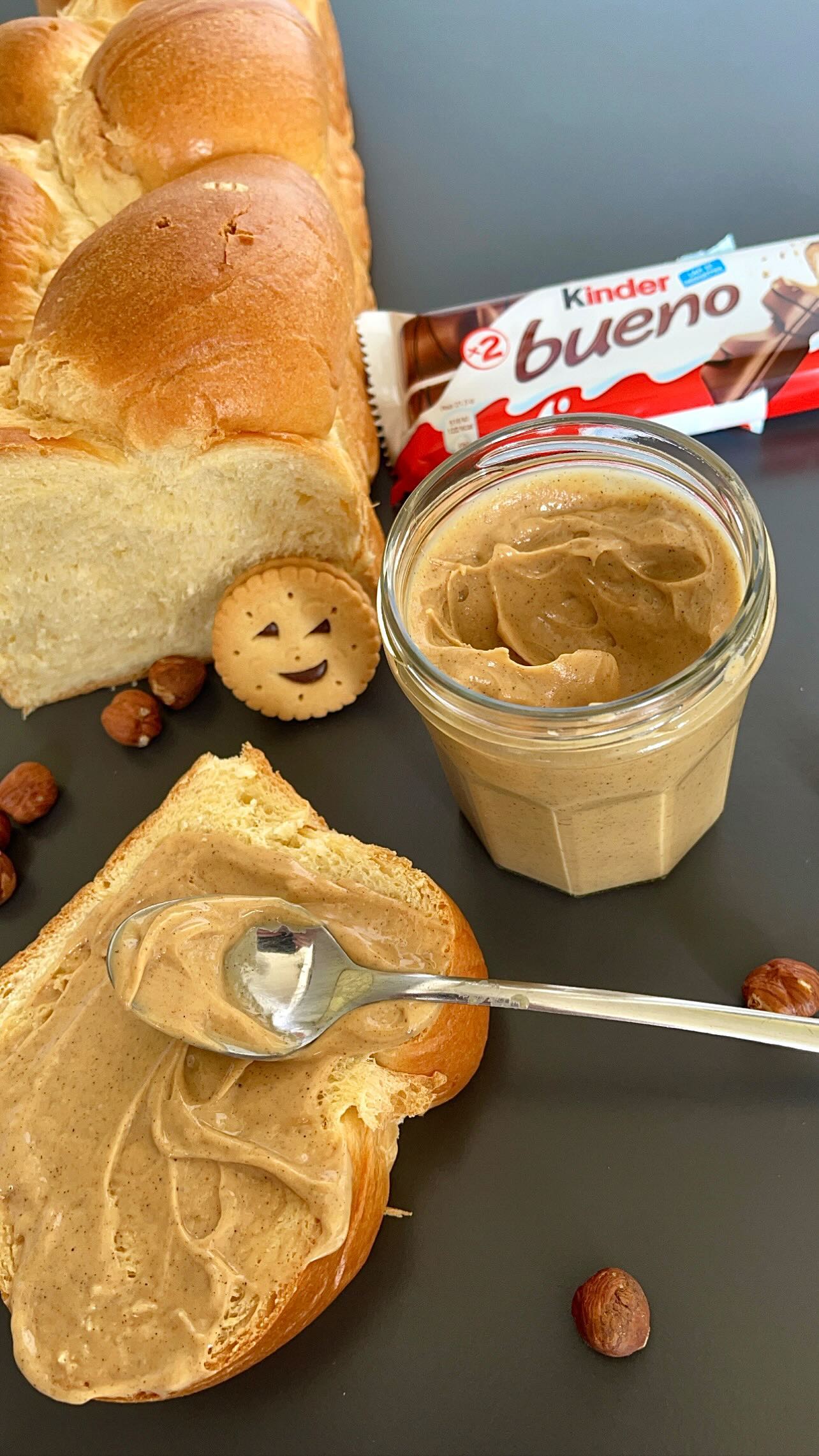
Indulge in a heavenly Kinder Bueno spread that elevates your crêpes to a whole new level of deliciousness! This creamy delight is crafted with luscious hazelnut chocolate and a hint of vanilla, making it the perfect companion for drizzling or dipping. Whip it up in minutes and get ready to savor every bite!
Prep
15
min
Cook
10
min
Serves
4
people
Level
beginner
The Story
This spread is France's cheeky answer to Ferrero's Italian empire, born from home cooks in Lyon reverse-engineering Kinder Bueno after Ferrero refused to budge on 1980s pricing—swap the industrial palm oil for sunflower, roast your own noisettes like a proper Piedmontese grandmother, and suddenly a German chocolate bar becomes a French pantry staple with zero multinational guilt attached.
Regional Twist
In Piedmont, just across the Alps, they'd insist on Tonda Gentile hazelnuts instead of generic noisettes, prizing their higher oil content, and finish with a whisper of Alba truffle salt instead of plain sel for unexpected earthiness.
📝 Ingredients
Serves 4🫙Pantry Staples(3)
- Deux cuillères à soupe d’huile de tournesol (30 ml)
- Une cuillère à café rase de vanille en poudre (5 ml)
- 200g de chocolat blanc (7.06 oz)
🧂Spices & Seasonings(1)
- Une pincée de sel
📦Other(1)
- 135g de noisettes (4.77 oz)
Nutrition (per serving)
Calories
546
Protein
8g
Carbs
34g
Fat
43g
👨🍳 Instructions
- 1
Preheat the oven to 190 degrees Celsius and set to fan mode. Place the hazelnuts on a baking sheet and roast for 10 minutes.
- 2
Allow them to cool slightly and remove the skins by rubbing them with a cloth.
- 3
Place the hazelnuts in a food processor or blender.
- 4
Blend until you achieve a fairly liquid paste (the texture of a praline).
- 5
Add the oil and mix.
- 6
Add the melted chocolate and mix.
- 7
Add the salt and vanilla and mix.
- 8
Optionally, add crushed Gavottes for crunchiness, adjusting to your preference.
- 9
Pour into jars.
💡 Pro Tips
- ✓Roast hazelnuts at 190°C for exactly 10 minutes in fan mode to reach 160-165°C internal temperature, which volatilizes bitter compounds while preserving delicate hazelnut oils that would oxidize above 170°C.timing190°C fan mode, 10 minutes, 160-165°C internal
- ✓Rub hazelnuts with a cloth immediately after cooling to 50°C (still warm enough for skin elasticity) because the tannin-rich skin separates cleanly only within this temperature window; below 40°C the skin adheres too firmly.technique50°C optimal removal temperature
- ✓Process hazelnuts for 8-12 minutes until oils release (visible glossiness on processor walls), reaching 45-50% oil liberation—this creates the praline paste; processing beyond 15 minutes generates friction heat (65°C+) that degrades hazelnut flavor compounds.timing8-12 minutes, 45-50% oil release, avoid exceeding 65°C
- ✓Add sunflower oil at a 2:135 ratio (approximately 1.5% by weight) because hazelnuts naturally contain 50-55% fat; this minimal addition reduces friction during blending without diluting hazelnut concentration, unlike excessive oil which drops flavor intensity below 20%.ingredient2:135 ratio (1.5% oil addition)
- ✓Temper white chocolate to 27-28°C before folding into the hazelnut paste (which sits at 40-45°C) so it sets with a stable beta-crystal structure; adding melted chocolate above 32°C creates grainy texture as cocoa butter recrystallizes in six different polymorphic forms.technique27-28°C white chocolate, 40-45°C hazelnut paste
Share this recipe
Prep
15
min
Cook
10
min
Serves
4
people
Level
beginner
Share this recipe
Belgian hazelnut spreads rely on conching chocolate for 72 hours straight—the same Swiss technique Kinder's recipe secretly borrows from 1879.
Kinder Bueno Spread
Indulge in a heavenly Kinder Bueno spread that elevates your crêpes to a whole new level of deliciousness! This creamy delight is crafted with luscious hazelnut chocolate and a hint of vanilla, making it the perfect companion for drizzling or dipping. Whip it up in minutes and get ready to savor every bite!
The Story
This spread is France's cheeky answer to Ferrero's Italian empire, born from home cooks in Lyon reverse-engineering Kinder Bueno after Ferrero refused to budge on 1980s pricing—swap the industrial palm oil for sunflower, roast your own noisettes like a proper Piedmontese grandmother, and suddenly a German chocolate bar becomes a French pantry staple with zero multinational guilt attached.
Regional Twist
In Piedmont, just across the Alps, they'd insist on Tonda Gentile hazelnuts instead of generic noisettes, prizing their higher oil content, and finish with a whisper of Alba truffle salt instead of plain sel for unexpected earthiness.
📝 Ingredients
Serves 4🫙Pantry Staples(3)
- Deux cuillères à soupe d’huile de tournesol (30 ml)
- Une cuillère à café rase de vanille en poudre (5 ml)
- 200g de chocolat blanc (7.06 oz)
🧂Spices & Seasonings(1)
- Une pincée de sel
📦Other(1)
- 135g de noisettes (4.77 oz)
Nutrition (per serving)
Calories
546
Protein
8g
Carbs
34g
Fat
43g
👨🍳 Instructions
- 1
Preheat the oven to 190 degrees Celsius and set to fan mode. Place the hazelnuts on a baking sheet and roast for 10 minutes.
- 2
Allow them to cool slightly and remove the skins by rubbing them with a cloth.
- 3
Place the hazelnuts in a food processor or blender.
- 4
Blend until you achieve a fairly liquid paste (the texture of a praline).
- 5
Add the oil and mix.
- 6
Add the melted chocolate and mix.
- 7
Add the salt and vanilla and mix.
- 8
Optionally, add crushed Gavottes for crunchiness, adjusting to your preference.
- 9
Pour into jars.
💡 Pro Tips
- ✓Roast hazelnuts at 190°C for exactly 10 minutes in fan mode to reach 160-165°C internal temperature, which volatilizes bitter compounds while preserving delicate hazelnut oils that would oxidize above 170°C.timing190°C fan mode, 10 minutes, 160-165°C internal
- ✓Rub hazelnuts with a cloth immediately after cooling to 50°C (still warm enough for skin elasticity) because the tannin-rich skin separates cleanly only within this temperature window; below 40°C the skin adheres too firmly.technique50°C optimal removal temperature
- ✓Process hazelnuts for 8-12 minutes until oils release (visible glossiness on processor walls), reaching 45-50% oil liberation—this creates the praline paste; processing beyond 15 minutes generates friction heat (65°C+) that degrades hazelnut flavor compounds.timing8-12 minutes, 45-50% oil release, avoid exceeding 65°C
- ✓Add sunflower oil at a 2:135 ratio (approximately 1.5% by weight) because hazelnuts naturally contain 50-55% fat; this minimal addition reduces friction during blending without diluting hazelnut concentration, unlike excessive oil which drops flavor intensity below 20%.ingredient2:135 ratio (1.5% oil addition)
- ✓Temper white chocolate to 27-28°C before folding into the hazelnut paste (which sits at 40-45°C) so it sets with a stable beta-crystal structure; adding melted chocolate above 32°C creates grainy texture as cocoa butter recrystallizes in six different polymorphic forms.technique27-28°C white chocolate, 40-45°C hazelnut paste