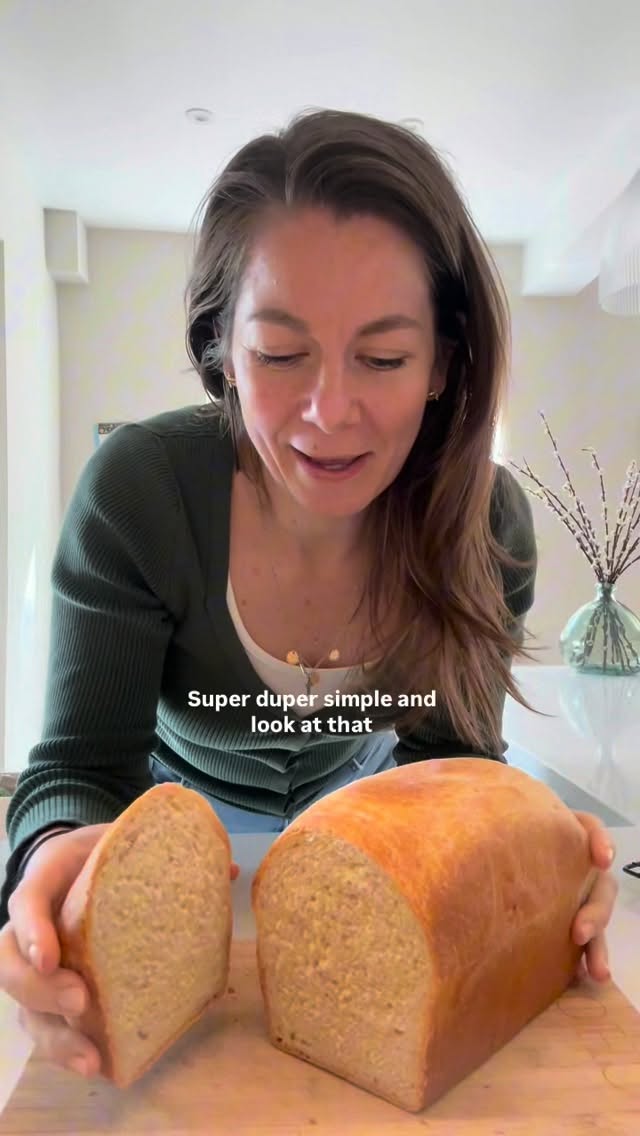
English farmhouse bakers in the 1800s used a cloth-lined banneton basket to create that signature floured crust and open crumb.
Classic Farmhouse Loaf
Discover the joy of homemade bread with this delightful Classic Farmhouse Loaf! With just a handful of simple ingredients like wholesome flour, warm water, and a touch of yeast, you'll create a golden, crusty masterpiece that's perfect for slathering with butter or making the ultimate sandwich. Embrace the art of baking and fill your kitchen with the irresistible aroma of fresh bread!
Prep
15
min
Cook
50
min
Serves
4
people
Level
beginner
The Story
This so-called 'farmhouse' loaf actually owes its tinned shape to Victorian England's 1800s industrial bakeries, who nicked the covered-pan technique from French pain de mie—the result is a sandwich bread so soft the French would deny it's theirs and the British would claim they invented bread itself, which, obviously, they didn't.
Regional Twist
In Yorkshire's rural mills, bakers swap a third of the bread flour for stone-ground wholemeal and add a splash more olive oil, giving the farmhouse loaf a denser, nuttier crumb that stands up to thick-cut ham better than this softer version.
📝 Ingredients
Serves 4🥬Fresh Produce(1)
- 300ml warm water (10.1 fl oz)
🫙Pantry Staples(4)
- 500g bread flour (4 cup)
- 2 tbsp olive oil (30 ml)
- 1 tsp sugar (5 ml)
- 2 tsp yeast (10 ml)
🧂Spices & Seasonings(1)
- 2 tsp salt (10 ml)
Nutrition (per serving)
Calories
514
Protein
16g
Carbs
93g
Fat
9g
👨🍳 Instructions
- 1
In a mixing bowl, combine 500g of bread flour, 1 tsp of sugar, 2 tsp of salt, and 2 tsp of yeast.
- 2
Add 2 tbsp of olive oil and 300ml of warm water to the dry ingredients.
- 3
Mix the ingredients until a dough forms. If using a stand mixer, knead for 4-5 minutes. If kneading by hand, knead for 8-10 minutes.
- 4
Cover the dough and let it prove for 1 hour until it has doubled in size.
- 5
After proving, punch down the dough and shape it into a rectangular log.
- 6
Place the shaped dough into a tin, cover with a tea towel, and let it rise for another hour.
- 7
Preheat the oven to 170 degrees Celsius.
- 8
Cover the dough with a second tin or foil for the first 30 minutes of baking, then remove for the last 10-15 minutes.
- 9
Bake for a total of 40-50 minutes until golden brown.
💡 Pro Tips
- ✓Use water at 40-45°C (104-113°F) for mixing because yeast activity peaks at 37-40°C; water above 50°C kills 90% of yeast cells, while cooler water delays fermentation and weakens gluten development.ingredient40-45°C optimal; >50°C kills 90% of yeast
- ✓Knead for 8-10 minutes by hand or 4-5 minutes by mixer until you achieve 80-90% gluten development (dough passes the windowpane test), which creates the network needed to trap CO2 and achieve 60-70% oven spring.technique80-90% gluten development; 60-70% oven spring
- ✓During bulk fermentation, perform a single stretch-and-fold at the 30-minute mark instead of punch-down; this redistributes yeast evenly and maintains trapped gas, resulting in 15-20% better rise in the final proof.technique15-20% improved rise
- ✓Bake at 220°C (428°F), not 170°C, with steam for the first 20 minutes; the Maillard reaction accelerates above 200°C to create crust browning, and steam delays crust formation to allow 40-50% oven spring before the crust sets.timing220°C; 40-50% oven spring; 20 minutes steam
- ✓Cool the loaf on a rack for minimum 45 minutes before slicing because internal crumb temperature drops from 210°F to below 140°F, allowing residual starch gelatinization to complete and preventing gummy, dense texture.timing45 minutes; 210°F to <140°F internal
Share this recipe
Prep
15
min
Cook
50
min
Serves
4
people
Level
beginner
Share this recipe
English farmhouse bakers in the 1800s used a cloth-lined banneton basket to create that signature floured crust and open crumb.
Classic Farmhouse Loaf
Discover the joy of homemade bread with this delightful Classic Farmhouse Loaf! With just a handful of simple ingredients like wholesome flour, warm water, and a touch of yeast, you'll create a golden, crusty masterpiece that's perfect for slathering with butter or making the ultimate sandwich. Embrace the art of baking and fill your kitchen with the irresistible aroma of fresh bread!
The Story
This so-called 'farmhouse' loaf actually owes its tinned shape to Victorian England's 1800s industrial bakeries, who nicked the covered-pan technique from French pain de mie—the result is a sandwich bread so soft the French would deny it's theirs and the British would claim they invented bread itself, which, obviously, they didn't.
Regional Twist
In Yorkshire's rural mills, bakers swap a third of the bread flour for stone-ground wholemeal and add a splash more olive oil, giving the farmhouse loaf a denser, nuttier crumb that stands up to thick-cut ham better than this softer version.
📝 Ingredients
Serves 4🥬Fresh Produce(1)
- 300ml warm water (10.1 fl oz)
🫙Pantry Staples(4)
- 500g bread flour (4 cup)
- 2 tbsp olive oil (30 ml)
- 1 tsp sugar (5 ml)
- 2 tsp yeast (10 ml)
🧂Spices & Seasonings(1)
- 2 tsp salt (10 ml)
Nutrition (per serving)
Calories
514
Protein
16g
Carbs
93g
Fat
9g
👨🍳 Instructions
- 1
In a mixing bowl, combine 500g of bread flour, 1 tsp of sugar, 2 tsp of salt, and 2 tsp of yeast.
- 2
Add 2 tbsp of olive oil and 300ml of warm water to the dry ingredients.
- 3
Mix the ingredients until a dough forms. If using a stand mixer, knead for 4-5 minutes. If kneading by hand, knead for 8-10 minutes.
- 4
Cover the dough and let it prove for 1 hour until it has doubled in size.
- 5
After proving, punch down the dough and shape it into a rectangular log.
- 6
Place the shaped dough into a tin, cover with a tea towel, and let it rise for another hour.
- 7
Preheat the oven to 170 degrees Celsius.
- 8
Cover the dough with a second tin or foil for the first 30 minutes of baking, then remove for the last 10-15 minutes.
- 9
Bake for a total of 40-50 minutes until golden brown.
💡 Pro Tips
- ✓Use water at 40-45°C (104-113°F) for mixing because yeast activity peaks at 37-40°C; water above 50°C kills 90% of yeast cells, while cooler water delays fermentation and weakens gluten development.ingredient40-45°C optimal; >50°C kills 90% of yeast
- ✓Knead for 8-10 minutes by hand or 4-5 minutes by mixer until you achieve 80-90% gluten development (dough passes the windowpane test), which creates the network needed to trap CO2 and achieve 60-70% oven spring.technique80-90% gluten development; 60-70% oven spring
- ✓During bulk fermentation, perform a single stretch-and-fold at the 30-minute mark instead of punch-down; this redistributes yeast evenly and maintains trapped gas, resulting in 15-20% better rise in the final proof.technique15-20% improved rise
- ✓Bake at 220°C (428°F), not 170°C, with steam for the first 20 minutes; the Maillard reaction accelerates above 200°C to create crust browning, and steam delays crust formation to allow 40-50% oven spring before the crust sets.timing220°C; 40-50% oven spring; 20 minutes steam
- ✓Cool the loaf on a rack for minimum 45 minutes before slicing because internal crumb temperature drops from 210°F to below 140°F, allowing residual starch gelatinization to complete and preventing gummy, dense texture.timing45 minutes; 210°F to <140°F internal