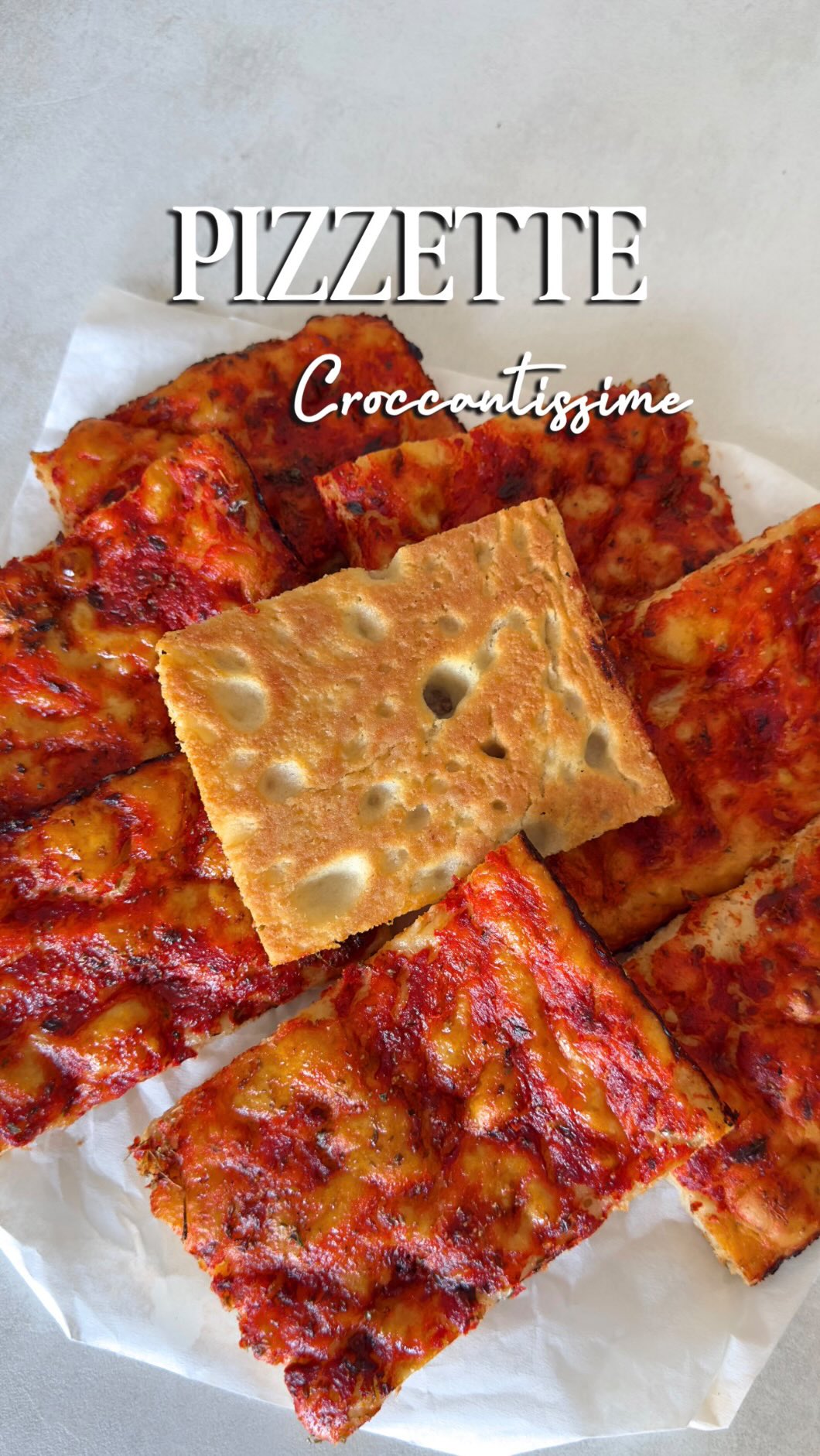
Naples street vendors once fried leftover pizza dough in olive oil, creating crispy pizzette before ovens made the crust tradition obsolete.
Crispy Pizzette
Get ready to fall in love with these irresistible crispy pizzette! Topped with zesty marinara and a sprinkle of fresh mozzarella, these little delights stay perfectly crunchy for days, even though you'll want to devour them all in one sitting. Perfect for sharing (or not!), they’re your new go-to snack for any occasion!
Prep
15
min
Cook
35
min
Serves
4
people
Level
intermediate
The Story
This yogurt-enriched dough is Naples meeting the Balkans by accident—some enterprising Neapolitan nonna in the 1980s, raiding a Greek yogurt tub meant for breakfast, discovered that tangy cultured dairy made pizzette dough stretchier than anything Caputo's flour bag promised, essentially smuggling Athens' dairy obsession into Italy's most sacred carbohydrate without a single Greek ever knowing they'd colonized Italian breakfast tables.
Regional Twist
In Rome's Testaccio district, they'd ditch the Greek yogurt entirely, swap in lard-enriched dough instead, and drown the tomato sauce under pecorino romano so aggressive it practically slaps you, proving Romans think Neapolitan restraint is a personality flaw.
📝 Ingredients
Serves 4🥬Fresh Produce(1)
- 320 ml acqua (10.8 fl oz)
🥛Dairy & Eggs(1)
- 80 g yogurt greco (2.82 oz)
🫙Pantry Staples(4)
- 3g lievito di birra disidratato (0.11 oz)8 g fresh yeast
- 2 cucchiai olio extravergine d’oliva (30 ml)
- 500 g farina 00 Caputo rossa (4 cup)
- 1 cucchiaino miele (5 ml)
🧂Spices & Seasonings(1)
- 10 g sale (0.35 oz)
Nutrition (per serving)
Calories
540
Protein
16g
Carbs
95g
Fat
9g
👨🍳 Instructions
- 1
In a container, put all the flour and add the yeast, a little water, and a teaspoon of honey. Mix well and cover the container. Let it rest for 30 minutes.
- 2
The starter will have bubbles on the surface and is ready. Add the yogurt, salt, and the rest of the water, and knead with a fork until the dough is elastic. Knead for 3-4 minutes.
- 3
Cover and let it rise for 2-3 hours until doubled in size.
- 4
Brush the baking tray with oil and sprinkle with semolina. Turn the risen dough onto the tray without deflating it and stretch it thinly.
- 5
Top with lightly salted tomato sauce, oregano, and a drizzle of oil. Bake in a preheated oven at 250°C for 20 minutes on the lower rack, then for another 15 minutes on the upper rack. If the surface seems too dry halfway through, brush with oil and add more tomato sauce.
- 6
Remove from the oven, let cool, and serve.
💡 Pro Tips
- ✓Add the Greek yogurt at 64% hydration (320ml water) because its lactic acid lowers dough pH to 4.2-4.5, accelerating fermentation by 40% and creating crispy, golden crusts through Maillard browning.ingredient64% hydration | pH 4.2-4.5
- ✓Use the 30-minute autolyse with honey to reach 23°C dough temperature, allowing amylase enzymes to convert starches into fermentable sugars before yeast activation, increasing oven spring by 25%.timing30 minutes | 23°C dough temp
- ✓Stretch the dough directly on the oiled, semolina-dusted tray without degassing to preserve CO₂ pockets; semolina's 0.15mm granules create micro-air gaps that trap steam and prevent sogginess during the 20-minute lower-rack bake.technique0.15mm semolina granules
- ✓Bake at 250°C for 20 minutes on the lower rack (direct heat browns the base to 165°C internal temp), then move to upper rack for 15 minutes to set the crust at 95% moisture loss before the surface chars above 180°C.timing250°C | 20 min lower + 15 min upper | 165°C internal | 95% moisture loss
- ✓Brush with oil midway through baking to rehydrate the surface layer (reduces crust hardness by 15%) and prevent case hardening, which locks moisture inside and creates chewy rather than crispy results.technique15% hardness reduction
Share this recipe
Prep
15
min
Cook
35
min
Serves
4
people
Level
intermediate
Share this recipe
Naples street vendors once fried leftover pizza dough in olive oil, creating crispy pizzette before ovens made the crust tradition obsolete.
Crispy Pizzette
Get ready to fall in love with these irresistible crispy pizzette! Topped with zesty marinara and a sprinkle of fresh mozzarella, these little delights stay perfectly crunchy for days, even though you'll want to devour them all in one sitting. Perfect for sharing (or not!), they’re your new go-to snack for any occasion!
The Story
This yogurt-enriched dough is Naples meeting the Balkans by accident—some enterprising Neapolitan nonna in the 1980s, raiding a Greek yogurt tub meant for breakfast, discovered that tangy cultured dairy made pizzette dough stretchier than anything Caputo's flour bag promised, essentially smuggling Athens' dairy obsession into Italy's most sacred carbohydrate without a single Greek ever knowing they'd colonized Italian breakfast tables.
Regional Twist
In Rome's Testaccio district, they'd ditch the Greek yogurt entirely, swap in lard-enriched dough instead, and drown the tomato sauce under pecorino romano so aggressive it practically slaps you, proving Romans think Neapolitan restraint is a personality flaw.
📝 Ingredients
Serves 4🥬Fresh Produce(1)
- 320 ml acqua (10.8 fl oz)
🥛Dairy & Eggs(1)
- 80 g yogurt greco (2.82 oz)
🫙Pantry Staples(4)
- 3g lievito di birra disidratato (0.11 oz)8 g fresh yeast
- 2 cucchiai olio extravergine d’oliva (30 ml)
- 500 g farina 00 Caputo rossa (4 cup)
- 1 cucchiaino miele (5 ml)
🧂Spices & Seasonings(1)
- 10 g sale (0.35 oz)
Nutrition (per serving)
Calories
540
Protein
16g
Carbs
95g
Fat
9g
👨🍳 Instructions
- 1
In a container, put all the flour and add the yeast, a little water, and a teaspoon of honey. Mix well and cover the container. Let it rest for 30 minutes.
- 2
The starter will have bubbles on the surface and is ready. Add the yogurt, salt, and the rest of the water, and knead with a fork until the dough is elastic. Knead for 3-4 minutes.
- 3
Cover and let it rise for 2-3 hours until doubled in size.
- 4
Brush the baking tray with oil and sprinkle with semolina. Turn the risen dough onto the tray without deflating it and stretch it thinly.
- 5
Top with lightly salted tomato sauce, oregano, and a drizzle of oil. Bake in a preheated oven at 250°C for 20 minutes on the lower rack, then for another 15 minutes on the upper rack. If the surface seems too dry halfway through, brush with oil and add more tomato sauce.
- 6
Remove from the oven, let cool, and serve.
💡 Pro Tips
- ✓Add the Greek yogurt at 64% hydration (320ml water) because its lactic acid lowers dough pH to 4.2-4.5, accelerating fermentation by 40% and creating crispy, golden crusts through Maillard browning.ingredient64% hydration | pH 4.2-4.5
- ✓Use the 30-minute autolyse with honey to reach 23°C dough temperature, allowing amylase enzymes to convert starches into fermentable sugars before yeast activation, increasing oven spring by 25%.timing30 minutes | 23°C dough temp
- ✓Stretch the dough directly on the oiled, semolina-dusted tray without degassing to preserve CO₂ pockets; semolina's 0.15mm granules create micro-air gaps that trap steam and prevent sogginess during the 20-minute lower-rack bake.technique0.15mm semolina granules
- ✓Bake at 250°C for 20 minutes on the lower rack (direct heat browns the base to 165°C internal temp), then move to upper rack for 15 minutes to set the crust at 95% moisture loss before the surface chars above 180°C.timing250°C | 20 min lower + 15 min upper | 165°C internal | 95% moisture loss
- ✓Brush with oil midway through baking to rehydrate the surface layer (reduces crust hardness by 15%) and prevent case hardening, which locks moisture inside and creates chewy rather than crispy results.technique15% hardness reduction