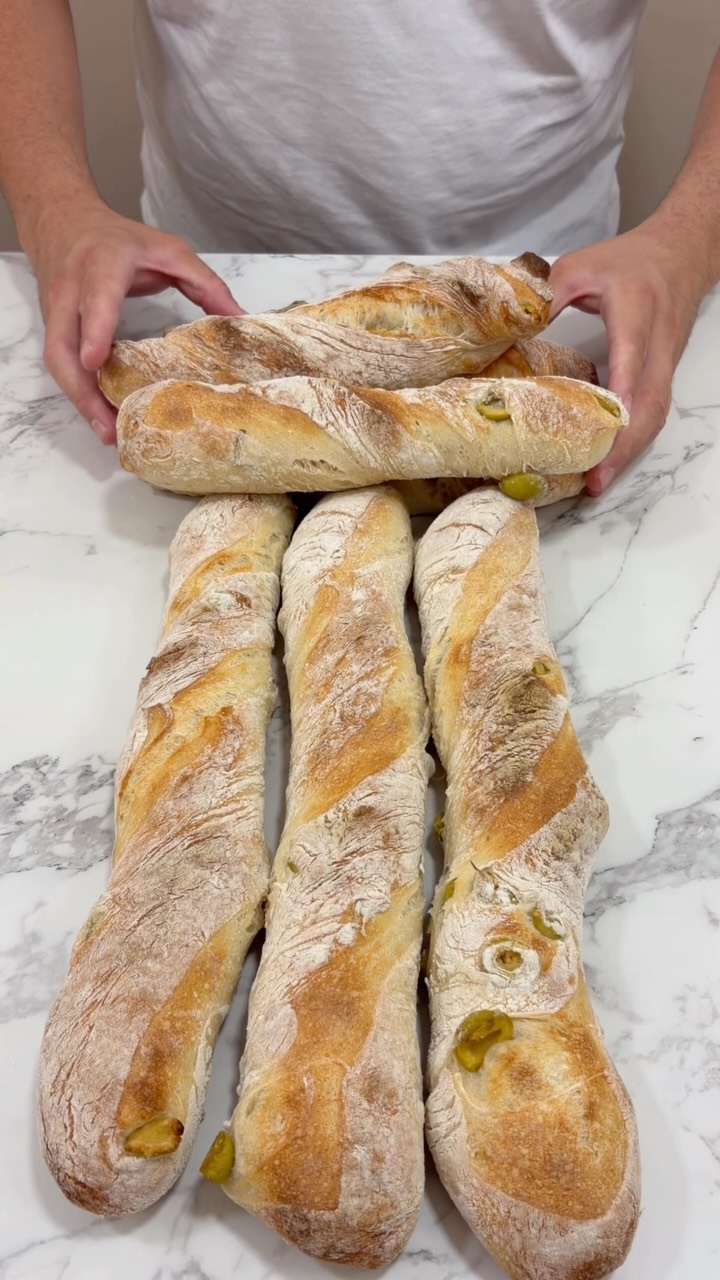
Olive and Rosemary Bread
Dive into the irresistible flavors of homemade Olive and Rosemary Bread! This aromatic loaf combines briny olives and fragrant rosemary, creating a heavenly blend that’s perfect for any meal. With a simple kneading technique and a dash of olive oil, you’ll whip up a warm, crusty delight that will have everyone coming back for seconds!
Prep
15
min
Cook
30
min
Serves
4
people
Level
intermediate
📝 Ingredients
Serves 4🥬Fresh Produce(1)
- 725 gramos de agua (25.6 oz)
🫙Pantry Staples(3)
- 1 kg de harina de fuerza (8 cup)
- 3 gramos de levadura fresca (0.11 oz)
- una cucharada de aceite de oliva (15 ml)
🧂Spices & Seasonings(2)
- romero fresco
- 23 gramos de sal (0.81 oz)
🍯Sauces & Condiments(1)
- aceitunas
Nutrition (per serving)
Calories
957
Protein
25g
Carbs
191g
Fat
7g
👨🍳 Instructions
- 1
In a bowl, combine 1 kg of strong flour, 23 grams of salt, 3 grams of fresh yeast, 725 grams of water, and one tablespoon of olive oil. Mix well.
- 2
Cover and let it rest for half an hour at room temperature.
- 3
After half an hour, fold the dough with a spoon for one minute, cover again, and let it rest for another 30 minutes.
- 4
After 30 minutes, add the olives and fresh rosemary. Fold the dough again with your hands.
- 5
Cover the dough tightly and let it rest for one hour at room temperature and then 48 hours in the refrigerator.
- 6
After 48 hours, place the dough on a floured surface and cut elongated pieces, twisting the dough.
- 7
Place them on a baking tray and bake at the specified temperature.
💡 Pro Tips
- ✓Hydrate your dough to 72.5% (725g water per 1kg flour) because this high hydration creates open crumb structure and allows gluten to fully develop during the 48-hour cold fermentation without requiring intensive kneading.ingredient72.5% hydration ratio
- ✓Add olives and rosemary after the second 30-minute rest (not during initial mix) because incorporating them after gluten development prevents their oils and moisture from interfering with gluten strand formation and hydration balance.timingAdd at 1-hour mark, post-gluten development
- ✓Cold ferment for exactly 48 hours at 2-4°C because extended cold fermentation increases acetic acid production by 30-40%, enhancing flavor complexity while the low temperature keeps yeast dormant (fermentation rate drops to ~10% of room temp).timing48 hours at 2-4°C
- ✓Use only 3 grams of fresh yeast (0.3% of flour weight) for this dough because the 48-hour bulk fermentation relies on slow, controlled fermentation; higher yeast levels would create excessive CO2 and cause over-proofing before baking.ingredient0.3% yeast ratio
- ✓Bake at 475°F (245°C) for 25-28 minutes because this temperature creates Maillard browning on the crust while the interior reaches 205-210°F internal temp, where gluten sets and residual yeast dies off (fermentation stops above 140°F).technique245°C / 205-210°F internal temp
Share this recipe
Prep
15
min
Cook
30
min
Serves
4
people
Level
intermediate
Share this recipe
Olive and Rosemary Bread
Dive into the irresistible flavors of homemade Olive and Rosemary Bread! This aromatic loaf combines briny olives and fragrant rosemary, creating a heavenly blend that’s perfect for any meal. With a simple kneading technique and a dash of olive oil, you’ll whip up a warm, crusty delight that will have everyone coming back for seconds!
📝 Ingredients
Serves 4🥬Fresh Produce(1)
- 725 gramos de agua (25.6 oz)
🫙Pantry Staples(3)
- 1 kg de harina de fuerza (8 cup)
- 3 gramos de levadura fresca (0.11 oz)
- una cucharada de aceite de oliva (15 ml)
🧂Spices & Seasonings(2)
- romero fresco
- 23 gramos de sal (0.81 oz)
🍯Sauces & Condiments(1)
- aceitunas
Nutrition (per serving)
Calories
957
Protein
25g
Carbs
191g
Fat
7g
👨🍳 Instructions
- 1
In a bowl, combine 1 kg of strong flour, 23 grams of salt, 3 grams of fresh yeast, 725 grams of water, and one tablespoon of olive oil. Mix well.
- 2
Cover and let it rest for half an hour at room temperature.
- 3
After half an hour, fold the dough with a spoon for one minute, cover again, and let it rest for another 30 minutes.
- 4
After 30 minutes, add the olives and fresh rosemary. Fold the dough again with your hands.
- 5
Cover the dough tightly and let it rest for one hour at room temperature and then 48 hours in the refrigerator.
- 6
After 48 hours, place the dough on a floured surface and cut elongated pieces, twisting the dough.
- 7
Place them on a baking tray and bake at the specified temperature.
💡 Pro Tips
- ✓Hydrate your dough to 72.5% (725g water per 1kg flour) because this high hydration creates open crumb structure and allows gluten to fully develop during the 48-hour cold fermentation without requiring intensive kneading.ingredient72.5% hydration ratio
- ✓Add olives and rosemary after the second 30-minute rest (not during initial mix) because incorporating them after gluten development prevents their oils and moisture from interfering with gluten strand formation and hydration balance.timingAdd at 1-hour mark, post-gluten development
- ✓Cold ferment for exactly 48 hours at 2-4°C because extended cold fermentation increases acetic acid production by 30-40%, enhancing flavor complexity while the low temperature keeps yeast dormant (fermentation rate drops to ~10% of room temp).timing48 hours at 2-4°C
- ✓Use only 3 grams of fresh yeast (0.3% of flour weight) for this dough because the 48-hour bulk fermentation relies on slow, controlled fermentation; higher yeast levels would create excessive CO2 and cause over-proofing before baking.ingredient0.3% yeast ratio
- ✓Bake at 475°F (245°C) for 25-28 minutes because this temperature creates Maillard browning on the crust while the interior reaches 205-210°F internal temp, where gluten sets and residual yeast dies off (fermentation stops above 140°F).technique245°C / 205-210°F internal temp