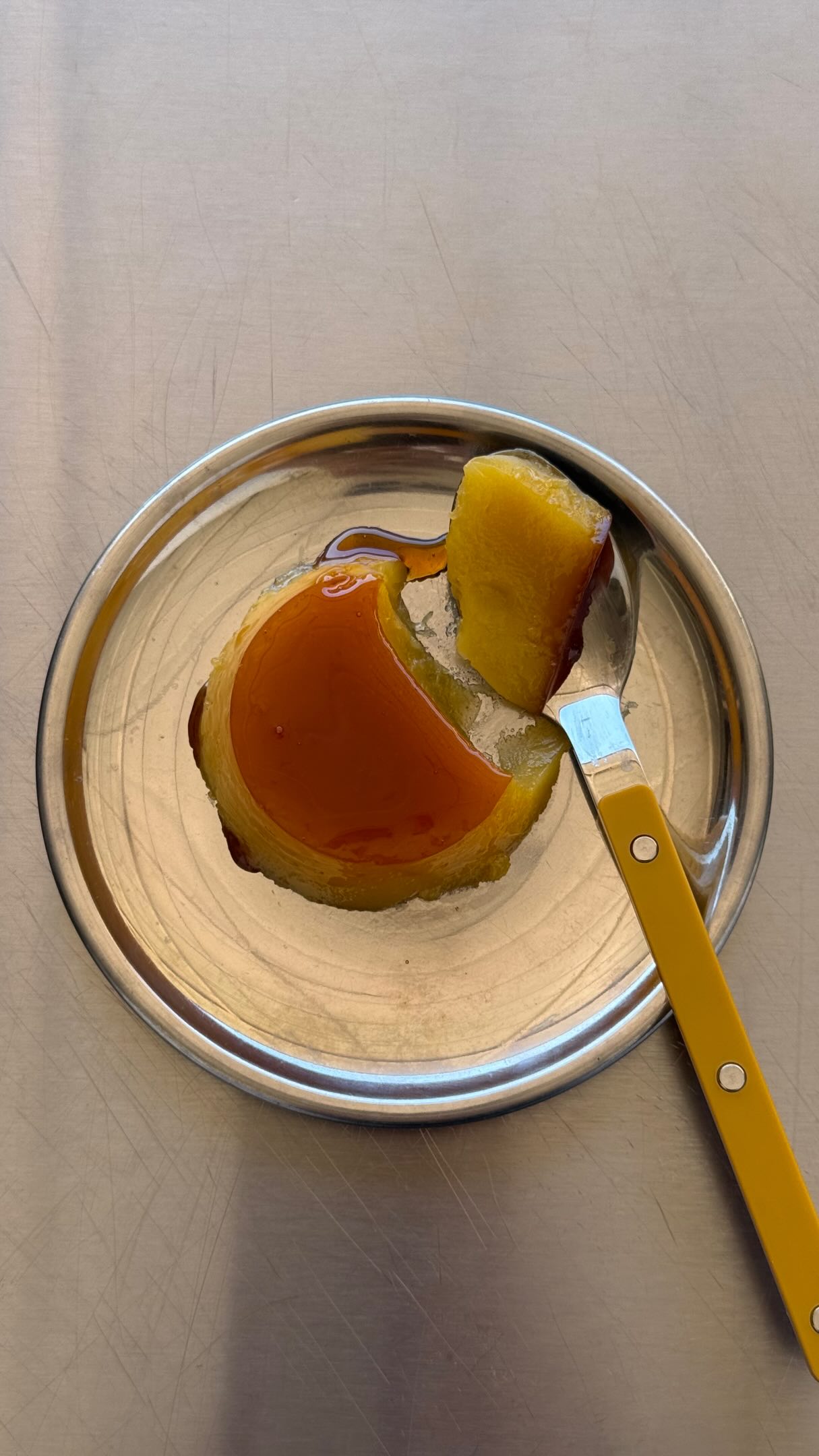
16th-century Jerez convent nuns invented this egg-yolk custard to use leftovers from clarifying wine with egg whites at local bodegas.
Tocinillo de Cielo
Dive into the delightful world of Tocinillo de Cielo, a heavenly dessert hailing from Jerez! This luscious treat boasts a rich, custardy texture primarily crafted from egg yolks and sugar, making it irresistibly smooth and sweet. With a touch of lemon zest for brightness, this flan-like indulgence is sure to satisfy your sweet tooth and impress your guests!
Prep
15
min
Cook
90
min
Serves
6
people
Level
intermediate
The Story
This egg-yolk extravagance traces back to 16th-century Jerez, Spain, where convent nuns—stuck with surplus yolks after wineries used egg whites to clarify sherry—invented tocinillo de cielo, literally 'heaven's bacon,' a nickname mocking its fatty richness; centuries later, Mexican and Filipino colonies adopted the technique, proving Spain's imperial reach stretched further than any conquistador's sword ever could.
Regional Twist
In Asturias, they ditch the plain vanilla essence and add orange zest to the caramel, while some Galician bakers swap a portion of the sugar for honey, giving this yolk-heavy dessert a floral, boozy edge entirely unlike Jerez's austere original.
📝 Ingredients
Serves 6🥬Fresh Produce(3)
- chorrito de limónoptional
- 60ml de agua (2.03 fl oz)
- 250ml de agua (8.45 fl oz)
🥛Dairy & Eggs(1)
- 8 yemas
🫙Pantry Staples(3)
- 100gr de azúcar blanco (0.5 cup)
- 250gr de azúcar (1.25 cup)
- pizca de esencia de vainilla (opcional)optional
Nutrition (per serving)
Calories
299
Protein
4g
Carbs
59g
Fat
6g
👨🍳 Instructions
- 1
Start by preparing the caramel: combine sugar, water, a splash of lemon, and optionally, a touch of vanilla. Cover the base of the molds and let it cool.
- 2
Meanwhile, prepare a syrup by cooking equal parts sugar and water until it reaches about 105-110 degrees Celsius. If you don't have a thermometer, use a spoon to check that it falls in a fine, continuous thread.
- 3
Lightly beat the egg yolks, trying not to incorporate too much air. Gradually add the syrup while stirring continuously.
- 4
Strain the mixture and pour it into the molds.
- 5
To cook in a water bath, place a cloth at the bottom of a baking dish, place the molds on top, and add hot water to cover about half of the molds.
- 6
Bake at 150 degrees Celsius for 75-90 minutes, depending on the size and thickness of the molds.
💡 Pro Tips
- ✓Cook your syrup to exactly 105-110°C (soft-ball stage) before adding to yolks because this temperature denatures proteins enough to create a stable emulsion without cooking the yolks scrambled, which occurs above 65°C.timing105-110°C
- ✓Add syrup to yolks in a thin, continuous stream while stirring rather than all at once, because the gradual heat transfer allows the emulsion to form around fat molecules without thermal shock breaking the mixture.techniqueThin stream addition
- ✓Use a cloth at the bottom of your water bath baking dish to prevent direct heat conduction and keep water bath temperature at 65-70°C, which ensures gentle, even cooking and prevents rubbery, separated custard that results from temperatures above 75°C.equipment65-70°C water bath
- ✓Strain the yolk mixture through fine mesh before baking to remove any cooked egg strands or foam, which would create grainy texture as trapped air bubbles expand and rupture during the 75-90 minute bake.techniqueFine mesh straining
- ✓Add lemon juice to your caramel (100g sugar/60ml water ratio) because the citric acid inverts 10-15% of sucrose into glucose and fructose, preventing crystallization and creating a smooth, glossy coating.ingredientCitric acid inversion: 10-15%
Share this recipe
Prep
15
min
Cook
90
min
Serves
6
people
Level
intermediate
Share this recipe
16th-century Jerez convent nuns invented this egg-yolk custard to use leftovers from clarifying wine with egg whites at local bodegas.
Tocinillo de Cielo
Dive into the delightful world of Tocinillo de Cielo, a heavenly dessert hailing from Jerez! This luscious treat boasts a rich, custardy texture primarily crafted from egg yolks and sugar, making it irresistibly smooth and sweet. With a touch of lemon zest for brightness, this flan-like indulgence is sure to satisfy your sweet tooth and impress your guests!
The Story
This egg-yolk extravagance traces back to 16th-century Jerez, Spain, where convent nuns—stuck with surplus yolks after wineries used egg whites to clarify sherry—invented tocinillo de cielo, literally 'heaven's bacon,' a nickname mocking its fatty richness; centuries later, Mexican and Filipino colonies adopted the technique, proving Spain's imperial reach stretched further than any conquistador's sword ever could.
Regional Twist
In Asturias, they ditch the plain vanilla essence and add orange zest to the caramel, while some Galician bakers swap a portion of the sugar for honey, giving this yolk-heavy dessert a floral, boozy edge entirely unlike Jerez's austere original.
📝 Ingredients
Serves 6🥬Fresh Produce(3)
- chorrito de limónoptional
- 60ml de agua (2.03 fl oz)
- 250ml de agua (8.45 fl oz)
🥛Dairy & Eggs(1)
- 8 yemas
🫙Pantry Staples(3)
- 100gr de azúcar blanco (0.5 cup)
- 250gr de azúcar (1.25 cup)
- pizca de esencia de vainilla (opcional)optional
Nutrition (per serving)
Calories
299
Protein
4g
Carbs
59g
Fat
6g
👨🍳 Instructions
- 1
Start by preparing the caramel: combine sugar, water, a splash of lemon, and optionally, a touch of vanilla. Cover the base of the molds and let it cool.
- 2
Meanwhile, prepare a syrup by cooking equal parts sugar and water until it reaches about 105-110 degrees Celsius. If you don't have a thermometer, use a spoon to check that it falls in a fine, continuous thread.
- 3
Lightly beat the egg yolks, trying not to incorporate too much air. Gradually add the syrup while stirring continuously.
- 4
Strain the mixture and pour it into the molds.
- 5
To cook in a water bath, place a cloth at the bottom of a baking dish, place the molds on top, and add hot water to cover about half of the molds.
- 6
Bake at 150 degrees Celsius for 75-90 minutes, depending on the size and thickness of the molds.
💡 Pro Tips
- ✓Cook your syrup to exactly 105-110°C (soft-ball stage) before adding to yolks because this temperature denatures proteins enough to create a stable emulsion without cooking the yolks scrambled, which occurs above 65°C.timing105-110°C
- ✓Add syrup to yolks in a thin, continuous stream while stirring rather than all at once, because the gradual heat transfer allows the emulsion to form around fat molecules without thermal shock breaking the mixture.techniqueThin stream addition
- ✓Use a cloth at the bottom of your water bath baking dish to prevent direct heat conduction and keep water bath temperature at 65-70°C, which ensures gentle, even cooking and prevents rubbery, separated custard that results from temperatures above 75°C.equipment65-70°C water bath
- ✓Strain the yolk mixture through fine mesh before baking to remove any cooked egg strands or foam, which would create grainy texture as trapped air bubbles expand and rupture during the 75-90 minute bake.techniqueFine mesh straining
- ✓Add lemon juice to your caramel (100g sugar/60ml water ratio) because the citric acid inverts 10-15% of sucrose into glucose and fructose, preventing crystallization and creating a smooth, glossy coating.ingredientCitric acid inversion: 10-15%