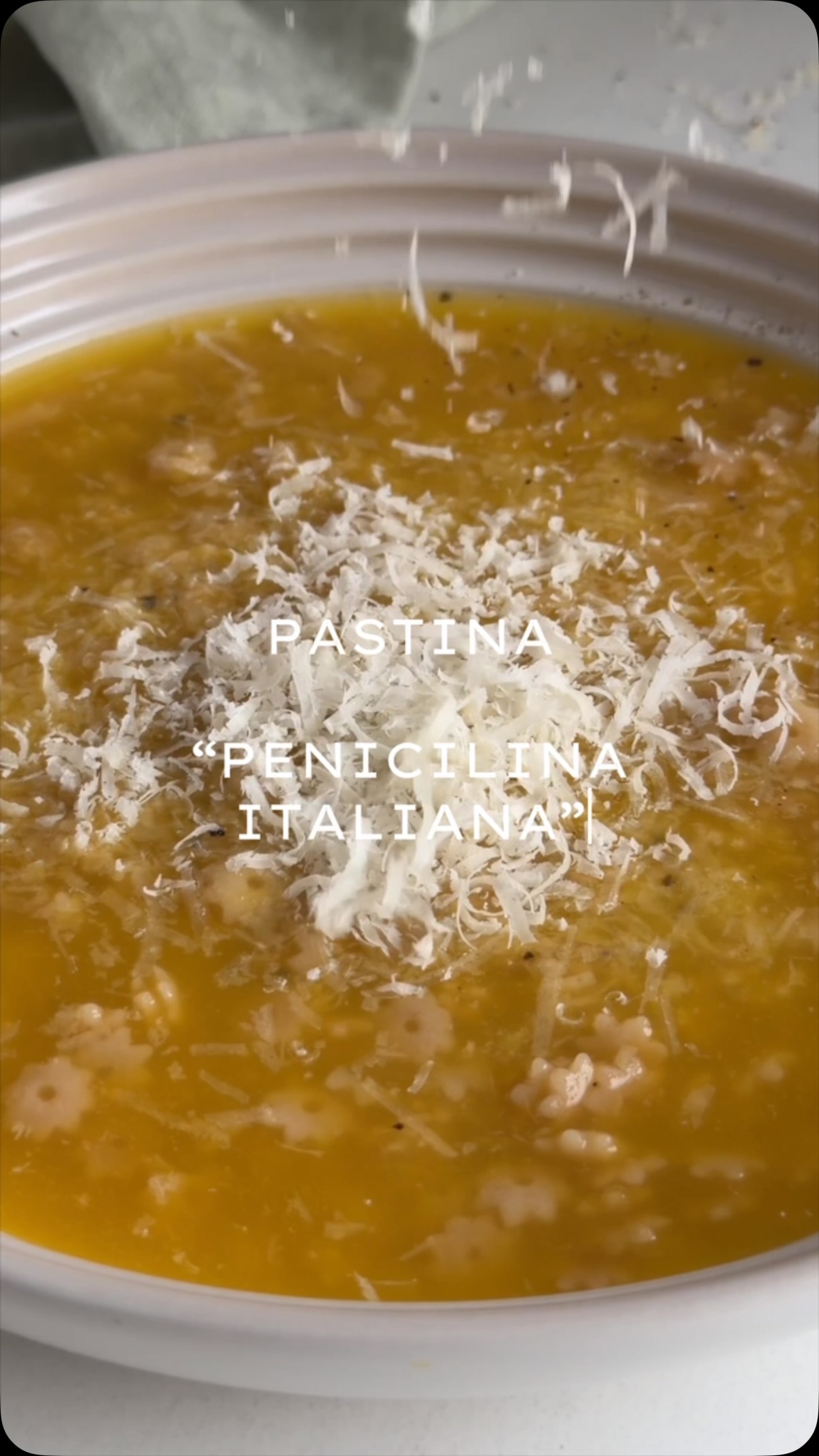
Italian grandmothers have spooned tiny star pasta into sick kids since the 1900s, calling it penicillin decades before antibiotics existed.
Pastina 'Italian Penicillin'
Cozy up with a bowl of Pastina—often affectionately dubbed "Italian penicillin"! This heartwarming soup features tender pastina pasta, aromatic garlic, and a sprinkle of fresh parsley to elevate your spirits and soothe your soul. Perfect for those chilly days or when you need a little extra comfort, this delightful dish is sure to become a go-to favorite!
Prep
15
min
Cook
30
min
Serves
4
people
Level
beginner
The Story
This isn't fusion at all, it's pure Neapolitan grandmother wisdom from the early 1900s, when Italian immigrants in New York needed cheap comfort food during brutal winters and flu seasons, so they blitzed humble vegetables into broth and dumped in tiny star pasta—essentially inventing a Mediterranean answer to Jewish chicken soup decades before anyone called either dish medicine.
Regional Twist
In Naples itself, cooks ditch the blended vegetable method entirely and instead toss whole peeled tomatoes into the simmering broth alongside the celery, creating a rustic, chunkier version that tastes like a lazy Sunday ragù had a baby with chicken soup.
📝 Ingredients
Serves 4🥬Fresh Produce(5)
- 3 peeled carrots in pieces
- 4 to 6 large celery stalks in pieces
- 1 clove of garlic
- ½ yellow or white onion in pieces
- Chopped parsley for serving
🥩Meat & Seafood(1)
- 6 to 7 cups of water or chicken broth (or more to adjust consistency) (1.44-1.68 L)
🥛Dairy & Eggs(2)
- Grated parmesan cheese for serving
- 1 piece of parmesan rind (optional, if you have leftover it gives a delicious flavor)optional
🧂Spices & Seasonings(1)
- Salt and pepper
📦Other(1)
- 1½ cups of pastina (star-shaped pasta) (360 ml)
Nutrition (per serving)
Calories
272
Protein
15g
Carbs
40g
Fat
5g
👨🍳 Instructions
- 1
In a pot, add the water or chicken broth, onion, carrots, celery, garlic, and the parmesan rind if you have it. Cover and let it boil for 25 minutes, until the carrots are tender.
- 2
Remove the parmesan rind and blend the vegetables with the broth. Taste and adjust seasoning, adding more broth if it has evaporated too much and feels too thick.
- 3
In another pot, cook the pastina in boiling salted water according to the package instructions (if you are going to save it for later, add a little oil so it doesn't stick).
- 4
Serve some pastina in a bowl and pour the broth over it. Finish with freshly grated parmesan, parsley, and pepper.
💡 Pro Tips
- ✓Simmer the vegetable broth at 185-190°F (gentle bubble every 2-3 seconds) rather than a rolling boil to prevent over-evaporation and keep the broth clear; a vigorous boil can reduce liquid by 30-40% in 25 minutes and cloud the soup with starch.technique185-190°F, prevents 30-40% evaporation loss
- ✓Add the Parmesan rind during the initial 25-minute simmer, not after blending, so the casein proteins and fats emulsify into the broth; removing before blending prevents the rind from breaking into grainy particles during puréeing.timingAdd at start, remove before blending
- ✓Blend the vegetables with broth at a 1:2 ratio (vegetables to liquid) to achieve 85-90% smooth purée while maintaining body; this viscosity coats the pastina and carries flavor without becoming wallpaper paste or soup.technique1:2 vegetable-to-broth ratio
- ✓Cook pastina separately in heavily salted water (2% salinity) for only 6-7 minutes instead of package time, then drain without rinsing—this leaves a 2-3mm starch layer on each pasta grain that absorbs broth flavors during the final 2-minute rest in the bowl.timing2% salinity, 6-7 minutes, 2-minute rest in bowl
- ✓Toss cooked pastina with 1 teaspoon neutral oil per cup if making ahead, as the oil coats starch granules and prevents gelatinization; gelatinized pastina will clump into a paste when the hot broth is poured over it later.ingredient1 teaspoon oil per cup of cooked pastina
Share this recipe
Prep
15
min
Cook
30
min
Serves
4
people
Level
beginner
Share this recipe
Italian grandmothers have spooned tiny star pasta into sick kids since the 1900s, calling it penicillin decades before antibiotics existed.
Pastina 'Italian Penicillin'
Cozy up with a bowl of Pastina—often affectionately dubbed "Italian penicillin"! This heartwarming soup features tender pastina pasta, aromatic garlic, and a sprinkle of fresh parsley to elevate your spirits and soothe your soul. Perfect for those chilly days or when you need a little extra comfort, this delightful dish is sure to become a go-to favorite!
The Story
This isn't fusion at all, it's pure Neapolitan grandmother wisdom from the early 1900s, when Italian immigrants in New York needed cheap comfort food during brutal winters and flu seasons, so they blitzed humble vegetables into broth and dumped in tiny star pasta—essentially inventing a Mediterranean answer to Jewish chicken soup decades before anyone called either dish medicine.
Regional Twist
In Naples itself, cooks ditch the blended vegetable method entirely and instead toss whole peeled tomatoes into the simmering broth alongside the celery, creating a rustic, chunkier version that tastes like a lazy Sunday ragù had a baby with chicken soup.
📝 Ingredients
Serves 4🥬Fresh Produce(5)
- 3 peeled carrots in pieces
- 4 to 6 large celery stalks in pieces
- 1 clove of garlic
- ½ yellow or white onion in pieces
- Chopped parsley for serving
🥩Meat & Seafood(1)
- 6 to 7 cups of water or chicken broth (or more to adjust consistency) (1.44-1.68 L)
🥛Dairy & Eggs(2)
- Grated parmesan cheese for serving
- 1 piece of parmesan rind (optional, if you have leftover it gives a delicious flavor)optional
🧂Spices & Seasonings(1)
- Salt and pepper
📦Other(1)
- 1½ cups of pastina (star-shaped pasta) (360 ml)
Nutrition (per serving)
Calories
272
Protein
15g
Carbs
40g
Fat
5g
👨🍳 Instructions
- 1
In a pot, add the water or chicken broth, onion, carrots, celery, garlic, and the parmesan rind if you have it. Cover and let it boil for 25 minutes, until the carrots are tender.
- 2
Remove the parmesan rind and blend the vegetables with the broth. Taste and adjust seasoning, adding more broth if it has evaporated too much and feels too thick.
- 3
In another pot, cook the pastina in boiling salted water according to the package instructions (if you are going to save it for later, add a little oil so it doesn't stick).
- 4
Serve some pastina in a bowl and pour the broth over it. Finish with freshly grated parmesan, parsley, and pepper.
💡 Pro Tips
- ✓Simmer the vegetable broth at 185-190°F (gentle bubble every 2-3 seconds) rather than a rolling boil to prevent over-evaporation and keep the broth clear; a vigorous boil can reduce liquid by 30-40% in 25 minutes and cloud the soup with starch.technique185-190°F, prevents 30-40% evaporation loss
- ✓Add the Parmesan rind during the initial 25-minute simmer, not after blending, so the casein proteins and fats emulsify into the broth; removing before blending prevents the rind from breaking into grainy particles during puréeing.timingAdd at start, remove before blending
- ✓Blend the vegetables with broth at a 1:2 ratio (vegetables to liquid) to achieve 85-90% smooth purée while maintaining body; this viscosity coats the pastina and carries flavor without becoming wallpaper paste or soup.technique1:2 vegetable-to-broth ratio
- ✓Cook pastina separately in heavily salted water (2% salinity) for only 6-7 minutes instead of package time, then drain without rinsing—this leaves a 2-3mm starch layer on each pasta grain that absorbs broth flavors during the final 2-minute rest in the bowl.timing2% salinity, 6-7 minutes, 2-minute rest in bowl
- ✓Toss cooked pastina with 1 teaspoon neutral oil per cup if making ahead, as the oil coats starch granules and prevents gelatinization; gelatinized pastina will clump into a paste when the hot broth is poured over it later.ingredient1 teaspoon oil per cup of cooked pastina