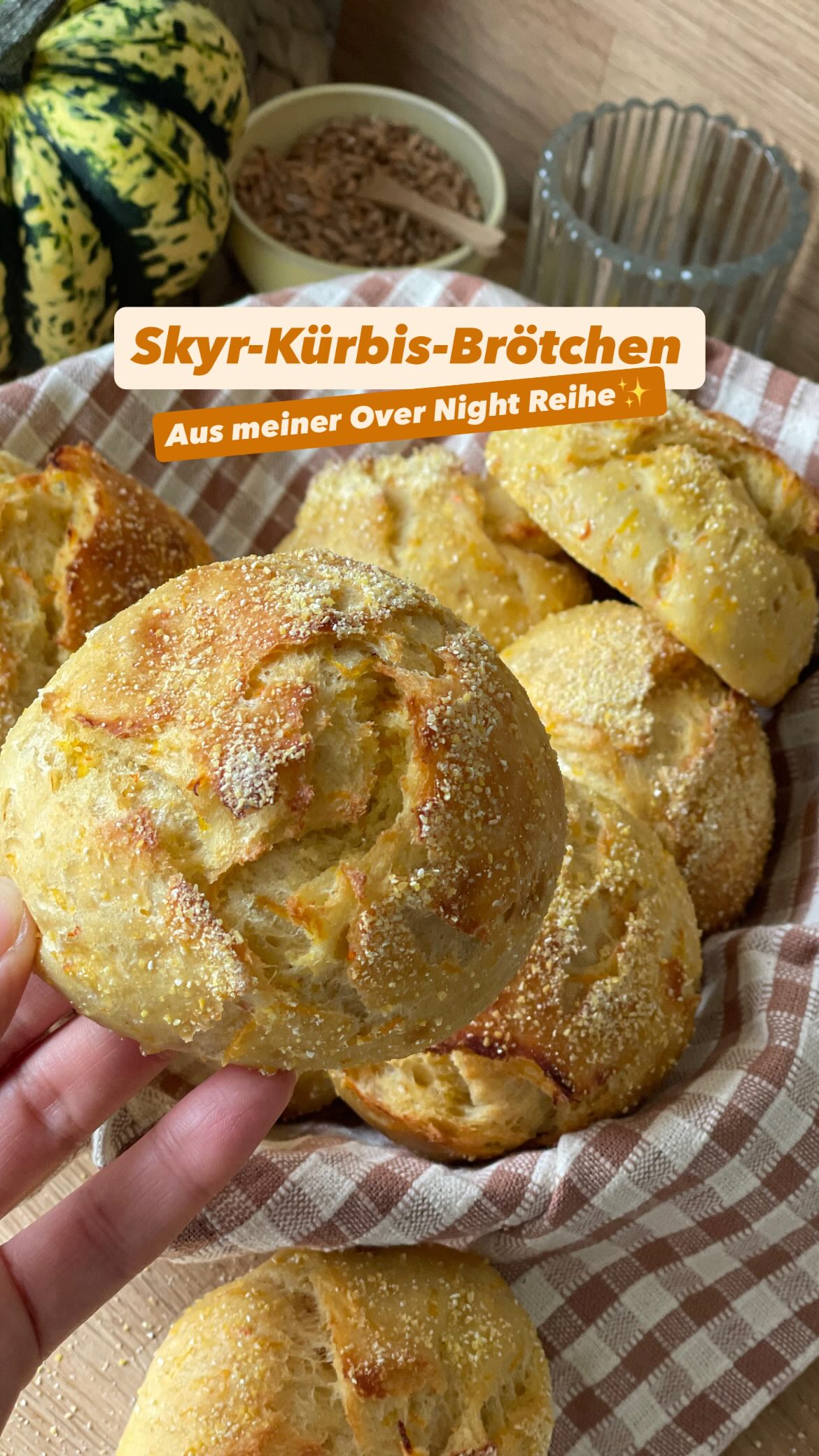
German bakers fold grated raw pumpkin and tangy skyr into dough, then chill it overnight—slow fermentation builds fluffiness without a single egg.
Fluffy Overnight Rolls with Grated Pumpkin and Skyr
Get ready to embrace the flavors of fall with these delightful fluffy overnight rolls, featuring the warm essence of grated pumpkin and the creamy goodness of Skyr! Perfect for lazy mornings, these rolls rise to perfection overnight, resulting in a tender, melt-in-your-mouth treat that pairs beautifully with your favorite spreads. Whip up a batch and fill your kitchen with the irresistible aroma of autumn!
Prep
15
min
Cook
30
min
Serves
10
people
Level
intermediate
The Story
Right, this one's proper German cunning—Icelandic skyr sneaking into Swabian bread dough, a Viking-meets-Dinkelmehl collision nobody asked for but somehow works, likely cooked up by health-conscious Berlin bakers in the 2010s who decided ancient grains needed a Nordic dairy bodyguard, proving that even bread recipes can have passports stamped from two completely unrelated corners of Europe.
Regional Twist
In Austria's Salzburg region, bakers swap the plain Skyr for a mix with quark and add grated carrot alongside the pumpkin, creating a sweeter, denser roll that pairs with their beloved Speck instead of German cold cuts.
📝 Ingredients
Serves 10🥬Fresh Produce(1)
- 300–320 ml kaltes Wasser (10.1 fl oz)
🫙Pantry Staples(4)
- 4 g frische Hefe (0.14 oz)
- 1 TL Honig (5 ml)
- 300 g Dinkelmehl Type 630 (2.4 cup)
- 200 g Dinkelmehl Type 1050 (1.6 cup)
🧂Spices & Seasonings(1)
- 2 TL Salz (ca. 7 Gramm) (10 ml)
📦Other(2)
- 100 g fein geraspelter Kürbis (3.53 oz)Hokkaido pumpkin is particularly suitable
- 150 g Skyr natur (5.29 oz)
Nutrition (per serving)
Calories
184
Protein
8g
Carbs
36g
Fat
1g
👨🍳 Instructions
- 1
In the evening, prepare by finely grating the pumpkin. If the pumpkin is very watery, lightly squeeze it to remove excess liquid without drying it completely.
- 2
Combine flour, Skyr, grated pumpkin, and salt in a bowl.
- 3
Dissolve yeast with honey in water and add to the other ingredients.
- 4
Initially add 300 ml of cold water and mix everything into a soft, slightly sticky dough. If the dough feels too firm, gradually add the remaining 20 ml of water.
- 5
Place the dough in an airtight container and put it directly in the refrigerator for 12–18 hours.
- 6
In the morning, take the dough out of the refrigerator and place it on a lightly floured or semolina-dusted baking sheet.
- 7
Using wet hands or a dough scraper, divide into 9–10 portions without kneading too vigorously to retain gas in the dough.
- 8
Optionally sprinkle with pumpkin seeds.
- 9
Bake in a preheated oven at 220 °C (428 °F). For steam, add some hot water to a heatproof container when placing the rolls in the oven.
- 10
After about 10 minutes, reduce the temperature to 210 °C (410 °F) and bake for another 15–20 minutes until the rolls are golden brown and crispy.
💡 Pro Tips
- ✓Squeeze pumpkin to 45-50% of its original moisture content, removing excess water that would hydrate the flour beyond the recipe's 65% hydration ratio and create a slack, unstructured dough.ingredient45-50% moisture retention
- ✓Use water at 4-8°C (refrigerated) because cold temperatures slow yeast fermentation to 12-18 hours, allowing long-chain fermentation that develops flavor compounds (organic acids, esters) while minimizing gas production that would collapse during overnight rest.technique4-8°C water temperature
- ✓Cold-retard at 3-4°C for exactly 12-18 hours; temperatures below 3°C halt fermentation entirely, while above 5°C risks over-proofing and CO₂ loss, reducing final oven spring by up to 35%.timing3-4°C for 12-18 hours
- ✓Divide dough with wet hands using a bench scraper rather than kneading—this preserves 60-70% of dissolved CO₂ bubbles that formed during cold fermentation, which will expand dramatically when oven heat denatures gluten proteins around 65°C.techniquePreserve 60-70% CO₂
- ✓The 4g fresh yeast in cold water creates a 1:75 yeast-to-flour ratio, ideal for slow fermentation because low yeast levels exhaust glucose first, forcing cells into amino acid catabolism that produces complex flavor without over-proofing the dough.ingredient1:75 yeast ratio
Share this recipe
Prep
15
min
Cook
30
min
Serves
10
people
Level
intermediate
Share this recipe
German bakers fold grated raw pumpkin and tangy skyr into dough, then chill it overnight—slow fermentation builds fluffiness without a single egg.
Fluffy Overnight Rolls with Grated Pumpkin and Skyr
Get ready to embrace the flavors of fall with these delightful fluffy overnight rolls, featuring the warm essence of grated pumpkin and the creamy goodness of Skyr! Perfect for lazy mornings, these rolls rise to perfection overnight, resulting in a tender, melt-in-your-mouth treat that pairs beautifully with your favorite spreads. Whip up a batch and fill your kitchen with the irresistible aroma of autumn!
The Story
Right, this one's proper German cunning—Icelandic skyr sneaking into Swabian bread dough, a Viking-meets-Dinkelmehl collision nobody asked for but somehow works, likely cooked up by health-conscious Berlin bakers in the 2010s who decided ancient grains needed a Nordic dairy bodyguard, proving that even bread recipes can have passports stamped from two completely unrelated corners of Europe.
Regional Twist
In Austria's Salzburg region, bakers swap the plain Skyr for a mix with quark and add grated carrot alongside the pumpkin, creating a sweeter, denser roll that pairs with their beloved Speck instead of German cold cuts.
📝 Ingredients
Serves 10🥬Fresh Produce(1)
- 300–320 ml kaltes Wasser (10.1 fl oz)
🫙Pantry Staples(4)
- 4 g frische Hefe (0.14 oz)
- 1 TL Honig (5 ml)
- 300 g Dinkelmehl Type 630 (2.4 cup)
- 200 g Dinkelmehl Type 1050 (1.6 cup)
🧂Spices & Seasonings(1)
- 2 TL Salz (ca. 7 Gramm) (10 ml)
📦Other(2)
- 100 g fein geraspelter Kürbis (3.53 oz)Hokkaido pumpkin is particularly suitable
- 150 g Skyr natur (5.29 oz)
Nutrition (per serving)
Calories
184
Protein
8g
Carbs
36g
Fat
1g
👨🍳 Instructions
- 1
In the evening, prepare by finely grating the pumpkin. If the pumpkin is very watery, lightly squeeze it to remove excess liquid without drying it completely.
- 2
Combine flour, Skyr, grated pumpkin, and salt in a bowl.
- 3
Dissolve yeast with honey in water and add to the other ingredients.
- 4
Initially add 300 ml of cold water and mix everything into a soft, slightly sticky dough. If the dough feels too firm, gradually add the remaining 20 ml of water.
- 5
Place the dough in an airtight container and put it directly in the refrigerator for 12–18 hours.
- 6
In the morning, take the dough out of the refrigerator and place it on a lightly floured or semolina-dusted baking sheet.
- 7
Using wet hands or a dough scraper, divide into 9–10 portions without kneading too vigorously to retain gas in the dough.
- 8
Optionally sprinkle with pumpkin seeds.
- 9
Bake in a preheated oven at 220 °C (428 °F). For steam, add some hot water to a heatproof container when placing the rolls in the oven.
- 10
After about 10 minutes, reduce the temperature to 210 °C (410 °F) and bake for another 15–20 minutes until the rolls are golden brown and crispy.
💡 Pro Tips
- ✓Squeeze pumpkin to 45-50% of its original moisture content, removing excess water that would hydrate the flour beyond the recipe's 65% hydration ratio and create a slack, unstructured dough.ingredient45-50% moisture retention
- ✓Use water at 4-8°C (refrigerated) because cold temperatures slow yeast fermentation to 12-18 hours, allowing long-chain fermentation that develops flavor compounds (organic acids, esters) while minimizing gas production that would collapse during overnight rest.technique4-8°C water temperature
- ✓Cold-retard at 3-4°C for exactly 12-18 hours; temperatures below 3°C halt fermentation entirely, while above 5°C risks over-proofing and CO₂ loss, reducing final oven spring by up to 35%.timing3-4°C for 12-18 hours
- ✓Divide dough with wet hands using a bench scraper rather than kneading—this preserves 60-70% of dissolved CO₂ bubbles that formed during cold fermentation, which will expand dramatically when oven heat denatures gluten proteins around 65°C.techniquePreserve 60-70% CO₂
- ✓The 4g fresh yeast in cold water creates a 1:75 yeast-to-flour ratio, ideal for slow fermentation because low yeast levels exhaust glucose first, forcing cells into amino acid catabolism that produces complex flavor without over-proofing the dough.ingredient1:75 yeast ratio