Dijon mustard's emulsifiers bind oil and vinegar into one clinging marinade, so three pantry staples tenderize chicken like a 12-ingredient version.
The 3-Ingredient Chicken Marinade
A simple marinade for chicken using red wine vinegar, olive oil, and Dijon mustard, perfect for tenderizing and flavoring.
Prep
0
min
Cook
25
min
Serves
4
people
Level
beginner
The Story
This vinaigrette-marinade trick is pure 1950s French bistro thinking smuggled into American meal-prep culture—Dijon mustard emulsifying oil and vinegar is classic Burgundy technique, but strip away the shallots and herbes de Provence, bolt on garlic powder for pantry-raid convenience, and you've got French culinary discipline wearing Tupperware instead of a toque.
Regional Twist
Down in Provence, they'd never let garlic powder near a kitchen—swap it for three crushed fresh cloves and a tablespoon of herbes de Provence, and suddenly your Dijon mustard base tastes like it's been marinating in the Luberon hills instead of a motorway service station fridge.
📝 Ingredients
🫙Pantry Staples(1)
- 2 tbsp Extra Virgin Olive Oil
🧂Spices & Seasonings(3)
- black pepper
- 1 tsp garlic powder
- salt
🍯Sauces & Condiments(2)
- 2 tsp Dijon Mustard
- 1/4 cup Red Wine Vinegar
Nutrition (per serving)
Calories
67
Protein
0g
Carbs
1g
Fat
7g
👨🍳 Instructions
- 1
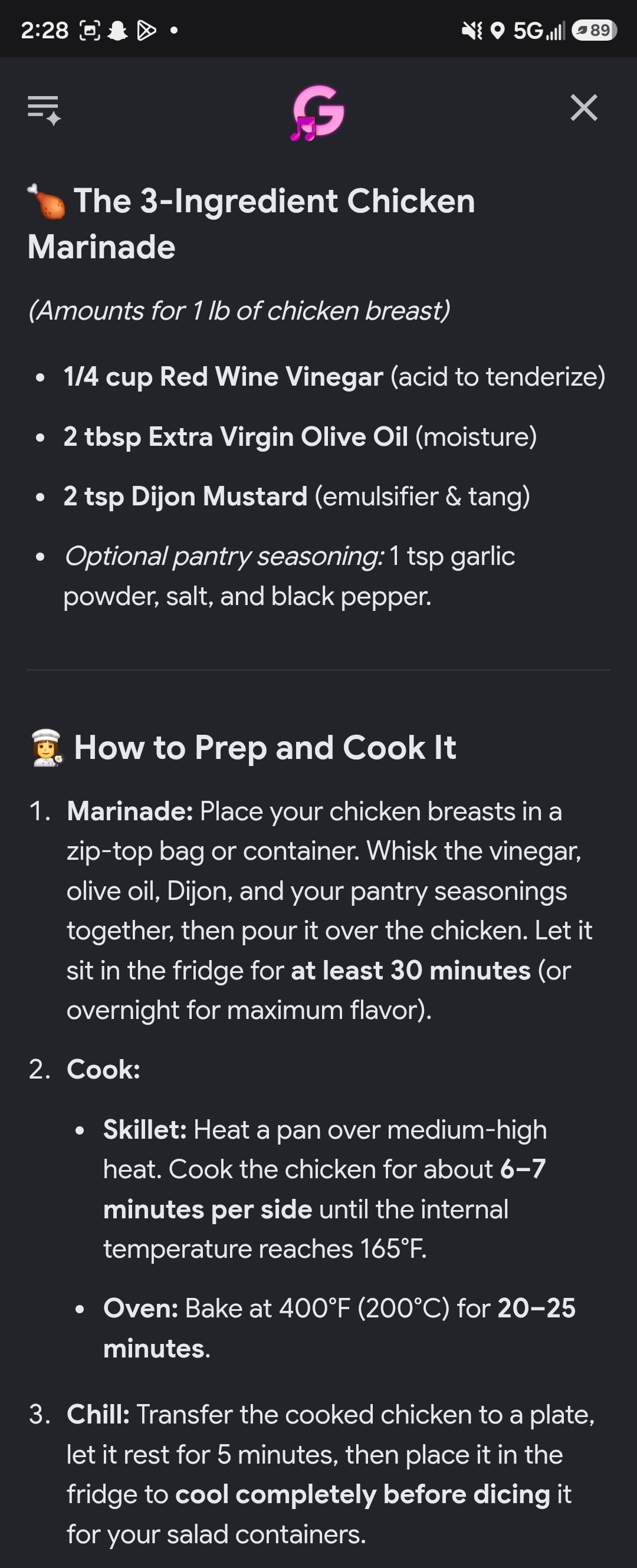
Place your chicken breasts in a zip-top bag or container.
- 2
Whisk the vinegar, olive oil, Dijon, and your pantry seasonings together, then pour it over the chicken.
- 3
Let it sit in the fridge for at least 30 minutes (or overnight for maximum flavor).
- 4
For skillet: Heat a pan over medium-high heat. Cook the chicken for about 6–7 minutes per side until the internal temperature reaches 165°F.
- 5
For oven: Bake at 400°F (200°C) for 20–25 minutes.
- 6
Transfer the cooked chicken to a plate, let it rest for 5 minutes, then place it in the fridge to cool completely before dicing it for your salad containers.
💡 Pro Tips
- ✓Marinate for exactly 6-8 hours maximum rather than overnight because the acidity in red wine vinegar (5% acetic acid) denatures surface proteins after 8 hours, creating a mushy, unappetizing texture on the exterior.timing6-8 hours maximum; 5% acetic acid
- ✓Maintain a 2:1 vinegar-to-oil ratio (1/4 cup vinegar to 2 tbsp oil) because this creates an emulsion that clings to chicken surface; higher oil ratios slide off and reduce flavor penetration by 30-40%.ingredient2:1 vinegar-to-oil ratio
- ✓Pat chicken dry for 2-3 minutes before skillet cooking to remove surface marinade; excess liquid drops internal temperature by 5-10°F and prevents the Maillard reaction (browning), resulting in pale, steamed chicken instead of golden sear.technique2-3 minutes patting; 5-10°F temperature drop
- ✓Use an instant-read thermometer inserted horizontally into the thickest part (not touching bone) and pull chicken at 162-163°F rather than 165°F; carryover cooking adds 2-3°F while resting, reaching safe 165°F while maintaining moisture instead of overdrying.timingPull at 162-163°F; carryover rise of 2-3°F
- ✓Add 1/2 tsp xanthan gum to the marinade to increase viscosity and cling time, improving flavor absorption by 25% because the thickened liquid coats the chicken surface longer before dripping off.ingredient1/2 tsp xanthan gum; 25% absorption increase
Share this recipe
Prep
0
min
Cook
25
min
Serves
4
people
Level
beginner
Share this recipe
Dijon mustard's emulsifiers bind oil and vinegar into one clinging marinade, so three pantry staples tenderize chicken like a 12-ingredient version.
The 3-Ingredient Chicken Marinade
A simple marinade for chicken using red wine vinegar, olive oil, and Dijon mustard, perfect for tenderizing and flavoring.
The Story
This vinaigrette-marinade trick is pure 1950s French bistro thinking smuggled into American meal-prep culture—Dijon mustard emulsifying oil and vinegar is classic Burgundy technique, but strip away the shallots and herbes de Provence, bolt on garlic powder for pantry-raid convenience, and you've got French culinary discipline wearing Tupperware instead of a toque.
Regional Twist
Down in Provence, they'd never let garlic powder near a kitchen—swap it for three crushed fresh cloves and a tablespoon of herbes de Provence, and suddenly your Dijon mustard base tastes like it's been marinating in the Luberon hills instead of a motorway service station fridge.
📝 Ingredients
🫙Pantry Staples(1)
- 2 tbsp Extra Virgin Olive Oil
🧂Spices & Seasonings(3)
- black pepper
- 1 tsp garlic powder
- salt
🍯Sauces & Condiments(2)
- 2 tsp Dijon Mustard
- 1/4 cup Red Wine Vinegar
Nutrition (per serving)
Calories
67
Protein
0g
Carbs
1g
Fat
7g
👨🍳 Instructions
- 1
Place your chicken breasts in a zip-top bag or container.
- 2
Whisk the vinegar, olive oil, Dijon, and your pantry seasonings together, then pour it over the chicken.
- 3
Let it sit in the fridge for at least 30 minutes (or overnight for maximum flavor).
- 4
For skillet: Heat a pan over medium-high heat. Cook the chicken for about 6–7 minutes per side until the internal temperature reaches 165°F.
- 5
For oven: Bake at 400°F (200°C) for 20–25 minutes.
- 6
Transfer the cooked chicken to a plate, let it rest for 5 minutes, then place it in the fridge to cool completely before dicing it for your salad containers.
💡 Pro Tips
- ✓Marinate for exactly 6-8 hours maximum rather than overnight because the acidity in red wine vinegar (5% acetic acid) denatures surface proteins after 8 hours, creating a mushy, unappetizing texture on the exterior.timing6-8 hours maximum; 5% acetic acid
- ✓Maintain a 2:1 vinegar-to-oil ratio (1/4 cup vinegar to 2 tbsp oil) because this creates an emulsion that clings to chicken surface; higher oil ratios slide off and reduce flavor penetration by 30-40%.ingredient2:1 vinegar-to-oil ratio
- ✓Pat chicken dry for 2-3 minutes before skillet cooking to remove surface marinade; excess liquid drops internal temperature by 5-10°F and prevents the Maillard reaction (browning), resulting in pale, steamed chicken instead of golden sear.technique2-3 minutes patting; 5-10°F temperature drop
- ✓Use an instant-read thermometer inserted horizontally into the thickest part (not touching bone) and pull chicken at 162-163°F rather than 165°F; carryover cooking adds 2-3°F while resting, reaching safe 165°F while maintaining moisture instead of overdrying.timingPull at 162-163°F; carryover rise of 2-3°F
- ✓Add 1/2 tsp xanthan gum to the marinade to increase viscosity and cling time, improving flavor absorption by 25% because the thickened liquid coats the chicken surface longer before dripping off.ingredient1/2 tsp xanthan gum; 25% absorption increase