Jim Lahey's 2006 no-knead method shocked bakers by skipping kneading entirely—18 hours of fermentation builds gluten instead of your arms.
No-Knead Bread Rolls
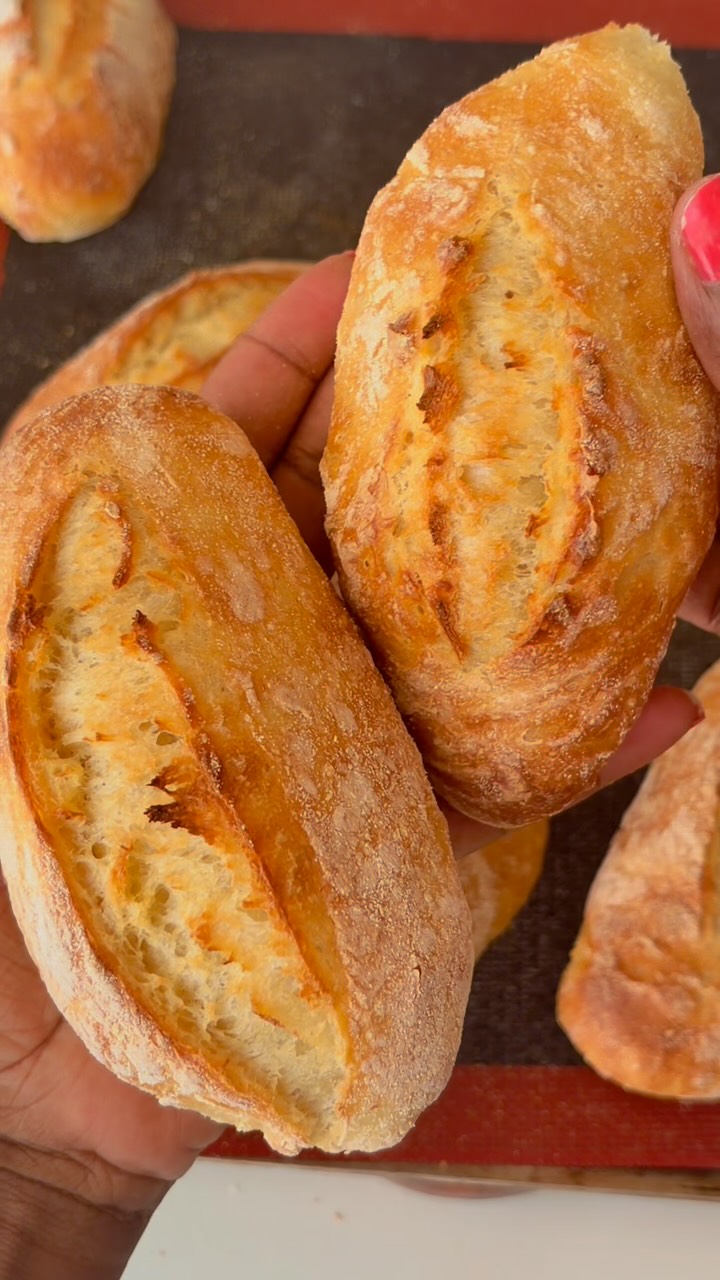
Get ready to indulge in the ultimate no-knead bread rolls that are irresistibly crispy on the outside and fluffy on the inside! With just three simple ingredients—flour, yeast, and a splash of water—you'll create a batch of warm, golden rolls that are perfect for any meal. So roll up your sleeves and let these easy-to-make delights elevate your next dinner!
Prep
15
min
Cook
25
min
Serves
6
people
Level
beginner
The Story
This no-knead wizardry didn't come from some flour-dusted Parisian nonna—it was cracked by New York baker Jim Lahey in 2006, then promptly hijacked by French home bakers who realized their grandmothers had been overworking dough for centuries, proving that sometimes the French need an American to tell them they've been doing bread wrong since the Revolution.
Regional Twist
Up in Brittany, bakers swap a portion of that T55 farine for buckwheat flour, nodding to their galette heritage, while adding a touch more of the tiède water to compensate for buckwheat's thirstier, gluten-free nature, yielding rolls with earthier, nuttier character.
📝 Ingredients
Serves 6🥬Fresh Produce(1)
- 380 g d’eau tiède + jusqu’à 20 g si nécessaire. (13.4 oz)
🫙Pantry Staples(2)
- 5 à 7 g de levure boulangère sèche (0.18 oz)
- 500 g de farine T55 ou T65 (4 cup)
🧂Spices & Seasonings(1)
- 9 g de sel (0.32 oz)
Nutrition (per serving)
Calories
297
Protein
9g
Carbs
61g
Fat
1g
👨🍳 Instructions
- 1
Dissolve the yeast in warm water.
- 2
Add the flour and salt, then mix simply with a spoon or spatula until there is no dry flour left.
- 3
Cover and let rise for 1.5 to 2 hours until the dough is well risen and filled with bubbles.
- 4
Generously flour the work surface, then gently pour the dough without deflating it too much.
- 5
Divide into 5 to 6 pieces and shape them very lightly.
- 6
Place them on a baking sheet and score the tops.
- 7
Preheat the oven to 240 °C for at least 30 to 40 minutes, with a tray or container placed in the bottom of the oven.
- 8
When ready to bake, pour hot water into the tray to create steam.
- 9
Bake at 240 °C for 20 to 25 minutes until a nice golden and crispy crust is achieved.
- 10
Let cool on a rack.
💡 Pro Tips
- ✓Use water between 38-42°C (100-107°F) when dissolving yeast because temperatures below 35°C slow fermentation by 50%, while above 45°C denatures enzymes and kills yeast cells.ingredient38-42°C optimal range
- ✓Aim for a hydration ratio of 76% (380g water ÷ 500g flour) to create an open crumb structure; this high-hydration dough develops gluten networks through fermentation rather than mechanical kneading.ingredient76% hydration ratio
- ✓Extend bulk fermentation to 18-20 hours at room temperature (20-22°C) instead of 1.5-2 hours to develop flavor compounds through slow enzymatic breakdown and allow wild yeast colonization, which strengthens the crust.timing18-20 hours at 20-22°C
- ✓Preheat the oven and steam tray to 240°C for exactly 45 minutes because thermal mass in the tray stabilizes oven temperature; steam in the first 12-15 minutes of baking gelatinizes surface starches, allowing 30-40% greater oven spring before the crust sets.equipment45 minutes preheat; steam first 12-15 minutes
- ✓Shape rolls with minimal handling (2-3 folds per side) and proof them seam-side up for 45-60 minutes at room temperature before baking, as over-proofing by more than 25% volume reduces surface tension and causes flat, dense rolls.timing45-60 minutes proof; max 25% volume increase
Share this recipe
Prep
15
min
Cook
25
min
Serves
6
people
Level
beginner
Share this recipe
Jim Lahey's 2006 no-knead method shocked bakers by skipping kneading entirely—18 hours of fermentation builds gluten instead of your arms.
No-Knead Bread Rolls
Get ready to indulge in the ultimate no-knead bread rolls that are irresistibly crispy on the outside and fluffy on the inside! With just three simple ingredients—flour, yeast, and a splash of water—you'll create a batch of warm, golden rolls that are perfect for any meal. So roll up your sleeves and let these easy-to-make delights elevate your next dinner!
The Story
This no-knead wizardry didn't come from some flour-dusted Parisian nonna—it was cracked by New York baker Jim Lahey in 2006, then promptly hijacked by French home bakers who realized their grandmothers had been overworking dough for centuries, proving that sometimes the French need an American to tell them they've been doing bread wrong since the Revolution.
Regional Twist
Up in Brittany, bakers swap a portion of that T55 farine for buckwheat flour, nodding to their galette heritage, while adding a touch more of the tiède water to compensate for buckwheat's thirstier, gluten-free nature, yielding rolls with earthier, nuttier character.
📝 Ingredients
Serves 6🥬Fresh Produce(1)
- 380 g d’eau tiède + jusqu’à 20 g si nécessaire. (13.4 oz)
🫙Pantry Staples(2)
- 5 à 7 g de levure boulangère sèche (0.18 oz)
- 500 g de farine T55 ou T65 (4 cup)
🧂Spices & Seasonings(1)
- 9 g de sel (0.32 oz)
Nutrition (per serving)
Calories
297
Protein
9g
Carbs
61g
Fat
1g
👨🍳 Instructions
- 1
Dissolve the yeast in warm water.
- 2
Add the flour and salt, then mix simply with a spoon or spatula until there is no dry flour left.
- 3
Cover and let rise for 1.5 to 2 hours until the dough is well risen and filled with bubbles.
- 4
Generously flour the work surface, then gently pour the dough without deflating it too much.
- 5
Divide into 5 to 6 pieces and shape them very lightly.
- 6
Place them on a baking sheet and score the tops.
- 7
Preheat the oven to 240 °C for at least 30 to 40 minutes, with a tray or container placed in the bottom of the oven.
- 8
When ready to bake, pour hot water into the tray to create steam.
- 9
Bake at 240 °C for 20 to 25 minutes until a nice golden and crispy crust is achieved.
- 10
Let cool on a rack.
💡 Pro Tips
- ✓Use water between 38-42°C (100-107°F) when dissolving yeast because temperatures below 35°C slow fermentation by 50%, while above 45°C denatures enzymes and kills yeast cells.ingredient38-42°C optimal range
- ✓Aim for a hydration ratio of 76% (380g water ÷ 500g flour) to create an open crumb structure; this high-hydration dough develops gluten networks through fermentation rather than mechanical kneading.ingredient76% hydration ratio
- ✓Extend bulk fermentation to 18-20 hours at room temperature (20-22°C) instead of 1.5-2 hours to develop flavor compounds through slow enzymatic breakdown and allow wild yeast colonization, which strengthens the crust.timing18-20 hours at 20-22°C
- ✓Preheat the oven and steam tray to 240°C for exactly 45 minutes because thermal mass in the tray stabilizes oven temperature; steam in the first 12-15 minutes of baking gelatinizes surface starches, allowing 30-40% greater oven spring before the crust sets.equipment45 minutes preheat; steam first 12-15 minutes
- ✓Shape rolls with minimal handling (2-3 folds per side) and proof them seam-side up for 45-60 minutes at room temperature before baking, as over-proofing by more than 25% volume reduces surface tension and causes flat, dense rolls.timing45-60 minutes proof; max 25% volume increase