Emilia-Romagna farmers once baked piadina on terracotta 'testo' slabs over open fires—lard, not oil, is why it stays pliable.
Piadina
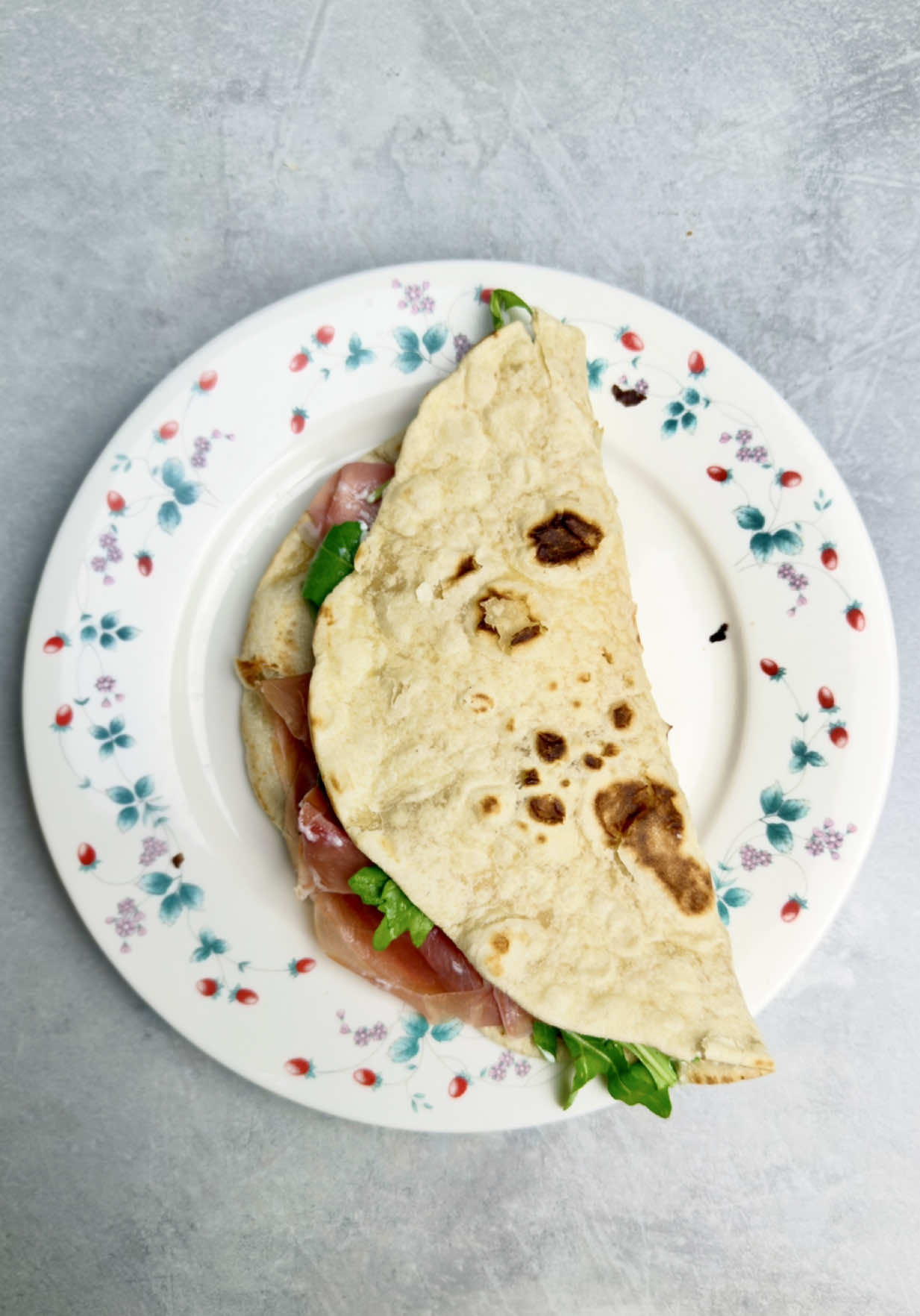
Indulge in the warm, flaky goodness of piadina, a versatile Italian flatbread that’s perfect for any meal! Stuff it with your favorite fillings like creamy mozzarella, zesty arugula, and savory prosciutto for a delightful burst of flavor in every bite. Whether grilled or toasted, these delightful wraps are sure to become your new go-to comfort food!
Prep
15
min
Cook
10
min
Serves
4
people
Level
beginner
The Story
This flatbread has bugger all to do with pizza, despite what every American food blog claims—it's Romagna's answer to bread, born from Etruscan grain-grinding traditions and perfected by Emilia-Romagna farmers who needed something to wrap around cheese and prosciutto while working the fields, centuries before some marketing genius in Rimini decided tourists needed piadina stands on every beach.
Regional Twist
Head inland to Emilia's San Leo and locals swap the farina 00 for a coarser whole wheat flour, giving the piadina a rustic, nuttier bite that stands up to the region's famously aggressive squacquerone cheese without turning to mush.
📝 Ingredients
Serves 4🥬Fresh Produce(1)
- 190g di acqua (6.71 oz)
🫙Pantry Staples(2)
- 400g di farina 00 (3.2 cup)
- 40g di olio evo (1.41 oz)
🧂Spices & Seasonings(1)
- 10g di sale (0.35 oz)
Nutrition (per serving)
Calories
450
Protein
11g
Carbs
74g
Fat
11g
👨🍳 Instructions
- 1
In a bowl, mix flour, water, oil, and salt and knead until a dough is formed. Let it rest for 10 minutes.
- 2
Divide the dough into 4 parts, form balls, and let them rest for another 30 minutes covered with a cloth.
- 3
Roll them out with a rolling pin, trying to achieve a round shape, and cook them in a preheated pan for a few minutes on each side.
💡 Pro Tips
- ✓Hydrate your dough to 47.5% (190g water per 400g flour) because piadina requires a softer, more extensible dough than pasta—this percentage allows gluten to fully develop while maintaining pliability for hand-stretching.ingredient47.5% hydration ratio
- ✓Rest dough balls for exactly 30 minutes at room temperature (68-72°F) before rolling because gluten networks need time to relax and allow CO₂ gas bubbles to form, preventing tearing and enabling even puffing during cooking.timing30 minutes at 68-72°F
- ✓Cook piadina on a cast iron skillet or tawa preheated to 350-375°F for 2-3 minutes per side until light golden spots appear, not brown—this temperature creates steam pockets that puff the bread without burning the exterior.equipment350-375°F, 2-3 minutes per side
- ✓Incorporate 10% oil by weight (40g per 400g flour) into the dough because fats coat gluten strands, tenderizing the crumb and increasing shelf life by delaying starch retrogradation.ingredient10% oil by weight
- ✓During rolling, use a light dusting of flour and work from center outward, rotating the dough 45° between strokes—this prevents gluten contraction and ensures uniform 3-4mm thickness for even cooking and proper puffing.technique3-4mm thickness
Share this recipe
Prep
15
min
Cook
10
min
Serves
4
people
Level
beginner
Share this recipe
Emilia-Romagna farmers once baked piadina on terracotta 'testo' slabs over open fires—lard, not oil, is why it stays pliable.
Piadina
Indulge in the warm, flaky goodness of piadina, a versatile Italian flatbread that’s perfect for any meal! Stuff it with your favorite fillings like creamy mozzarella, zesty arugula, and savory prosciutto for a delightful burst of flavor in every bite. Whether grilled or toasted, these delightful wraps are sure to become your new go-to comfort food!
The Story
This flatbread has bugger all to do with pizza, despite what every American food blog claims—it's Romagna's answer to bread, born from Etruscan grain-grinding traditions and perfected by Emilia-Romagna farmers who needed something to wrap around cheese and prosciutto while working the fields, centuries before some marketing genius in Rimini decided tourists needed piadina stands on every beach.
Regional Twist
Head inland to Emilia's San Leo and locals swap the farina 00 for a coarser whole wheat flour, giving the piadina a rustic, nuttier bite that stands up to the region's famously aggressive squacquerone cheese without turning to mush.
📝 Ingredients
Serves 4🥬Fresh Produce(1)
- 190g di acqua (6.71 oz)
🫙Pantry Staples(2)
- 400g di farina 00 (3.2 cup)
- 40g di olio evo (1.41 oz)
🧂Spices & Seasonings(1)
- 10g di sale (0.35 oz)
Nutrition (per serving)
Calories
450
Protein
11g
Carbs
74g
Fat
11g
👨🍳 Instructions
- 1
In a bowl, mix flour, water, oil, and salt and knead until a dough is formed. Let it rest for 10 minutes.
- 2
Divide the dough into 4 parts, form balls, and let them rest for another 30 minutes covered with a cloth.
- 3
Roll them out with a rolling pin, trying to achieve a round shape, and cook them in a preheated pan for a few minutes on each side.
💡 Pro Tips
- ✓Hydrate your dough to 47.5% (190g water per 400g flour) because piadina requires a softer, more extensible dough than pasta—this percentage allows gluten to fully develop while maintaining pliability for hand-stretching.ingredient47.5% hydration ratio
- ✓Rest dough balls for exactly 30 minutes at room temperature (68-72°F) before rolling because gluten networks need time to relax and allow CO₂ gas bubbles to form, preventing tearing and enabling even puffing during cooking.timing30 minutes at 68-72°F
- ✓Cook piadina on a cast iron skillet or tawa preheated to 350-375°F for 2-3 minutes per side until light golden spots appear, not brown—this temperature creates steam pockets that puff the bread without burning the exterior.equipment350-375°F, 2-3 minutes per side
- ✓Incorporate 10% oil by weight (40g per 400g flour) into the dough because fats coat gluten strands, tenderizing the crumb and increasing shelf life by delaying starch retrogradation.ingredient10% oil by weight
- ✓During rolling, use a light dusting of flour and work from center outward, rotating the dough 45° between strokes—this prevents gluten contraction and ensures uniform 3-4mm thickness for even cooking and proper puffing.technique3-4mm thickness