Italian nonnas call this aglio e olio's cousin—cold-infusing garlic in oil at low heat prevents bitterness that high heat causes instantly.
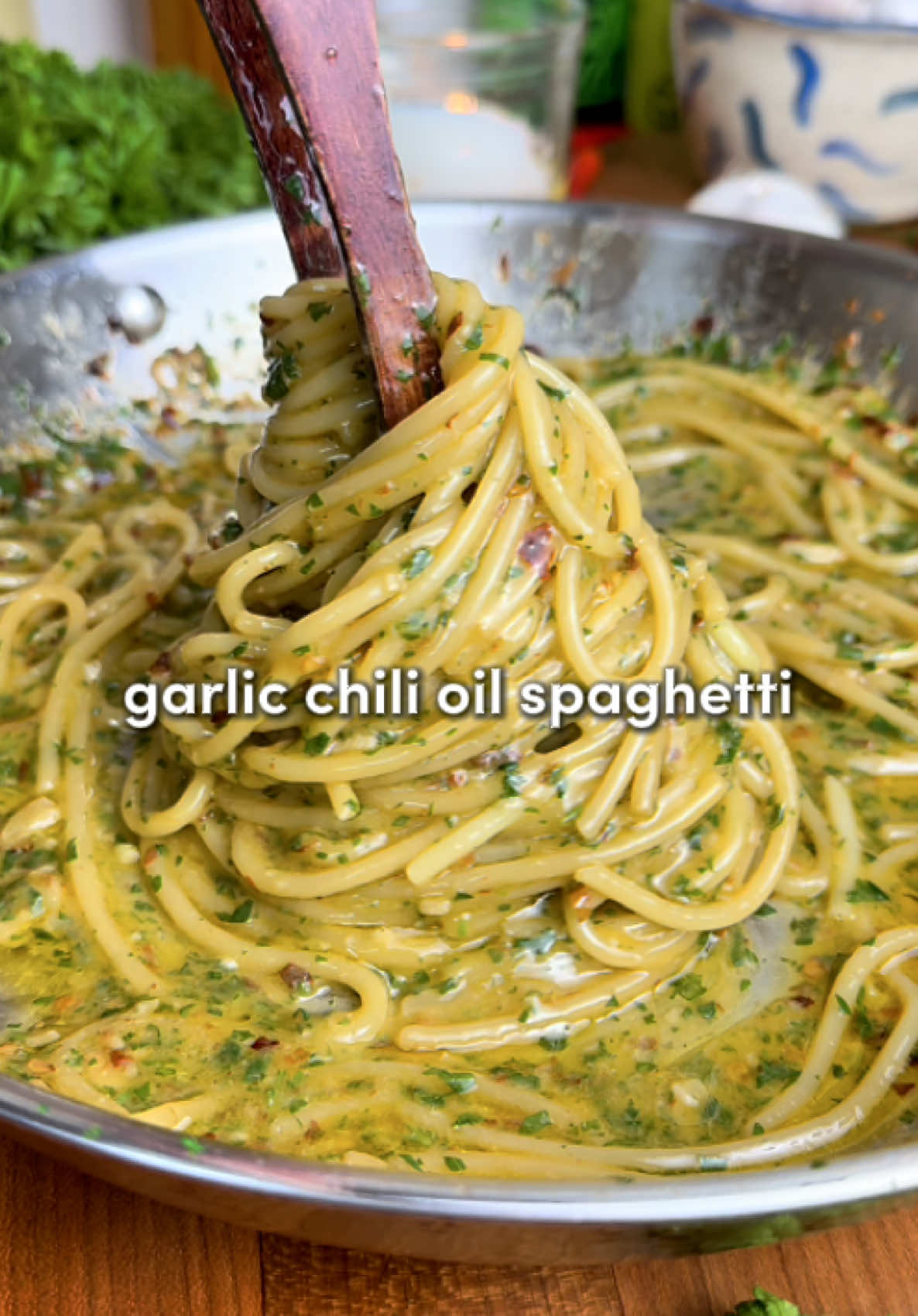
Garlic Chili Oil Spaghetti
Dive into a bowl of pure delight with our Garlic Chili Oil Spaghetti! With just a handful of ingredients, including fragrant garlic and a kick of chili flakes, this dish delivers a bold flavor punch that’s both satisfying and cozy. Perfect for a quick weeknight dinner or a comforting treat, you'll love how effortlessly delicious it is!
Prep
15
min
Cook
30
min
Serves
4
people
Level
beginner
The Story
This is Aglio e Olio, the Naples poverty dish invented by peasants in the 1800s who couldn't afford meat, tomatoes, or frankly much else besides garlic, oil, and stale spaghetti—yet somehow it became the pretentious food blogger's favorite flex dish, proving that sometimes the Neapolitan slums accidentally out-cooked every Michelin star chef with nothing but a hot pan and desperation.
Regional Twist
In Naples' Quartieri Spagnoli district, cooks swap red chili flakes for locally grown Friariello peppers and finish with a fistful of toasted breadcrumbs instead of Parmesan, a poverty-driven trick called 'poor man's cheese' that adds crunch without the cost.
📝 Ingredients
Serves 4🥬Fresh Produce(4)
- 8 garlic cloves, thinly sliced
- Fresh lemon zest, for garnish (optional)optional
- 1/3 cup fresh parsley leaves, finely chopped (79.2 ml)
- 1 whole parsley stem (for infusing)
🥛Dairy & Eggs(1)
- Freshly grated Parmesan cheese, for serving (optional)optional
🫙Pantry Staples(3)
- 1/3 cup extra virgin olive oil (plus 1 to 2 tbsp more if needed) (79.2 ml)
- 1 to 1 1/2 cups reserved pasta water (240-240 ml)
- 8 oz (225 g) spaghetti (227 g)
📦Other(1)
- 1 tsp red chili flakes (or 1 tsp finely chopped fresh chili without seeds) (5 ml)1 tsp finely chopped fresh chili without seeds
Nutrition (per serving)
Calories
421
Protein
10g
Carbs
43g
Fat
23g
👨🍳 Instructions
- 1
Bring a large pot of aggressively salted water to a boil. Cook spaghetti until al dente. Reserve 1 1/2 cups of the starchy pasta water, then drain.
- 2
While the pasta cooks, heat the olive oil gently in a large skillet over medium-low. Add the garlic slices and whole parsley stem, stir constantly until the garlic turns light golden… not brown (about 3 minutes).
- 3
Stir in the chili flakes and a pinch of salt. Let them bloom for 30 seconds, then remove the parsley stem and take the pan off the heat.
- 4
Add about ½ cup of the reserved pasta water to the skillet and stir/whisk vigorously to combine with the oil. It’ll start looking creamy and slightly thick… that’s your emulsion forming.
- 5
Return the pan to medium-low heat and add the drained spaghetti along with another splash of pasta water. Toss everything aggressively with tongs for 1–2 minutes, drizzling in 1 to 2 more tablespoons of olive oil and a bit more pasta water as you go. The sauce should turn silky and glossy. If it looks dry or clumpy, add more water; if it looks thin, keep tossing.
- 6
Turn off the heat and stir in the chopped parsley. Taste and add a tiny pinch of salt if needed.
- 7
Plate immediately, spooning any extra sauce from the pan over the top. Garnish with lemon zest and a sprinkle of Parmesan if you’d like.
💡 Pro Tips
- ✓Slice garlic to 2-3mm thickness and heat to exactly 160-170°F (71-76°C) over medium-low for 3 minutes—this triggers the Maillard reaction for light golden color without browning. Beyond 180°F (82°C), garlic turns bitter from acrolein compound formation and loses its sweet aromatic allicin compounds.technique160-170°F, 3 minutes, 2-3mm slices
- ✓Reserve pasta water at 1-2% starch concentration by setting aside immediately after draining—this starchy water emulsifies with olive oil through vigorous whisking, creating a stable sauce that clings to noodles. Starch acts as an emulsifier by binding water and fat molecules together, preventing separation.ingredient1-2% starch concentration
- ✓Bloom chili flakes for exactly 30 seconds at 300°F (149°C) oil temperature to activate capsaicin and lipophilic flavor compounds without charring them—this maximizes heat perception and fruity undertones. Longer blooming (over 60 seconds) causes chlorophyll degradation and acrid flavors.timing30 seconds, 300°F oil temperature
- ✓Toss spaghetti aggressively with pasta water and oil for 1-2 minutes to create mechanical shear that fully hydrates the pasta surface and develops a silky, glossy starch-based sauce coating. Gentle tossing fails to properly distribute the emulsion and leaves a thin, slippery result.technique1-2 minutes aggressive tossing
- ✓Add chopped parsley only after removing from heat to preserve chlorophyll pigments and volatile aromatic compounds (linalool, myrcene) that degrade within 30-45 seconds of heating above 160°F (71°C), maintaining bright color and fresh herbaceous flavor.timingAdd after heat removed, preserve within 30-45 seconds
Share this recipe
Prep
15
min
Cook
30
min
Serves
4
people
Level
beginner
Share this recipe
Italian nonnas call this aglio e olio's cousin—cold-infusing garlic in oil at low heat prevents bitterness that high heat causes instantly.
Garlic Chili Oil Spaghetti
Dive into a bowl of pure delight with our Garlic Chili Oil Spaghetti! With just a handful of ingredients, including fragrant garlic and a kick of chili flakes, this dish delivers a bold flavor punch that’s both satisfying and cozy. Perfect for a quick weeknight dinner or a comforting treat, you'll love how effortlessly delicious it is!
The Story
This is Aglio e Olio, the Naples poverty dish invented by peasants in the 1800s who couldn't afford meat, tomatoes, or frankly much else besides garlic, oil, and stale spaghetti—yet somehow it became the pretentious food blogger's favorite flex dish, proving that sometimes the Neapolitan slums accidentally out-cooked every Michelin star chef with nothing but a hot pan and desperation.
Regional Twist
In Naples' Quartieri Spagnoli district, cooks swap red chili flakes for locally grown Friariello peppers and finish with a fistful of toasted breadcrumbs instead of Parmesan, a poverty-driven trick called 'poor man's cheese' that adds crunch without the cost.
📝 Ingredients
Serves 4🥬Fresh Produce(4)
- 8 garlic cloves, thinly sliced
- Fresh lemon zest, for garnish (optional)optional
- 1/3 cup fresh parsley leaves, finely chopped (79.2 ml)
- 1 whole parsley stem (for infusing)
🥛Dairy & Eggs(1)
- Freshly grated Parmesan cheese, for serving (optional)optional
🫙Pantry Staples(3)
- 1/3 cup extra virgin olive oil (plus 1 to 2 tbsp more if needed) (79.2 ml)
- 1 to 1 1/2 cups reserved pasta water (240-240 ml)
- 8 oz (225 g) spaghetti (227 g)
📦Other(1)
- 1 tsp red chili flakes (or 1 tsp finely chopped fresh chili without seeds) (5 ml)1 tsp finely chopped fresh chili without seeds
Nutrition (per serving)
Calories
421
Protein
10g
Carbs
43g
Fat
23g
👨🍳 Instructions
- 1
Bring a large pot of aggressively salted water to a boil. Cook spaghetti until al dente. Reserve 1 1/2 cups of the starchy pasta water, then drain.
- 2
While the pasta cooks, heat the olive oil gently in a large skillet over medium-low. Add the garlic slices and whole parsley stem, stir constantly until the garlic turns light golden… not brown (about 3 minutes).
- 3
Stir in the chili flakes and a pinch of salt. Let them bloom for 30 seconds, then remove the parsley stem and take the pan off the heat.
- 4
Add about ½ cup of the reserved pasta water to the skillet and stir/whisk vigorously to combine with the oil. It’ll start looking creamy and slightly thick… that’s your emulsion forming.
- 5
Return the pan to medium-low heat and add the drained spaghetti along with another splash of pasta water. Toss everything aggressively with tongs for 1–2 minutes, drizzling in 1 to 2 more tablespoons of olive oil and a bit more pasta water as you go. The sauce should turn silky and glossy. If it looks dry or clumpy, add more water; if it looks thin, keep tossing.
- 6
Turn off the heat and stir in the chopped parsley. Taste and add a tiny pinch of salt if needed.
- 7
Plate immediately, spooning any extra sauce from the pan over the top. Garnish with lemon zest and a sprinkle of Parmesan if you’d like.
💡 Pro Tips
- ✓Slice garlic to 2-3mm thickness and heat to exactly 160-170°F (71-76°C) over medium-low for 3 minutes—this triggers the Maillard reaction for light golden color without browning. Beyond 180°F (82°C), garlic turns bitter from acrolein compound formation and loses its sweet aromatic allicin compounds.technique160-170°F, 3 minutes, 2-3mm slices
- ✓Reserve pasta water at 1-2% starch concentration by setting aside immediately after draining—this starchy water emulsifies with olive oil through vigorous whisking, creating a stable sauce that clings to noodles. Starch acts as an emulsifier by binding water and fat molecules together, preventing separation.ingredient1-2% starch concentration
- ✓Bloom chili flakes for exactly 30 seconds at 300°F (149°C) oil temperature to activate capsaicin and lipophilic flavor compounds without charring them—this maximizes heat perception and fruity undertones. Longer blooming (over 60 seconds) causes chlorophyll degradation and acrid flavors.timing30 seconds, 300°F oil temperature
- ✓Toss spaghetti aggressively with pasta water and oil for 1-2 minutes to create mechanical shear that fully hydrates the pasta surface and develops a silky, glossy starch-based sauce coating. Gentle tossing fails to properly distribute the emulsion and leaves a thin, slippery result.technique1-2 minutes aggressive tossing
- ✓Add chopped parsley only after removing from heat to preserve chlorophyll pigments and volatile aromatic compounds (linalool, myrcene) that degrade within 30-45 seconds of heating above 160°F (71°C), maintaining bright color and fresh herbaceous flavor.timingAdd after heat removed, preserve within 30-45 seconds