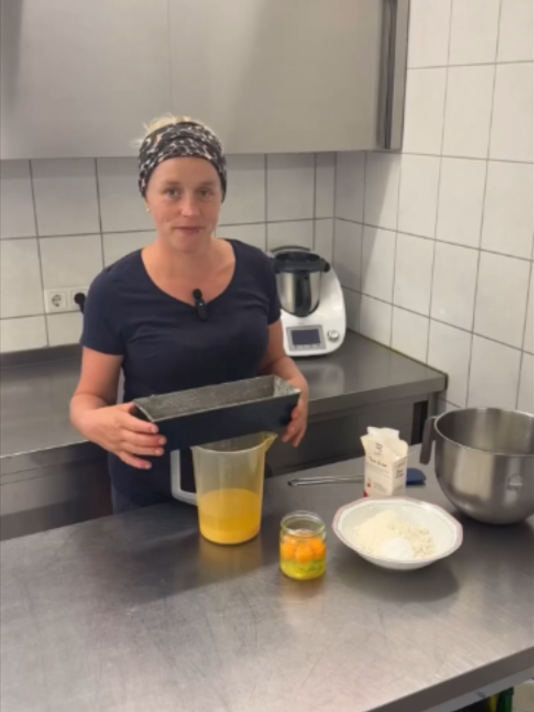
German bakers repurposed leftover Advocaat egg liqueur into this dense cake batter, a postwar trick for stretching rationed eggs further.
Moist Egg Liqueur Cake
Indulge in the delightful richness of our Moist Egg Liqueur Cake, a true crowd-pleaser that comes together in no time! With the luxurious flavors of creamy egg liqueur and a hint of vanilla, this cake is sure to impress at any gathering. Whip it up effortlessly and watch everyone come back for seconds!
Prep
15
min
Cook
55
min
Serves
8
people
Level
beginner
The Story
Eierlikör cake is Germany's boozy answer to boredom, born in 1950s Westphalia when housewives realized Verpoorten egg liqueur—originally a Dutch digestif—made a far better cake-soaker than mere vanilla extract, essentially turning grandma's Sunday Kaffeeklatsch into a socially acceptable excuse to bake with liquor before noon and call it dessert, not drinking.
Regional Twist
In Bavaria's Franconia region, bakers swap standard Eierlikör for their stronger homemade Eierlikör infused with rum, then fold in extra Vanillezucker and drizzle the glaze with a splash more liqueur, making the Munich version noticeably tipsier than its Rhineland cousin.
📝 Ingredients
Serves 8🥛Dairy & Eggs(2)
- 5 Eier
- ¼ l Eierlikör (1.06 cup)
🫙Pantry Staples(5)
- 1 Päckchen Backpulver
- ¼ l l Öl (1.06 cup)
- 250 g Puderzucker (1.25 cup)
- 250 g Dinkelmehl 630 (2 cup)
- 1 Päckchen Vanillezucker
Nutrition (per serving)
Calories
622
Protein
8g
Carbs
63g
Fat
37g
👨🍳 Instructions
- 1
Add all ingredients in order into a bowl and mix until smooth.
- 2
Pour into a greased and floured loaf pan and bake at 170 degrees Celsius for 55 minutes.
- 3
Once cooled, cover the cake with powdered sugar and chocolate glaze.
💡 Pro Tips
- ✓Separate your eggs and whip the whites to stiff peaks (3-4 minutes at high speed) before folding into the batter last—this adds 15-20% more volume and creates a lighter crumb structure by incorporating air that baking powder alone cannot achieve.technique3-4 minutes at high speed; 15-20% volume increase
- ✓Reduce oven temperature to 160°C and extend baking time to 65-70 minutes, checking with a toothpick at 60 minutes—the egg liqueur's 30-40% alcohol content and added moisture require lower, slower heat to prevent a dry exterior while the center sets.timing160°C for 65-70 minutes
- ✓Use room-temperature eggs and egg liqueur (bring from fridge 30 minutes prior) because cold ingredients prevent proper emulsification with the oil, reducing fat distribution by up to 25% and creating a dense, gummy crumb.ingredient30 minutes room temperature; 25% density increase if cold
- ✓Mix oil and egg liqueur together before adding to dry ingredients using the reverse creaming method—this distributes the alcohol and fat evenly, preventing the 1,200 mg/L alcohol from concentrating in pockets that would create tunneling and dry spots.technique
- ✓Cool the cake completely (2-3 hours at room temperature) before applying glaze, as the residual heat will cause the powdered sugar to dissolve and the chocolate to separate; the interior moisture continues to redistribute during cooling.timing2-3 hours cooling time
Share this recipe
Prep
15
min
Cook
55
min
Serves
8
people
Level
beginner
Share this recipe
German bakers repurposed leftover Advocaat egg liqueur into this dense cake batter, a postwar trick for stretching rationed eggs further.
Moist Egg Liqueur Cake
Indulge in the delightful richness of our Moist Egg Liqueur Cake, a true crowd-pleaser that comes together in no time! With the luxurious flavors of creamy egg liqueur and a hint of vanilla, this cake is sure to impress at any gathering. Whip it up effortlessly and watch everyone come back for seconds!
The Story
Eierlikör cake is Germany's boozy answer to boredom, born in 1950s Westphalia when housewives realized Verpoorten egg liqueur—originally a Dutch digestif—made a far better cake-soaker than mere vanilla extract, essentially turning grandma's Sunday Kaffeeklatsch into a socially acceptable excuse to bake with liquor before noon and call it dessert, not drinking.
Regional Twist
In Bavaria's Franconia region, bakers swap standard Eierlikör for their stronger homemade Eierlikör infused with rum, then fold in extra Vanillezucker and drizzle the glaze with a splash more liqueur, making the Munich version noticeably tipsier than its Rhineland cousin.
📝 Ingredients
Serves 8🥛Dairy & Eggs(2)
- 5 Eier
- ¼ l Eierlikör (1.06 cup)
🫙Pantry Staples(5)
- 1 Päckchen Backpulver
- ¼ l l Öl (1.06 cup)
- 250 g Puderzucker (1.25 cup)
- 250 g Dinkelmehl 630 (2 cup)
- 1 Päckchen Vanillezucker
Nutrition (per serving)
Calories
622
Protein
8g
Carbs
63g
Fat
37g
👨🍳 Instructions
- 1
Add all ingredients in order into a bowl and mix until smooth.
- 2
Pour into a greased and floured loaf pan and bake at 170 degrees Celsius for 55 minutes.
- 3
Once cooled, cover the cake with powdered sugar and chocolate glaze.
💡 Pro Tips
- ✓Separate your eggs and whip the whites to stiff peaks (3-4 minutes at high speed) before folding into the batter last—this adds 15-20% more volume and creates a lighter crumb structure by incorporating air that baking powder alone cannot achieve.technique3-4 minutes at high speed; 15-20% volume increase
- ✓Reduce oven temperature to 160°C and extend baking time to 65-70 minutes, checking with a toothpick at 60 minutes—the egg liqueur's 30-40% alcohol content and added moisture require lower, slower heat to prevent a dry exterior while the center sets.timing160°C for 65-70 minutes
- ✓Use room-temperature eggs and egg liqueur (bring from fridge 30 minutes prior) because cold ingredients prevent proper emulsification with the oil, reducing fat distribution by up to 25% and creating a dense, gummy crumb.ingredient30 minutes room temperature; 25% density increase if cold
- ✓Mix oil and egg liqueur together before adding to dry ingredients using the reverse creaming method—this distributes the alcohol and fat evenly, preventing the 1,200 mg/L alcohol from concentrating in pockets that would create tunneling and dry spots.technique
- ✓Cool the cake completely (2-3 hours at room temperature) before applying glaze, as the residual heat will cause the powdered sugar to dissolve and the chocolate to separate; the interior moisture continues to redistribute during cooling.timing2-3 hours cooling time