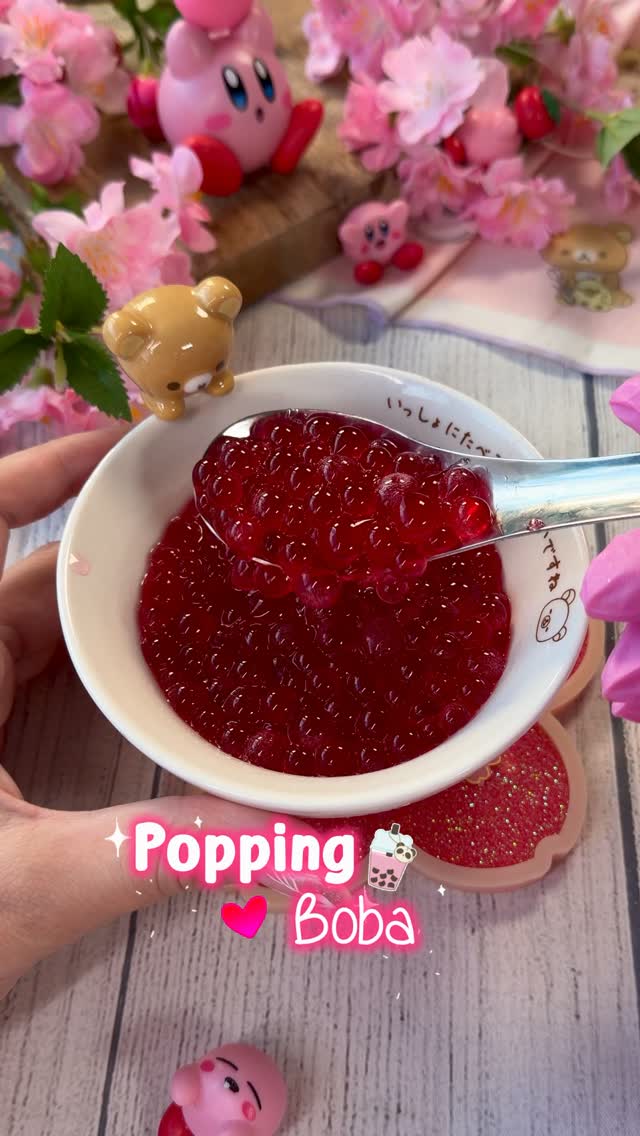
Popping boba uses reverse spherification, a 2003 molecular gastronomy technique that wraps liquid centers in edible calcium chloride membranes.
Popping Boba
Dive into the fun world of Popping Boba, those delightful little spheres that explode with flavor in your mouth! With just a few simple ingredients like fruit juice and agar-agar, you can create these enticing bubbles that will elevate any drink into a mini adventure. Get ready to sip, pop, and enjoy a burst of sweetness with every sip!
Prep
120
min
Cook
0
min
Serves
4
people
Level
intermediate
📝 Ingredients
Serves 4🥬Fresh Produce(1)
- 1 litro de agua (4.23 cup)
🫙Pantry Staples(1)
- 200 gr de azúcar (no te preocupes porque no te la vas a comer, es solo para modificar la densidad del agua y que queden perfectamente redondas, puedes quitarla si quieres) (1 cup)optional
📦Other(4)
- un bol con agua
- 5 gr de lactato de calcio (0.18 oz)
- 200 ml de la bebida que más te guste. (6.76 fl oz)
- 3 gr de alginato de sodio (0.11 oz)
👨🍳 Instructions
- 1
Mix the drink with sodium alginate using a blender. Refrigerate for at least 2 hours to remove bubbles so the balls do not float.
- 2
Fill a bowl with water, add calcium lactate and sugar, and stir until dissolved.
- 3
Add the juice drop by drop to form the balls. Transfer them to the bowl of water and let them sit for a minute before removing.
- 4
Add them to your favorite drink.
💡 Pro Tips
- ✓Maintain your sodium alginate bath at exactly 0.5% concentration (5g per 1L liquid) because higher concentrations create thick, rubbery skins while lower concentrations won't gel properly.ingredient0.5% concentration
- ✓Use a syringe with 14-16 gauge needle tip to drop spheres from exactly 6-8 inches above the calcium bath - this height creates optimal sphere formation through surface tension without breaking the alginate membrane.technique6-8 inches height
- ✓Keep calcium lactate bath at 1% concentration (10g per 1L water) and maintain at room temperature because cold temperatures slow calcium ion diffusion and create uneven gel formation.ingredient1% concentration
- ✓Process spheres for exactly 60-90 seconds in calcium bath because shorter times leave liquid centers that burst prematurely while longer times create solid gel throughout.timing60-90 seconds
- ✓Rinse finished spheres in clean water for 10-15 seconds to remove excess calcium ions that continue the gelling process and would make spheres too firm over time.technique10-15 seconds
Share this recipe
Prep
120
min
Cook
0
min
Serves
4
people
Level
intermediate
Share this recipe
Popping boba uses reverse spherification, a 2003 molecular gastronomy technique that wraps liquid centers in edible calcium chloride membranes.
Popping Boba
Dive into the fun world of Popping Boba, those delightful little spheres that explode with flavor in your mouth! With just a few simple ingredients like fruit juice and agar-agar, you can create these enticing bubbles that will elevate any drink into a mini adventure. Get ready to sip, pop, and enjoy a burst of sweetness with every sip!
📝 Ingredients
Serves 4🥬Fresh Produce(1)
- 1 litro de agua (4.23 cup)
🫙Pantry Staples(1)
- 200 gr de azúcar (no te preocupes porque no te la vas a comer, es solo para modificar la densidad del agua y que queden perfectamente redondas, puedes quitarla si quieres) (1 cup)optional
📦Other(4)
- un bol con agua
- 5 gr de lactato de calcio (0.18 oz)
- 200 ml de la bebida que más te guste. (6.76 fl oz)
- 3 gr de alginato de sodio (0.11 oz)
👨🍳 Instructions
- 1
Mix the drink with sodium alginate using a blender. Refrigerate for at least 2 hours to remove bubbles so the balls do not float.
- 2
Fill a bowl with water, add calcium lactate and sugar, and stir until dissolved.
- 3
Add the juice drop by drop to form the balls. Transfer them to the bowl of water and let them sit for a minute before removing.
- 4
Add them to your favorite drink.
💡 Pro Tips
- ✓Maintain your sodium alginate bath at exactly 0.5% concentration (5g per 1L liquid) because higher concentrations create thick, rubbery skins while lower concentrations won't gel properly.ingredient0.5% concentration
- ✓Use a syringe with 14-16 gauge needle tip to drop spheres from exactly 6-8 inches above the calcium bath - this height creates optimal sphere formation through surface tension without breaking the alginate membrane.technique6-8 inches height
- ✓Keep calcium lactate bath at 1% concentration (10g per 1L water) and maintain at room temperature because cold temperatures slow calcium ion diffusion and create uneven gel formation.ingredient1% concentration
- ✓Process spheres for exactly 60-90 seconds in calcium bath because shorter times leave liquid centers that burst prematurely while longer times create solid gel throughout.timing60-90 seconds
- ✓Rinse finished spheres in clean water for 10-15 seconds to remove excess calcium ions that continue the gelling process and would make spheres too firm over time.technique10-15 seconds