No-knead dough rests 12 hours at room temp, letting wild fermentation build gluten strength without a single fold.
Easy Bread Recipe
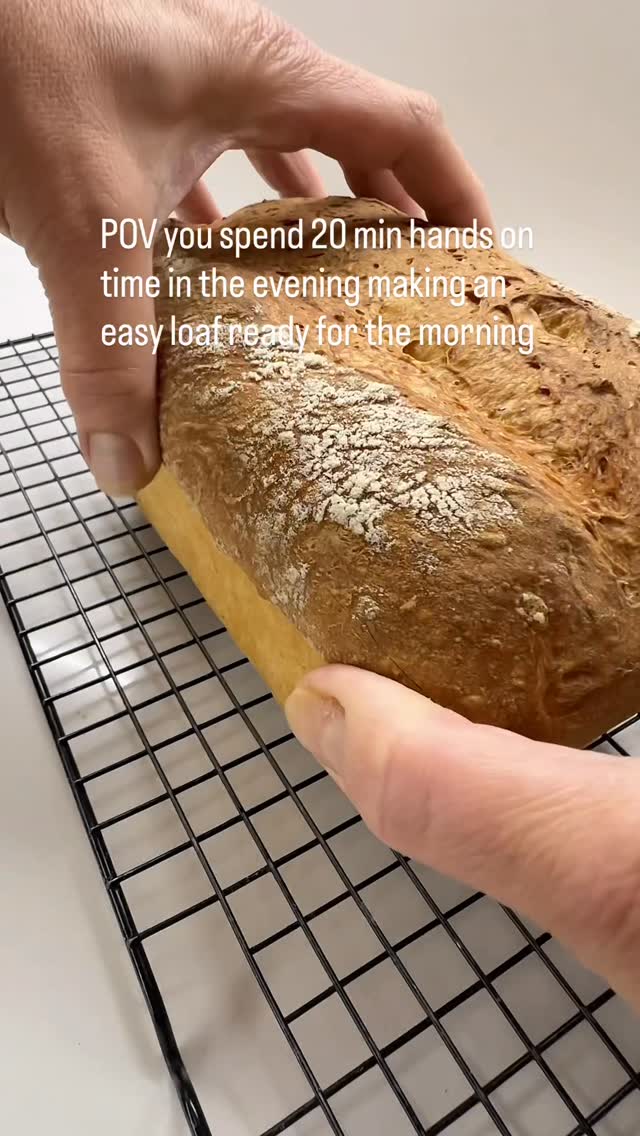
Whip up a warm loaf of goodness with this effortless bread recipe that’s sure to impress! With just flour, yeast, and a dash of salt, you’ll master the art of baking in no time. Get ready to enjoy the heavenly aroma of freshly baked bread wafting through your kitchen!
Prep
15
min
Cook
30
min
Serves
4
people
Level
beginner
The Story
This no-knead business owes everything to 1990s New York, where baker Jim Lahey ditched centuries of Egyptian and Mesopotamian kneading traditions entirely, letting time do what your forearms used to—proving that ancient bread-making, dating back 14,000 years to Jordanian hunter-gatherers, can be hijacked by a lazy Manhattan genius with a Dutch oven and absolutely no shame about it whatsoever.
Regional Twist
Head to Puglia's Altamura province and they'd swap your bread flour for semolina entirely, adding a splash more honey to feed the wild yeasts longer, producing that famously dense, golden crumb protected by EU law since 2003.
📝 Ingredients
Serves 4🥬Fresh Produce(1)
- 260ml lukewarm water (8.79 fl oz)
🫙Pantry Staples(4)
- 120g wholemeal bread flour (0.96 cup)
- 230g white bread flour (1.84 cup)
- 1 tbs honey (approx) (15 ml)optional
- 7g instant yeast (0.25 oz)
🧂Spices & Seasonings(1)
- 1/2 tbs salt (7.5 ml)
👨🍳 Instructions
- 1
Mix yeast, water and honey together well.
- 2
Add the flour and then the salt until it’s fully combined and shaggy.
- 3
Cover and rest for 15 minutes.
- 4
After 15 min wet your hand and stretch and fold the dough 4 times, turning the bowl after each fold. Cover and rest for 20 minutes.
- 5
Repeat the stretch and fold process and cover and rest for 1.5 hours.
- 6
Grease a small loaf tin with butter.
- 7
Once the dough is ready, sprinkle some flour over the dough and onto your work surface and turn the dough out.
- 8
Sprinkle the top of the dough with flour and gently stretch it out slightly.
- 9
Fold the dough over in thirds and roll it up. Seal the seams up along the top and sides, flip the dough over and place in the tin. Cover and rest for 45 minutes.
- 10
30 minutes before baking, preheat your oven to 220C and add a dish with water at the bottom to create steam.
- 11
Score the middle of the bread and bake on low shelf at 220C for 10 minutes.
- 12
After 10 minutes, turn your oven down to 190C and bake for another 20-25 minutes.
- 13
Turn the bread out of the tin when it’s done and let it cool on a cooling rack for at least 30 minutes before eating.
💡 Pro Tips
- ✓Use water at 100-110°F (37-43°C) when mixing with yeast, since temperatures above 120°F begin killing yeast cells while temperatures below 95°F drastically slow enzyme activity needed for fermentation.ingredient100-110°F
- ✓Wet your hands before stretching and folding the dough because the high hydration dough will stick to dry hands, tearing the developing gluten network instead of allowing smooth elongation.techniquedamp hands
- ✓The 15-20 minute rests between folds (autolyse-style) allow gluten strands to relax and realign after being stretched, so subsequent folds build strength without tearing the dough.timing15-20 minutes
- ✓During the final 1.5-hour bulk fermentation, yeast converts sugars into CO2 and ethanol, roughly doubling dough volume; going by time alone can mislead you if your kitchen runs below 70°F, so watch for a 90-100% volume increase instead.timing90-100% volume increase
- ✓Grease the loaf tin with butter rather than oil since butter's milk solids promote better browning via the Maillard reaction on the crust's sides and bottom, which pure oils lack.equipmentMaillard reaction
Share this recipe
Prep
15
min
Cook
30
min
Serves
4
people
Level
beginner
Share this recipe
No-knead dough rests 12 hours at room temp, letting wild fermentation build gluten strength without a single fold.
Easy Bread Recipe
Whip up a warm loaf of goodness with this effortless bread recipe that’s sure to impress! With just flour, yeast, and a dash of salt, you’ll master the art of baking in no time. Get ready to enjoy the heavenly aroma of freshly baked bread wafting through your kitchen!
The Story
This no-knead business owes everything to 1990s New York, where baker Jim Lahey ditched centuries of Egyptian and Mesopotamian kneading traditions entirely, letting time do what your forearms used to—proving that ancient bread-making, dating back 14,000 years to Jordanian hunter-gatherers, can be hijacked by a lazy Manhattan genius with a Dutch oven and absolutely no shame about it whatsoever.
Regional Twist
Head to Puglia's Altamura province and they'd swap your bread flour for semolina entirely, adding a splash more honey to feed the wild yeasts longer, producing that famously dense, golden crumb protected by EU law since 2003.
📝 Ingredients
Serves 4🥬Fresh Produce(1)
- 260ml lukewarm water (8.79 fl oz)
🫙Pantry Staples(4)
- 120g wholemeal bread flour (0.96 cup)
- 230g white bread flour (1.84 cup)
- 1 tbs honey (approx) (15 ml)optional
- 7g instant yeast (0.25 oz)
🧂Spices & Seasonings(1)
- 1/2 tbs salt (7.5 ml)
👨🍳 Instructions
- 1
Mix yeast, water and honey together well.
- 2
Add the flour and then the salt until it’s fully combined and shaggy.
- 3
Cover and rest for 15 minutes.
- 4
After 15 min wet your hand and stretch and fold the dough 4 times, turning the bowl after each fold. Cover and rest for 20 minutes.
- 5
Repeat the stretch and fold process and cover and rest for 1.5 hours.
- 6
Grease a small loaf tin with butter.
- 7
Once the dough is ready, sprinkle some flour over the dough and onto your work surface and turn the dough out.
- 8
Sprinkle the top of the dough with flour and gently stretch it out slightly.
- 9
Fold the dough over in thirds and roll it up. Seal the seams up along the top and sides, flip the dough over and place in the tin. Cover and rest for 45 minutes.
- 10
30 minutes before baking, preheat your oven to 220C and add a dish with water at the bottom to create steam.
- 11
Score the middle of the bread and bake on low shelf at 220C for 10 minutes.
- 12
After 10 minutes, turn your oven down to 190C and bake for another 20-25 minutes.
- 13
Turn the bread out of the tin when it’s done and let it cool on a cooling rack for at least 30 minutes before eating.
💡 Pro Tips
- ✓Use water at 100-110°F (37-43°C) when mixing with yeast, since temperatures above 120°F begin killing yeast cells while temperatures below 95°F drastically slow enzyme activity needed for fermentation.ingredient100-110°F
- ✓Wet your hands before stretching and folding the dough because the high hydration dough will stick to dry hands, tearing the developing gluten network instead of allowing smooth elongation.techniquedamp hands
- ✓The 15-20 minute rests between folds (autolyse-style) allow gluten strands to relax and realign after being stretched, so subsequent folds build strength without tearing the dough.timing15-20 minutes
- ✓During the final 1.5-hour bulk fermentation, yeast converts sugars into CO2 and ethanol, roughly doubling dough volume; going by time alone can mislead you if your kitchen runs below 70°F, so watch for a 90-100% volume increase instead.timing90-100% volume increase
- ✓Grease the loaf tin with butter rather than oil since butter's milk solids promote better browning via the Maillard reaction on the crust's sides and bottom, which pure oils lack.equipmentMaillard reaction