Ancient Mediterranean flatbreads used wild yeast from grape skins—commercial yeast wasn't invented until 1868 in Vienna.
My Ultimate Flatbread
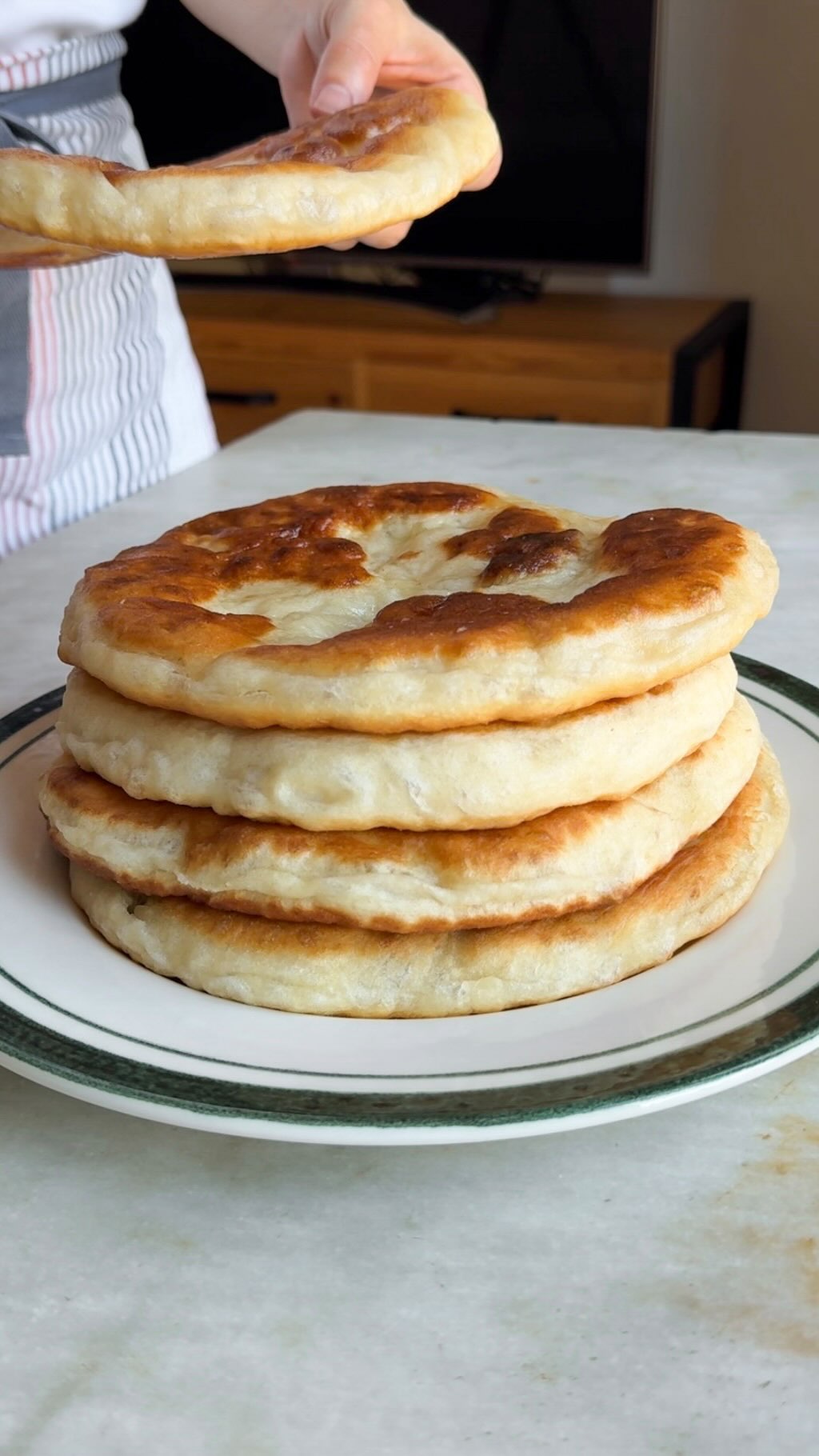
Get ready to elevate your meal with my go-to flatbread that’s irresistibly soft and airy! With just a handful of pantry staples like yogurt and flour, plus a simple no-knead technique, you’ll whip up this delightful bread in no time. Perfect for wrapping, dipping, or just enjoying warm right out of the pan!
Prep
15
min
Cook
30
min
Serves
4
people
Level
beginner
📝 Ingredients
Serves 4🥬Fresh Produce(1)
- water (240 ml)
🥛Dairy & Eggs(1)
- Greek yogurt (120 ml)
🫙Pantry Staples(3)
- flour (250 g)
- a pinch of sugar
- yeast (15 ml)
🧂Spices & Seasonings(1)
- salt
👨🍳 Instructions
- 1
Mix flour, salt, a pinch of sugar, yeast, water, and Greek yogurt until combined.
- 2
The dough will be wet and sticky; ensure no flour lumps remain.
- 3
Shape the dough into a ball, cover with a thin film of oil, and let it rise until doubled in size.
- 4
Once risen, fold the edges of the dough towards the center and fold it over itself a couple of times.
- 5
Divide the dough into portions and shape each into a ball.
- 6
Let them rest for another 20-30 minutes before shaping into discs.
- 7
Cook on a griddle with a little oil for better texture and fluffiness.
💡 Pro Tips
- ✓Hydrate your flatbread dough to 75-80% hydration ratio (water weight to flour weight) because the high moisture creates steam pockets during cooking, resulting in the characteristic puffy texture.technique75-80% hydration
- ✓Heat your griddle to exactly 450-475°F before cooking because this temperature creates immediate steam from the dough's moisture while preventing burning of the exterior.equipment450-475°F
- ✓Use Greek yogurt at 2-3% of flour weight because its lactic acid tenderizes gluten proteins and adds tang while the proteins contribute to browning through Maillard reactions.ingredient2-3% of flour weight
- ✓Rest shaped dough balls for exactly 20-30 minutes to allow gluten networks to relax, reducing spring-back when rolling and preventing tough, chewy flatbreads.timing20-30 minutes
- ✓Fold the risen dough 2-3 times to redistribute yeast and strengthen gluten structure through mechanical development, creating better gas retention for fluffier results.technique2-3 folds
Share this recipe
Prep
15
min
Cook
30
min
Serves
4
people
Level
beginner
Share this recipe
Ancient Mediterranean flatbreads used wild yeast from grape skins—commercial yeast wasn't invented until 1868 in Vienna.
My Ultimate Flatbread
Get ready to elevate your meal with my go-to flatbread that’s irresistibly soft and airy! With just a handful of pantry staples like yogurt and flour, plus a simple no-knead technique, you’ll whip up this delightful bread in no time. Perfect for wrapping, dipping, or just enjoying warm right out of the pan!
📝 Ingredients
Serves 4🥬Fresh Produce(1)
- water (240 ml)
🥛Dairy & Eggs(1)
- Greek yogurt (120 ml)
🫙Pantry Staples(3)
- flour (250 g)
- a pinch of sugar
- yeast (15 ml)
🧂Spices & Seasonings(1)
- salt
👨🍳 Instructions
- 1
Mix flour, salt, a pinch of sugar, yeast, water, and Greek yogurt until combined.
- 2
The dough will be wet and sticky; ensure no flour lumps remain.
- 3
Shape the dough into a ball, cover with a thin film of oil, and let it rise until doubled in size.
- 4
Once risen, fold the edges of the dough towards the center and fold it over itself a couple of times.
- 5
Divide the dough into portions and shape each into a ball.
- 6
Let them rest for another 20-30 minutes before shaping into discs.
- 7
Cook on a griddle with a little oil for better texture and fluffiness.
💡 Pro Tips
- ✓Hydrate your flatbread dough to 75-80% hydration ratio (water weight to flour weight) because the high moisture creates steam pockets during cooking, resulting in the characteristic puffy texture.technique75-80% hydration
- ✓Heat your griddle to exactly 450-475°F before cooking because this temperature creates immediate steam from the dough's moisture while preventing burning of the exterior.equipment450-475°F
- ✓Use Greek yogurt at 2-3% of flour weight because its lactic acid tenderizes gluten proteins and adds tang while the proteins contribute to browning through Maillard reactions.ingredient2-3% of flour weight
- ✓Rest shaped dough balls for exactly 20-30 minutes to allow gluten networks to relax, reducing spring-back when rolling and preventing tough, chewy flatbreads.timing20-30 minutes
- ✓Fold the risen dough 2-3 times to redistribute yeast and strengthen gluten structure through mechanical development, creating better gas retention for fluffier results.technique2-3 folds