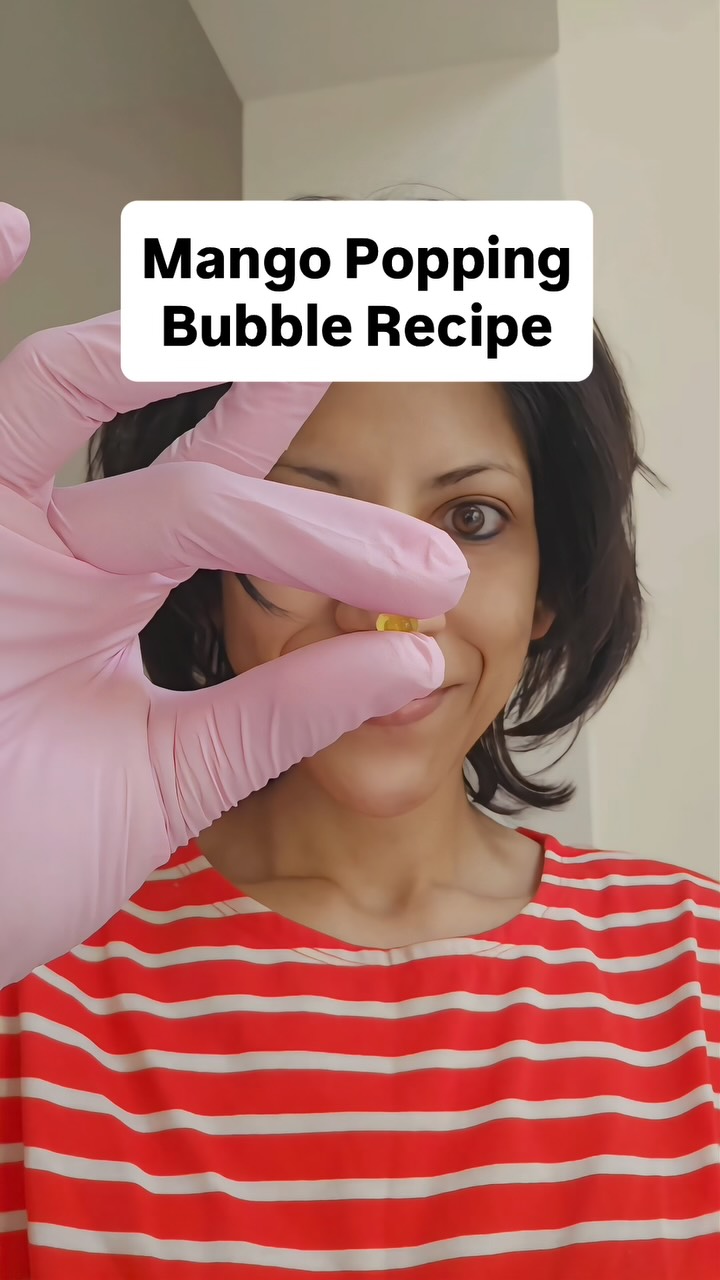
These edible bubbles burst from sodium alginate's molecular reaction with calcium—the same chemistry NASA uses for space food.
Popping Bubble Recipe
Dive into the delightful world of homemade boba popping bubbles! With just a few simple ingredients like fruit juice and agar-agar, you can create these juicy bursts of flavor that are perfect for topping your favorite drinks or desserts. Get ready to impress your friends with your newfound bubble-making skills!
Prep
120
min
Cook
10
min
Serves
4
people
Level
intermediate
📝 Ingredients
Serves 4🥬Fresh Produce(3)
- 200 ml fruit juice of your choice. I used mango (6.76 fl oz)
- 50 ml water (1.69 fl oz)
- 1 litre water (33.8 fl oz)
📦Other(3)
- 5 g calcium lactate (0.18 oz)
- 5 g sodium alginate (0.18 oz)
- Sweetener (optional)optional
👨🍳 Instructions
- 1
Prepare the sodium alginate solution: Mix sodium alginate with 200ml fruit juice + 50 ml water. You can use a blender too to mix it so there are no clumps. Blend the mixture until the sodium alginate is fully dissolved. Let the mixture sit for at least 2 hours.
- 2
Prepare the calcium lactate solution: Mix calcium acetate with a 1 litre of water in a separate container. Stir well until the calcium acetate is fully dissolved.
- 3
Create the boba popping bubbles: Using a dropper or 1/4 teaspoon, slowly drop small droplets of the sodium alginate solution into the calcium acetate solution. The droplets will form into small spheres (bubbles). Let the bubbles sit in the calcium acetate solution for about 1-2 minutes to allow them to form a skin. Gently remove the bubbles from the calcium acetate solution using a slotted spoon and rinse them in clean water.
- 4
Serve and enjoy: Add the boba popping bubbles to your favorite drinks or desserts. You can store any leftover bubbles in a container with some of the fruit juice to keep them from sticking together.
💡 Pro Tips
- ✓Use an immersion blender to mix sodium alginate for exactly 30-45 seconds to prevent incorporating excess air bubbles that create foam and weaken sphere formation.technique30-45 seconds
- ✓Maintain calcium lactate solution at 0.5% concentration (5g per liter) because higher concentrations create overly thick membranes that burst easily when bitten.ingredient0.5% concentration
- ✓Drop sodium alginate mixture from exactly 2-3 inches above the calcium bath to achieve uniform 8-10mm spheres - higher drops create irregular shapes due to surface tension disruption.technique2-3 inches height
- ✓Time the calcium reaction precisely at 90-120 seconds because shorter times leave weak membranes while longer times create rubbery textures that don't pop satisfyingly.timing90-120 seconds
- ✓Store finished spheres in their original fruit juice at 40°F because plain water causes osmotic pressure imbalance and premature bursting within 2-3 hours.ingredient40°F storage
Share this recipe
Prep
120
min
Cook
10
min
Serves
4
people
Level
intermediate
Share this recipe
These edible bubbles burst from sodium alginate's molecular reaction with calcium—the same chemistry NASA uses for space food.
Popping Bubble Recipe
Dive into the delightful world of homemade boba popping bubbles! With just a few simple ingredients like fruit juice and agar-agar, you can create these juicy bursts of flavor that are perfect for topping your favorite drinks or desserts. Get ready to impress your friends with your newfound bubble-making skills!
📝 Ingredients
Serves 4🥬Fresh Produce(3)
- 200 ml fruit juice of your choice. I used mango (6.76 fl oz)
- 50 ml water (1.69 fl oz)
- 1 litre water (33.8 fl oz)
📦Other(3)
- 5 g calcium lactate (0.18 oz)
- 5 g sodium alginate (0.18 oz)
- Sweetener (optional)optional
👨🍳 Instructions
- 1
Prepare the sodium alginate solution: Mix sodium alginate with 200ml fruit juice + 50 ml water. You can use a blender too to mix it so there are no clumps. Blend the mixture until the sodium alginate is fully dissolved. Let the mixture sit for at least 2 hours.
- 2
Prepare the calcium lactate solution: Mix calcium acetate with a 1 litre of water in a separate container. Stir well until the calcium acetate is fully dissolved.
- 3
Create the boba popping bubbles: Using a dropper or 1/4 teaspoon, slowly drop small droplets of the sodium alginate solution into the calcium acetate solution. The droplets will form into small spheres (bubbles). Let the bubbles sit in the calcium acetate solution for about 1-2 minutes to allow them to form a skin. Gently remove the bubbles from the calcium acetate solution using a slotted spoon and rinse them in clean water.
- 4
Serve and enjoy: Add the boba popping bubbles to your favorite drinks or desserts. You can store any leftover bubbles in a container with some of the fruit juice to keep them from sticking together.
💡 Pro Tips
- ✓Use an immersion blender to mix sodium alginate for exactly 30-45 seconds to prevent incorporating excess air bubbles that create foam and weaken sphere formation.technique30-45 seconds
- ✓Maintain calcium lactate solution at 0.5% concentration (5g per liter) because higher concentrations create overly thick membranes that burst easily when bitten.ingredient0.5% concentration
- ✓Drop sodium alginate mixture from exactly 2-3 inches above the calcium bath to achieve uniform 8-10mm spheres - higher drops create irregular shapes due to surface tension disruption.technique2-3 inches height
- ✓Time the calcium reaction precisely at 90-120 seconds because shorter times leave weak membranes while longer times create rubbery textures that don't pop satisfyingly.timing90-120 seconds
- ✓Store finished spheres in their original fruit juice at 40°F because plain water causes osmotic pressure imbalance and premature bursting within 2-3 hours.ingredient40°F storage