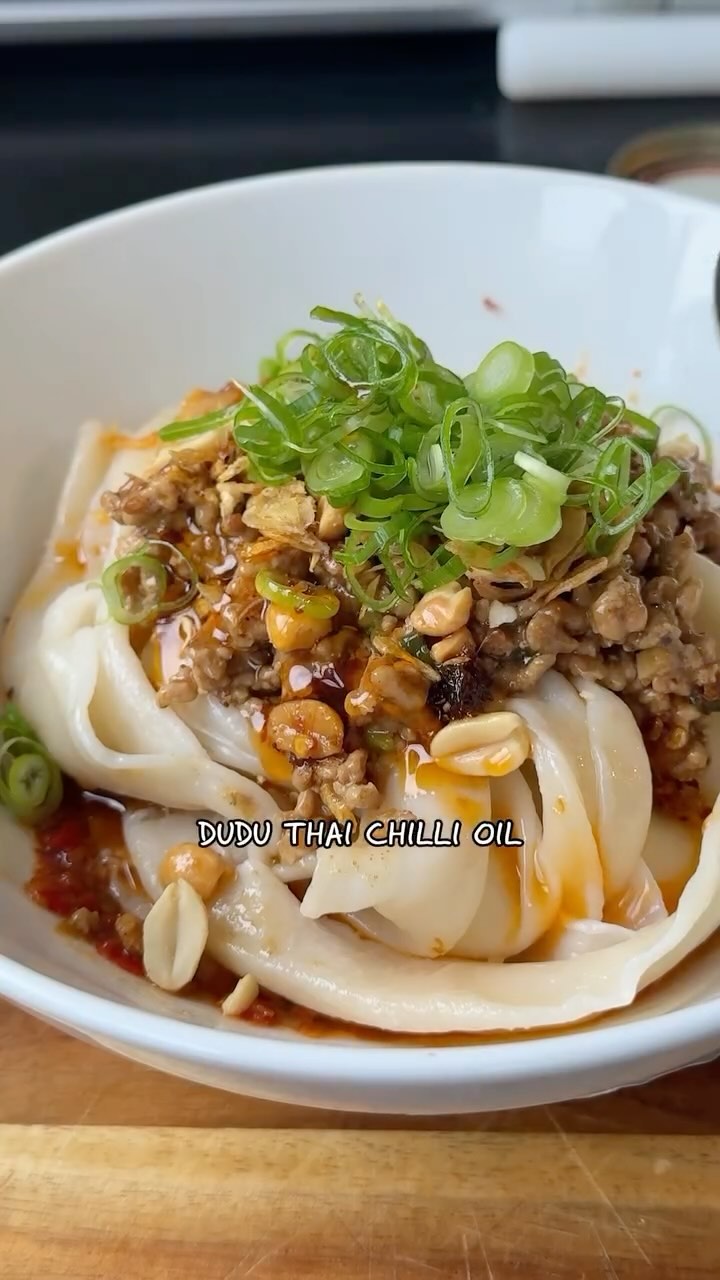
Biang Biang Noodles
Dive into the delightful world of Biang Biang noodles, where hand-pulled perfection meets a savory topping of fragrant spring onion minced pork. This dish bursts with flavor, thanks to a zesty sauce that ties everything together beautifully. Get ready to twirl your chopsticks and savor every bite of this mouthwatering experience!
Prep
15
min
Cook
30
min
Serves
4
people
Level
intermediate
📝 Ingredients
Serves 4🥬Fresh Produce(1)
- water
🥩Meat & Seafood(1)
- aromatic spring onion minced pork
🫙Pantry Staples(2)
- Dudu Thai chili oil
- flour
🧂Spices & Seasonings(1)
- salt
🍯Sauces & Condiments(1)
- sambal
📦Other(3)
- roast peanuts
- crispy shallots
- soybean paste
👨🍳 Instructions
- 1
Mix water, flour, and salt to form a dough.
- 2
Cut the dough into logs and shape them into pita shapes.
- 3
Cover with oil and let rest for two hours to develop gluten.
- 4
Prepare the topping by mincing spring onion and pork.
- 5
Combine sambal and soybean paste for the sauce.
- 6
Boil the noodles in plenty of water.
- 7
Serve the noodles with the sauce, pork mince, roast peanuts, crispy shallots, and chili oil.
💡 Pro Tips
- ✓Rest your dough for exactly 2 hours at room temperature because gluten networks need this time to fully hydrate and relax, reducing elasticity by 60% for easier hand-pulling.timing2 hours
- ✓Use a 3:1 flour to water ratio (by weight) for biang biang noodle dough because this creates the optimal gluten development for hand-stretching without tearing.ingredient3:1 ratio
- ✓Oil the dough surface completely during rest to prevent skin formation, which would create weak spots that tear at 15-20% stretch during hand-pulling.technique15-20% stretch
- ✓Heat your chili oil to exactly 300°F before pouring over aromatics because this temperature extracts maximum flavor compounds without burning the garlic and creating bitter notes.equipment300°F
- ✓Hand-pull noodles from center outward in one continuous motion because stopping mid-pull allows gluten to contract and creates uneven thickness variations of 2-3mm.technique2-3mm variations
Share this recipe
Prep
15
min
Cook
30
min
Serves
4
people
Level
intermediate
Share this recipe
Biang Biang Noodles
Dive into the delightful world of Biang Biang noodles, where hand-pulled perfection meets a savory topping of fragrant spring onion minced pork. This dish bursts with flavor, thanks to a zesty sauce that ties everything together beautifully. Get ready to twirl your chopsticks and savor every bite of this mouthwatering experience!
📝 Ingredients
Serves 4🥬Fresh Produce(1)
- water
🥩Meat & Seafood(1)
- aromatic spring onion minced pork
🫙Pantry Staples(2)
- Dudu Thai chili oil
- flour
🧂Spices & Seasonings(1)
- salt
🍯Sauces & Condiments(1)
- sambal
📦Other(3)
- roast peanuts
- crispy shallots
- soybean paste
👨🍳 Instructions
- 1
Mix water, flour, and salt to form a dough.
- 2
Cut the dough into logs and shape them into pita shapes.
- 3
Cover with oil and let rest for two hours to develop gluten.
- 4
Prepare the topping by mincing spring onion and pork.
- 5
Combine sambal and soybean paste for the sauce.
- 6
Boil the noodles in plenty of water.
- 7
Serve the noodles with the sauce, pork mince, roast peanuts, crispy shallots, and chili oil.
💡 Pro Tips
- ✓Rest your dough for exactly 2 hours at room temperature because gluten networks need this time to fully hydrate and relax, reducing elasticity by 60% for easier hand-pulling.timing2 hours
- ✓Use a 3:1 flour to water ratio (by weight) for biang biang noodle dough because this creates the optimal gluten development for hand-stretching without tearing.ingredient3:1 ratio
- ✓Oil the dough surface completely during rest to prevent skin formation, which would create weak spots that tear at 15-20% stretch during hand-pulling.technique15-20% stretch
- ✓Heat your chili oil to exactly 300°F before pouring over aromatics because this temperature extracts maximum flavor compounds without burning the garlic and creating bitter notes.equipment300°F
- ✓Hand-pull noodles from center outward in one continuous motion because stopping mid-pull allows gluten to contract and creates uneven thickness variations of 2-3mm.technique2-3mm variations