Pancake batter mixed exactly 12 times creates perfect air pockets—overmixing develops gluten and makes them chewy rubber discs.
The Simple But Perfect Pancake
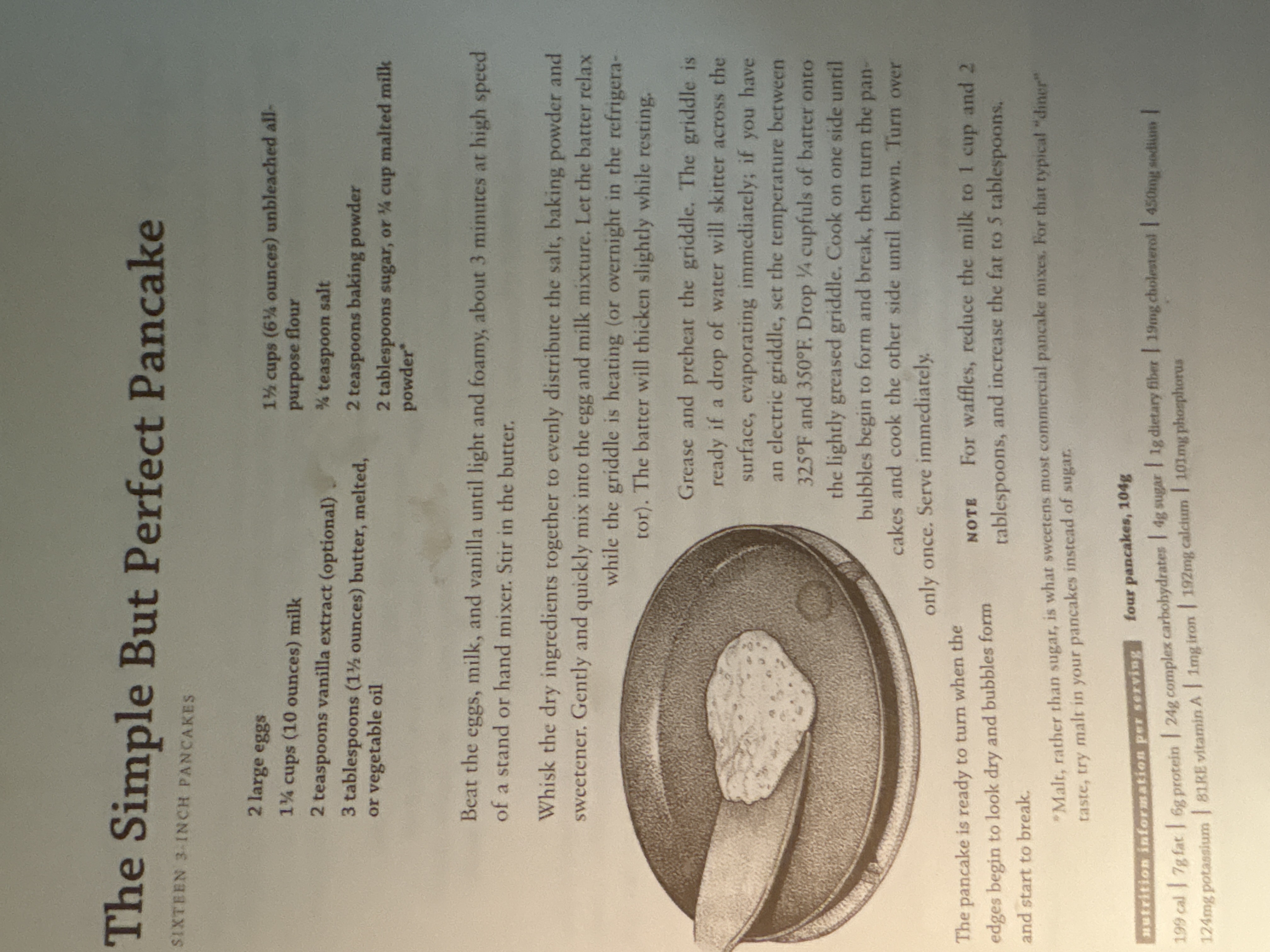
A classic pancake recipe that yields sixteen 3-inch pancakes, perfect for breakfast or brunch.
Prep
0
min
Cook
0
min
Serves
16
people
Level
beginner
The Story
These American griddle cakes are actually Dutch pannekoken that crossed the Atlantic in the 1600s with New Amsterdam settlers, who flattened their puffy oven pancakes to work on ship galley griddles—by 1740s Pennsylvania, German immigrants added baking powder creating the fluffy stack we know today, proving that sometimes the best inventions happen when cultures collide over breakfast.
Regional Twist
In Vermont's Champlain Valley, they replace regular sugar with pure maple sugar and add a splash of bourbon to the vanilla, creating pancakes so good they make syrup redundant.
📝 Ingredients
Serves 16🥛Dairy & Eggs(2)
- 3 tablespoons (1½ ounces) butter, melted, or vegetable oil
- 1¼ cups (10 ounces) milk
🫙Pantry Staples(4)
- 2 teaspoons baking powder
- 2 tablespoons sugar, or ¾ cup malted milk powder
- 1½ cups (6¾ ounces) unbleached all-purpose flour
- 2 teaspoons vanilla extract (optional)
🧂Spices & Seasonings(1)
- ¾ teaspoon salt
📦Other(1)
- 2 large eggs
👨🍳 Instructions
- 1
Beat the eggs, milk, and vanilla until light and foamy, about 3 minutes at high speed of a stand or hand mixer. Stir in the butter.
- 2
Whisk the dry ingredients together to evenly distribute the salt, baking powder, and sweetener.
- 3
Gently and quickly mix into the egg and milk mixture. Let the batter relax while the griddle is heating (or overnight in the refrigerator). The batter will thicken slightly while resting.
- 4
Grease and preheat the griddle. The griddle is ready if a drop of water will skitter across the surface, evaporating immediately; if you have an electric griddle, set the temperature between 325°F and 350°F.
- 5
Drop ¼ cupfuls of batter onto the lightly greased griddle. Cook on one side until bubbles begin to form and break, then turn the pancakes and cook the other side until brown. Turn over only once. Serve immediately.
💡 Pro Tips
- ✓Beat eggs and milk for exactly 3 minutes at high speed to incorporate air and create foam structure - this increases pancake height by 25-30% compared to simple whisking.technique3 minutes high speed
- ✓Test griddle temperature with the water skitter test at 325-350°F - water should dance and evaporate in 1-2 seconds, indicating proper Leidenfrost effect for even browning.equipment325-350°F
- ✓Let batter rest while griddle heats because gluten strands relax and flour fully hydrates, reducing toughness and creating more tender pancakes.timing10-15 minutes minimum
- ✓Flip pancakes only when surface bubbles form AND break (not just bubble) - this indicates moisture has escaped from the bottom layer and structure has set.technique
- ✓Use melted butter instead of oil for richer flavor, but stir it into the wet ingredients last to prevent it from solidifying and creating lumps when mixed with cold milk.ingredient
Share this recipe
Prep
0
min
Cook
0
min
Serves
16
people
Level
beginner
Share this recipe
Pancake batter mixed exactly 12 times creates perfect air pockets—overmixing develops gluten and makes them chewy rubber discs.
The Simple But Perfect Pancake
A classic pancake recipe that yields sixteen 3-inch pancakes, perfect for breakfast or brunch.
The Story
These American griddle cakes are actually Dutch pannekoken that crossed the Atlantic in the 1600s with New Amsterdam settlers, who flattened their puffy oven pancakes to work on ship galley griddles—by 1740s Pennsylvania, German immigrants added baking powder creating the fluffy stack we know today, proving that sometimes the best inventions happen when cultures collide over breakfast.
Regional Twist
In Vermont's Champlain Valley, they replace regular sugar with pure maple sugar and add a splash of bourbon to the vanilla, creating pancakes so good they make syrup redundant.
📝 Ingredients
Serves 16🥛Dairy & Eggs(2)
- 3 tablespoons (1½ ounces) butter, melted, or vegetable oil
- 1¼ cups (10 ounces) milk
🫙Pantry Staples(4)
- 2 teaspoons baking powder
- 2 tablespoons sugar, or ¾ cup malted milk powder
- 1½ cups (6¾ ounces) unbleached all-purpose flour
- 2 teaspoons vanilla extract (optional)
🧂Spices & Seasonings(1)
- ¾ teaspoon salt
📦Other(1)
- 2 large eggs
👨🍳 Instructions
- 1
Beat the eggs, milk, and vanilla until light and foamy, about 3 minutes at high speed of a stand or hand mixer. Stir in the butter.
- 2
Whisk the dry ingredients together to evenly distribute the salt, baking powder, and sweetener.
- 3
Gently and quickly mix into the egg and milk mixture. Let the batter relax while the griddle is heating (or overnight in the refrigerator). The batter will thicken slightly while resting.
- 4
Grease and preheat the griddle. The griddle is ready if a drop of water will skitter across the surface, evaporating immediately; if you have an electric griddle, set the temperature between 325°F and 350°F.
- 5
Drop ¼ cupfuls of batter onto the lightly greased griddle. Cook on one side until bubbles begin to form and break, then turn the pancakes and cook the other side until brown. Turn over only once. Serve immediately.
💡 Pro Tips
- ✓Beat eggs and milk for exactly 3 minutes at high speed to incorporate air and create foam structure - this increases pancake height by 25-30% compared to simple whisking.technique3 minutes high speed
- ✓Test griddle temperature with the water skitter test at 325-350°F - water should dance and evaporate in 1-2 seconds, indicating proper Leidenfrost effect for even browning.equipment325-350°F
- ✓Let batter rest while griddle heats because gluten strands relax and flour fully hydrates, reducing toughness and creating more tender pancakes.timing10-15 minutes minimum
- ✓Flip pancakes only when surface bubbles form AND break (not just bubble) - this indicates moisture has escaped from the bottom layer and structure has set.technique
- ✓Use melted butter instead of oil for richer flavor, but stir it into the wet ingredients last to prevent it from solidifying and creating lumps when mixed with cold milk.ingredient