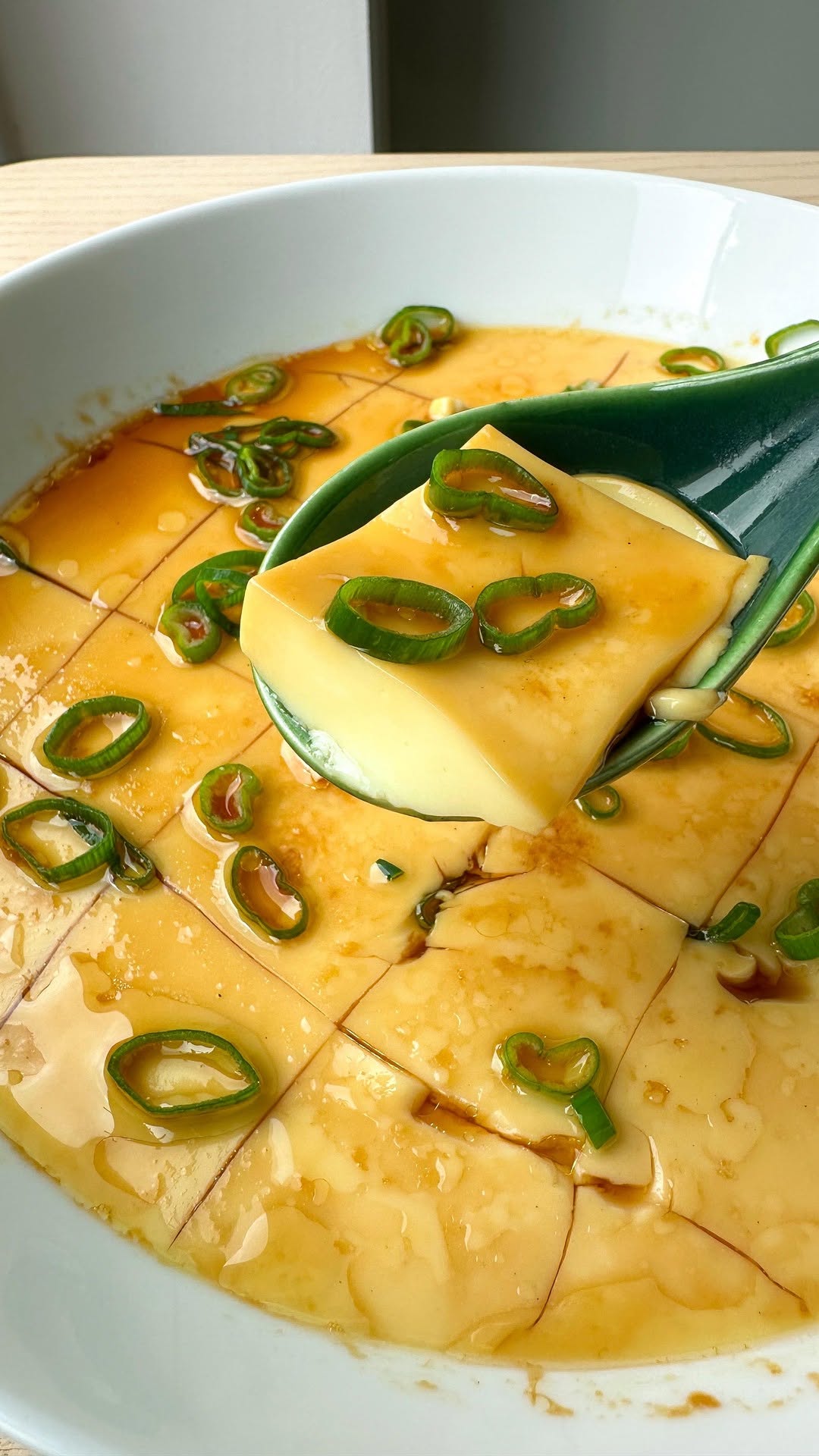
Chinese steamed eggs use a 1:1.5 egg-to-water ratio and 8-minute steam timing that creates silky custard without cream.
Chinese Steamed Egg
Indulge in the velvety goodness of Chinese Steamed Egg, a comforting dish that never fails to delight the whole family! With just a few simple ingredients like fresh eggs and savory chicken broth, this silky-smooth treat is effortlessly prepared using the steaming technique, locking in flavors and creating a melt-in-your-mouth experience. Perfect as a light meal or a side dish, this recipe is sure to become a staple in your kitchen!
Prep
5
min
Cook
10
min
Serves
4
people
Level
beginner
📝 Ingredients
Serves 4🥬Fresh Produce(2)
- green onionsoptional
- 1 and a half parts water
🥛Dairy & Eggs(1)
- 1 part egg
🫙Pantry Staples(1)
- sesame oiloptional
🍯Sauces & Condiments(1)
- soy sauceoptional
👨🍳 Instructions
- 1
Mix the egg and water well, trying not to create too many bubbles.
- 2
Heat the plate before adding the egg mixture to help it cook more evenly.
- 3
Steam on high heat for two minutes.
- 4
Turn off the heat and let it sit covered for seven to eight minutes.
- 5
Perform a jiggle test to check doneness.
- 6
Serve with soy sauce, sesame oil, and green onions.
💡 Pro Tips
- ✓Use a 1:1.5 to 1:2 ratio of eggs to room temperature water or stock, as this creates the silky custard texture without being too watery or dense.ingredient1:1.5 to 1:2 ratio
- ✓Strain the egg mixture through a fine mesh sieve to remove chalazae and air bubbles, which create an uneven, spongy texture instead of smooth custard.technique
- ✓Cover the steaming dish with plastic wrap or foil to prevent condensation droplets from falling onto the surface and creating pockmarks in the finished custard.technique
- ✓Steam at exactly 212°F (full boil) for 2 minutes, then residual heat cook for 7-8 minutes because direct high heat longer than 2 minutes causes the proteins to overcook and become rubbery.timing212°F, 2 minutes active + 7-8 minutes residual
- ✓The custard is perfectly done when it jiggles like set Jell-O in the center but doesn't slosh like liquid - this indicates proteins have coagulated at 160-165°F without overcooking.technique160-165°F
Share this recipe
Prep
5
min
Cook
10
min
Serves
4
people
Level
beginner
Share this recipe
Chinese steamed eggs use a 1:1.5 egg-to-water ratio and 8-minute steam timing that creates silky custard without cream.
Chinese Steamed Egg
Indulge in the velvety goodness of Chinese Steamed Egg, a comforting dish that never fails to delight the whole family! With just a few simple ingredients like fresh eggs and savory chicken broth, this silky-smooth treat is effortlessly prepared using the steaming technique, locking in flavors and creating a melt-in-your-mouth experience. Perfect as a light meal or a side dish, this recipe is sure to become a staple in your kitchen!
📝 Ingredients
Serves 4🥬Fresh Produce(2)
- green onionsoptional
- 1 and a half parts water
🥛Dairy & Eggs(1)
- 1 part egg
🫙Pantry Staples(1)
- sesame oiloptional
🍯Sauces & Condiments(1)
- soy sauceoptional
👨🍳 Instructions
- 1
Mix the egg and water well, trying not to create too many bubbles.
- 2
Heat the plate before adding the egg mixture to help it cook more evenly.
- 3
Steam on high heat for two minutes.
- 4
Turn off the heat and let it sit covered for seven to eight minutes.
- 5
Perform a jiggle test to check doneness.
- 6
Serve with soy sauce, sesame oil, and green onions.
💡 Pro Tips
- ✓Use a 1:1.5 to 1:2 ratio of eggs to room temperature water or stock, as this creates the silky custard texture without being too watery or dense.ingredient1:1.5 to 1:2 ratio
- ✓Strain the egg mixture through a fine mesh sieve to remove chalazae and air bubbles, which create an uneven, spongy texture instead of smooth custard.technique
- ✓Cover the steaming dish with plastic wrap or foil to prevent condensation droplets from falling onto the surface and creating pockmarks in the finished custard.technique
- ✓Steam at exactly 212°F (full boil) for 2 minutes, then residual heat cook for 7-8 minutes because direct high heat longer than 2 minutes causes the proteins to overcook and become rubbery.timing212°F, 2 minutes active + 7-8 minutes residual
- ✓The custard is perfectly done when it jiggles like set Jell-O in the center but doesn't slosh like liquid - this indicates proteins have coagulated at 160-165°F without overcooking.technique160-165°F