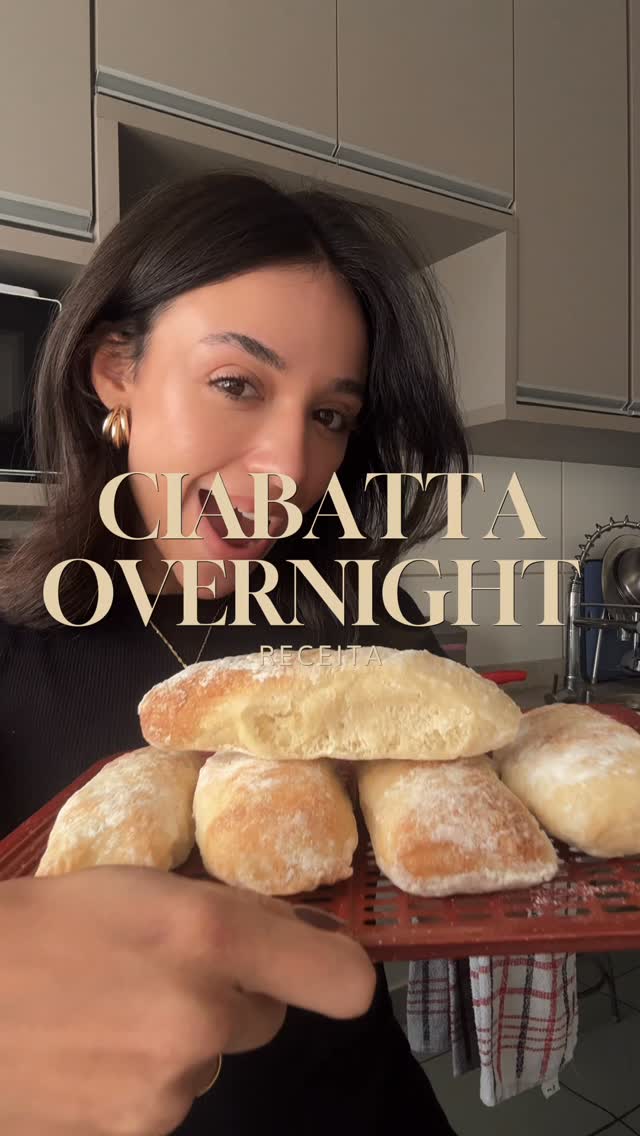
Ciabatta was invented in 1982 by an Italian baker trying to compete with French baguettes—it's younger than MTV.
Ciabatta Bread
Get ready to elevate your baking game with the ultimate crowd-pleaser: homemade ciabatta bread! This crusty delight comes to life with just a handful of ingredients—think high-quality flour and a touch of olive oil—plus a unique long fermentation technique that ensures a light, airy texture. Perfect for sandwiches or simply slathered with butter, this recipe is sure to become a staple in your kitchen!
Prep
15
min
Cook
30
min
Serves
4
people
Level
intermediate
📝 Ingredients
Serves 4🥬Fresh Produce(1)
- 500 ml de água morna (16.9 fl oz)
🫙Pantry Staples(3)
- 10 g de fermento biológico seco (0.35 oz)
- ~20 ml de azeite de oliva (0.68 fl oz)
- 575 g de farinha de trigo (4.6 cup)
🧂Spices & Seasonings(1)
- 10 g de sal (0.35 oz)
👨🍳 Instructions
- 1
In a large bowl, mix the warm water and yeast. Wait for 5–10 minutes.
- 2
Add the flour and mix just until incorporated, using a spatula. The dough is very wet.
- 3
Cover and let rest for 20 minutes.
- 4
Add the salt and olive oil, mix gently and let rest for another 10 minutes.
- 5
Do one simple fold just to structure the dough. Cover with plastic wrap and refrigerate for 8–12 hours (overnight).
- 6
Flour the counter well, turn out the dough and lightly flour the top.
- 7
To remove from the bowl: Do not stretch the dough. Always open from the sides with a spatula to preserve the air bubbles.
- 8
Cut to the desired size (spatula or non-serrated knife), place on a tray and let rest for 20–30 minutes before baking.
💡 Pro Tips
- ✓Maintain dough hydration at 75-80% (750-800g water per 1000g flour) because ciabatta's signature open crumb structure requires high moisture content to create steam pockets during baking.ingredient75-80% hydration
- ✓Use the 'slap and fold' technique instead of traditional kneading for wet ciabatta dough - lift the dough and slap it down while folding over itself to develop gluten without adding excess flour.technique
- ✓Perform stretch and folds every 30 minutes during the first 2 hours of bulk fermentation to build dough structure without degassing, as traditional kneading would collapse the delicate gluten network.timing30 minutes
- ✓Bake with steam for the first 15 minutes at 450°F by placing a pan of boiling water on the oven floor - this prevents crust formation and allows maximum oven spring before the crumb sets.equipment450°F, 15 minutes
- ✓Cut ciabatta with a bench scraper or sharp knife in one decisive motion rather than sawing, because dragging the blade will deflate the gas bubbles that create the characteristic irregular holes.technique
Share this recipe
Prep
15
min
Cook
30
min
Serves
4
people
Level
intermediate
Share this recipe
Ciabatta was invented in 1982 by an Italian baker trying to compete with French baguettes—it's younger than MTV.
Ciabatta Bread
Get ready to elevate your baking game with the ultimate crowd-pleaser: homemade ciabatta bread! This crusty delight comes to life with just a handful of ingredients—think high-quality flour and a touch of olive oil—plus a unique long fermentation technique that ensures a light, airy texture. Perfect for sandwiches or simply slathered with butter, this recipe is sure to become a staple in your kitchen!
📝 Ingredients
Serves 4🥬Fresh Produce(1)
- 500 ml de água morna (16.9 fl oz)
🫙Pantry Staples(3)
- 10 g de fermento biológico seco (0.35 oz)
- ~20 ml de azeite de oliva (0.68 fl oz)
- 575 g de farinha de trigo (4.6 cup)
🧂Spices & Seasonings(1)
- 10 g de sal (0.35 oz)
👨🍳 Instructions
- 1
In a large bowl, mix the warm water and yeast. Wait for 5–10 minutes.
- 2
Add the flour and mix just until incorporated, using a spatula. The dough is very wet.
- 3
Cover and let rest for 20 minutes.
- 4
Add the salt and olive oil, mix gently and let rest for another 10 minutes.
- 5
Do one simple fold just to structure the dough. Cover with plastic wrap and refrigerate for 8–12 hours (overnight).
- 6
Flour the counter well, turn out the dough and lightly flour the top.
- 7
To remove from the bowl: Do not stretch the dough. Always open from the sides with a spatula to preserve the air bubbles.
- 8
Cut to the desired size (spatula or non-serrated knife), place on a tray and let rest for 20–30 minutes before baking.
💡 Pro Tips
- ✓Maintain dough hydration at 75-80% (750-800g water per 1000g flour) because ciabatta's signature open crumb structure requires high moisture content to create steam pockets during baking.ingredient75-80% hydration
- ✓Use the 'slap and fold' technique instead of traditional kneading for wet ciabatta dough - lift the dough and slap it down while folding over itself to develop gluten without adding excess flour.technique
- ✓Perform stretch and folds every 30 minutes during the first 2 hours of bulk fermentation to build dough structure without degassing, as traditional kneading would collapse the delicate gluten network.timing30 minutes
- ✓Bake with steam for the first 15 minutes at 450°F by placing a pan of boiling water on the oven floor - this prevents crust formation and allows maximum oven spring before the crumb sets.equipment450°F, 15 minutes
- ✓Cut ciabatta with a bench scraper or sharp knife in one decisive motion rather than sawing, because dragging the blade will deflate the gas bubbles that create the characteristic irregular holes.technique