Professional chefs combine beef and chicken bones because gelatin from two animals creates 40% more body than single-animal stocks.
Roasted Chicken and Beef Stock
Craft a deliciously hearty stock that's bursting with flavor by roasting chicken and beef bones to perfection. Infuse your creation with aromatic herbs and vegetables for an irresistible base that elevates soups and sauces to a whole new level. Get ready to savor the rich comforts of homemade goodness!
Prep
15
min
Cook
480
min
Serves
8
people
Level
intermediate
The Story
This French-American bastardization emerged in 1950s culinary schools when French-trained chefs hit American kitchens and discovered Yankees had zero patience for proper veal stock—so they bodged together chicken quarters with beef bones, creating a mongrel remouillage that would make Escoffier spin in his grave but somehow delivers restaurant-quality depth in half the time.
Regional Twist
In Louisiana's Acadiana parishes, they char the onions directly over open flame before adding, double the bay leaves, and toss in a roux-darkened celery root that transforms this into the backbone of proper gumbo.
📝 Ingredients
Shopping List
- 2 lbs (907 g) beef bones
- 2 pieces carrots
- 2 pieces celery stalks
- 2 pieces chicken quarters
- 2 pieces leeks
- 2 pieces onions
- 2 tbsp (30 ml) tomato paste
Pantry Items
Amounts also listed in instructions below
- bay leaves (to taste)
👨🍳 Instructions
- 1
Preheat the oven to 350°F (175°C).
- 2
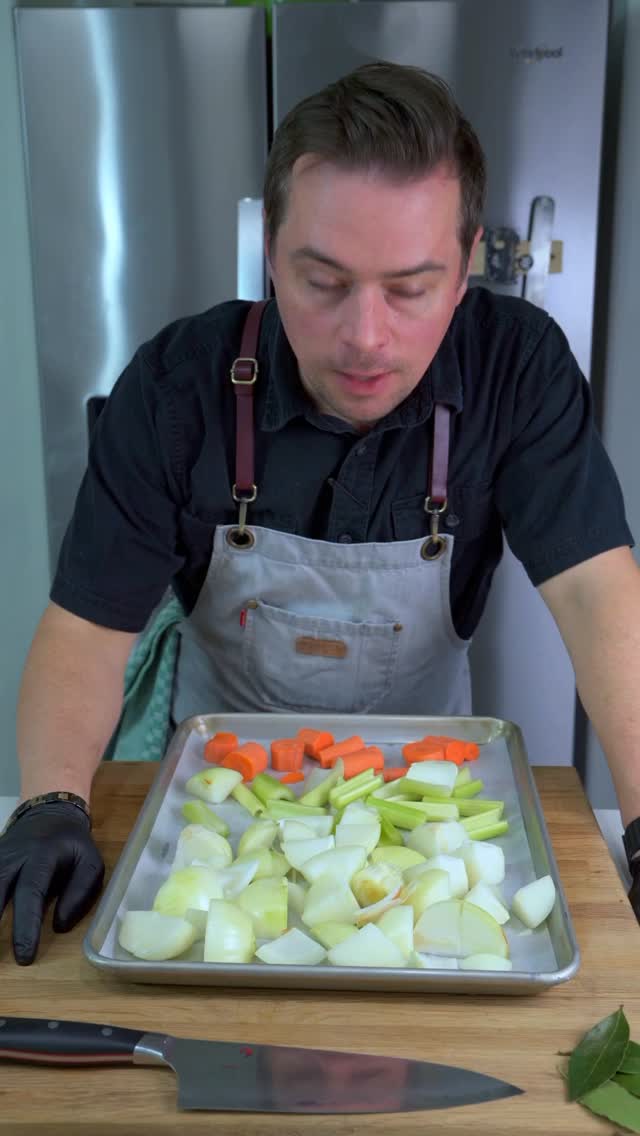
Place the chicken quarters and beef bones on top of a mixture of chopped mirepoix (carrots, onions, celery) in a roasting pan.
- 3
Roast in the oven, checking periodically and adding water if the mirepoix starts to darken.
- 4
Halfway through roasting, spread tomato paste over the bones.
- 5
Toast the bay leaves in a dry pan until fragrant.
- 6
After roasting, combine the strained stock with the contents to create a remoulage for additional flavor.
- 7
Add leeks towards the end of the cooking process.
💡 Pro Tips
- ✓Roast bones at 425°F for the first 30 minutes, then reduce to 350°F because the higher initial heat creates better Maillard reactions and caramelization for deeper flavor compounds.technique425°F initial, 350°F after 30 minutes
- ✓Apply tomato paste to bones when they reach 160°F internal temperature (about halfway through roasting) so the paste caramelizes without burning and adds glutamate-rich umami depth.timing160°F internal temperature
- ✓Maintain water level so mirepoix stays barely covered but bones remain exposed, as exposed bone surfaces continue browning while vegetables stay below 300°F to prevent bitter compounds.technique300°F vegetable limit
- ✓Toast bay leaves for 30-45 seconds until they release essential oils (you'll smell the change) because heat volatilizes compounds like eucalyptol and linalool that are otherwise locked in dried leaves.timing30-45 seconds
- ✓Add leeks during the final 45 minutes of simmering because their delicate sulfur compounds break down quickly above 185°F and become overpowering if cooked too long.timingFinal 45 minutes, below 185°F
Share this recipe
Prep
15
min
Cook
480
min
Serves
8
people
Level
intermediate
Share this recipe
Professional chefs combine beef and chicken bones because gelatin from two animals creates 40% more body than single-animal stocks.
Roasted Chicken and Beef Stock
Craft a deliciously hearty stock that's bursting with flavor by roasting chicken and beef bones to perfection. Infuse your creation with aromatic herbs and vegetables for an irresistible base that elevates soups and sauces to a whole new level. Get ready to savor the rich comforts of homemade goodness!
The Story
This French-American bastardization emerged in 1950s culinary schools when French-trained chefs hit American kitchens and discovered Yankees had zero patience for proper veal stock—so they bodged together chicken quarters with beef bones, creating a mongrel remouillage that would make Escoffier spin in his grave but somehow delivers restaurant-quality depth in half the time.
Regional Twist
In Louisiana's Acadiana parishes, they char the onions directly over open flame before adding, double the bay leaves, and toss in a roux-darkened celery root that transforms this into the backbone of proper gumbo.
📝 Ingredients
Shopping List
- 2 lbs (907 g) beef bones
- 2 pieces carrots
- 2 pieces celery stalks
- 2 pieces chicken quarters
- 2 pieces leeks
- 2 pieces onions
- 2 tbsp (30 ml) tomato paste
Pantry Items
Amounts also listed in instructions below
- bay leaves (to taste)
👨🍳 Instructions
- 1
Preheat the oven to 350°F (175°C).
- 2
Place the chicken quarters and beef bones on top of a mixture of chopped mirepoix (carrots, onions, celery) in a roasting pan.
- 3
Roast in the oven, checking periodically and adding water if the mirepoix starts to darken.
- 4
Halfway through roasting, spread tomato paste over the bones.
- 5
Toast the bay leaves in a dry pan until fragrant.
- 6
After roasting, combine the strained stock with the contents to create a remoulage for additional flavor.
- 7
Add leeks towards the end of the cooking process.
💡 Pro Tips
- ✓Roast bones at 425°F for the first 30 minutes, then reduce to 350°F because the higher initial heat creates better Maillard reactions and caramelization for deeper flavor compounds.technique425°F initial, 350°F after 30 minutes
- ✓Apply tomato paste to bones when they reach 160°F internal temperature (about halfway through roasting) so the paste caramelizes without burning and adds glutamate-rich umami depth.timing160°F internal temperature
- ✓Maintain water level so mirepoix stays barely covered but bones remain exposed, as exposed bone surfaces continue browning while vegetables stay below 300°F to prevent bitter compounds.technique300°F vegetable limit
- ✓Toast bay leaves for 30-45 seconds until they release essential oils (you'll smell the change) because heat volatilizes compounds like eucalyptol and linalool that are otherwise locked in dried leaves.timing30-45 seconds
- ✓Add leeks during the final 45 minutes of simmering because their delicate sulfur compounds break down quickly above 185°F and become overpowering if cooked too long.timingFinal 45 minutes, below 185°F