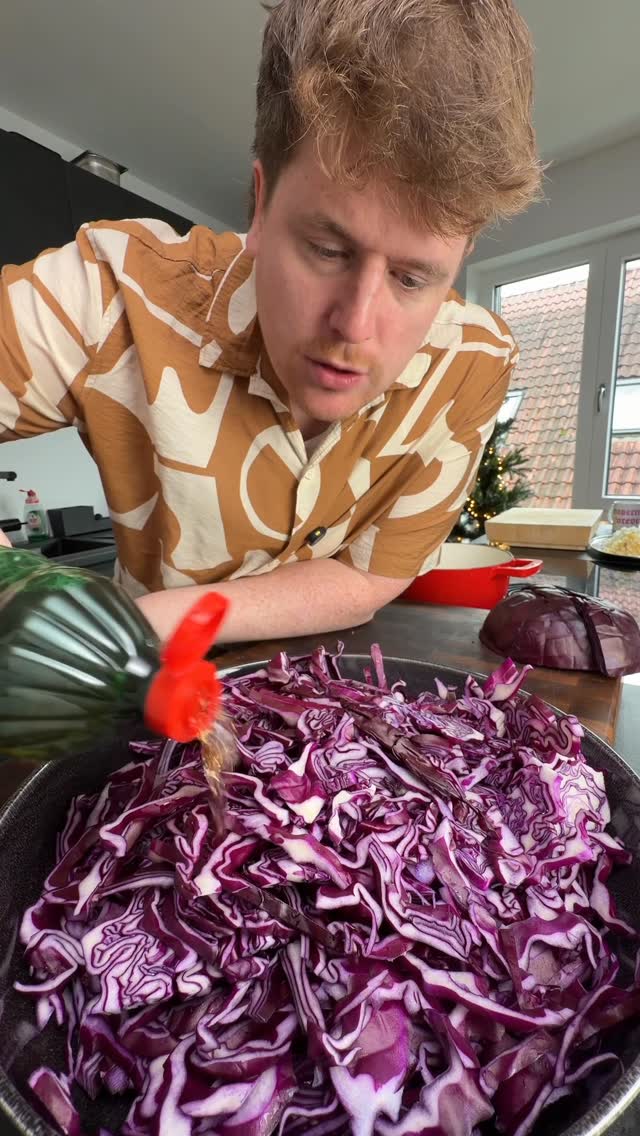
German red cabbage turns purple from anthocyanins reacting with vinegar—without acid, it would be blue-gray mush.
Red Cabbage
Savor the vibrant flavors of our mouthwatering red cabbage dish, an irresistible side that's sure to impress at any gathering! Toss thinly sliced cabbage with a splash of tangy apple cider vinegar and a hint of sweet caramelized onions for a crunchy, colorful treat. Elevate your meals with this easy-to-make recipe that's as delightful to the eye as it is to the palate!
Prep
20
min
Cook
80
min
Serves
4
people
Level
intermediate
The Story
This Bavarian winter staple conquered Christmas markets across Northern Europe when 16th-century German merchants discovered that vinegar-shocked red cabbage could survive month-long trading expeditions without rotting—what started as medieval food preservation accidentally created the perfect sweet-sour sidekick to roasted meats that now dominates holiday tables from Munich to Manchester.
Regional Twist
In Bavaria's Franconia region, they double the blackcurrant jam and add juniper berries, creating a darker, more intensely fruity version that pairs specifically with wild boar.
📝 Ingredients
Shopping List
- 2 apples
- 1 cup (59 ml) blackcurrant jam
- 1 cup (118 ml) mulled wine
- 2 onions
- 1 cup (118 ml) port wine
- 1 head red cabbage
Pantry Items
Amounts also listed in instructions below
- cornstarch (to taste)
- ginger (to taste)
- rapeseed oil (to taste)
- salt (to taste)
- sugar (to taste)
- vinegar (to taste)
👨🍳 Instructions
- 1
Cut the red cabbage in half, then quarter it and remove the outer leaves.
- 2
Finely slice the cabbage using a knife or food processor.
- 3
Add vinegar, salt, and sugar to the cabbage and mix well.
- 4
If using, put on gloves to avoid staining your hands.
- 5
Add rapeseed oil to a pan and sauté the onions, apples, and ginger.
- 6
Pour in the port wine and let it cook down.
- 7
Add spices like cinnamon, cloves, and bay leaves if desired.
- 8
For sweetness, add mulled wine.
- 9
Let the mixture simmer on low heat for 20 minutes.
- 10
Once the alcohol has evaporated and the mixture smells fragrant, add the cabbage.
- 11
Cover and let it simmer slowly for 1 hour.
- 12
Stir in blackcurrant jam and thicken with cornstarch.
💡 Pro Tips
- ✓Add vinegar immediately after slicing to maintain the vibrant red color, as anthocyanins (red pigments) turn blue-purple in alkaline conditions but stay red in acidic environments below pH 4.techniquepH below 4
- ✓Salt the sliced cabbage and let it sit for 15-20 minutes to draw out excess moisture through osmosis, preventing a watery final dish and concentrating flavors.timing15-20 minutes
- ✓Cook the port wine down by 75% (from 1/2 cup to 2 tablespoons) to concentrate the alcohol and sugars while removing harsh ethanol notes that would overpower the cabbage's subtle sweetness.technique75% reduction
- ✓Keep cooking temperature at medium-low (around 275-300°F) to slowly break down the cabbage's tough cellulose fibers without destroying heat-sensitive anthocyanin pigments.equipment275-300°F
- ✓Grate apples on the coarse side of a box grater rather than dicing to create 3-4mm pieces that break down partially during cooking, adding natural pectin for body while maintaining some texture.technique3-4mm pieces
Share this recipe
Prep
20
min
Cook
80
min
Serves
4
people
Level
intermediate
Share this recipe
German red cabbage turns purple from anthocyanins reacting with vinegar—without acid, it would be blue-gray mush.
Red Cabbage
Savor the vibrant flavors of our mouthwatering red cabbage dish, an irresistible side that's sure to impress at any gathering! Toss thinly sliced cabbage with a splash of tangy apple cider vinegar and a hint of sweet caramelized onions for a crunchy, colorful treat. Elevate your meals with this easy-to-make recipe that's as delightful to the eye as it is to the palate!
The Story
This Bavarian winter staple conquered Christmas markets across Northern Europe when 16th-century German merchants discovered that vinegar-shocked red cabbage could survive month-long trading expeditions without rotting—what started as medieval food preservation accidentally created the perfect sweet-sour sidekick to roasted meats that now dominates holiday tables from Munich to Manchester.
Regional Twist
In Bavaria's Franconia region, they double the blackcurrant jam and add juniper berries, creating a darker, more intensely fruity version that pairs specifically with wild boar.
📝 Ingredients
Shopping List
- 2 apples
- 1 cup (59 ml) blackcurrant jam
- 1 cup (118 ml) mulled wine
- 2 onions
- 1 cup (118 ml) port wine
- 1 head red cabbage
Pantry Items
Amounts also listed in instructions below
- cornstarch (to taste)
- ginger (to taste)
- rapeseed oil (to taste)
- salt (to taste)
- sugar (to taste)
- vinegar (to taste)
👨🍳 Instructions
- 1
Cut the red cabbage in half, then quarter it and remove the outer leaves.
- 2
Finely slice the cabbage using a knife or food processor.
- 3
Add vinegar, salt, and sugar to the cabbage and mix well.
- 4
If using, put on gloves to avoid staining your hands.
- 5
Add rapeseed oil to a pan and sauté the onions, apples, and ginger.
- 6
Pour in the port wine and let it cook down.
- 7
Add spices like cinnamon, cloves, and bay leaves if desired.
- 8
For sweetness, add mulled wine.
- 9
Let the mixture simmer on low heat for 20 minutes.
- 10
Once the alcohol has evaporated and the mixture smells fragrant, add the cabbage.
- 11
Cover and let it simmer slowly for 1 hour.
- 12
Stir in blackcurrant jam and thicken with cornstarch.
💡 Pro Tips
- ✓Add vinegar immediately after slicing to maintain the vibrant red color, as anthocyanins (red pigments) turn blue-purple in alkaline conditions but stay red in acidic environments below pH 4.techniquepH below 4
- ✓Salt the sliced cabbage and let it sit for 15-20 minutes to draw out excess moisture through osmosis, preventing a watery final dish and concentrating flavors.timing15-20 minutes
- ✓Cook the port wine down by 75% (from 1/2 cup to 2 tablespoons) to concentrate the alcohol and sugars while removing harsh ethanol notes that would overpower the cabbage's subtle sweetness.technique75% reduction
- ✓Keep cooking temperature at medium-low (around 275-300°F) to slowly break down the cabbage's tough cellulose fibers without destroying heat-sensitive anthocyanin pigments.equipment275-300°F
- ✓Grate apples on the coarse side of a box grater rather than dicing to create 3-4mm pieces that break down partially during cooking, adding natural pectin for body while maintaining some texture.technique3-4mm pieces